Wood lathe faceplate mounting is a vital skill for securely attaching larger or irregularly shaped wood pieces to your lathe for turning. This guide breaks down the process into simple steps, ensuring a stable and safe setup for your projects.
Hey makers! Daniel Bates here from Lathe Hub. Ever looked at a big, chunky piece of wood and wondered how to get it spinning safely on your lathe? That’s where the faceplate comes in. It’s your trusty anchor for all sorts of projects, from bowls to decorative platters. Sometimes, just getting that faceplate attached securely can seem a bit tricky, especially when you’re starting out. But don’t worry, it’s actually quite straightforward once you know the simple steps. We’ll walk through everything you need to know to get your wood mounted on the faceplate with confidence, ensuring a smooth and safe turning experience every time. Let’s get those creative sparks flying!
Why Use a Wood Lathe Faceplate?
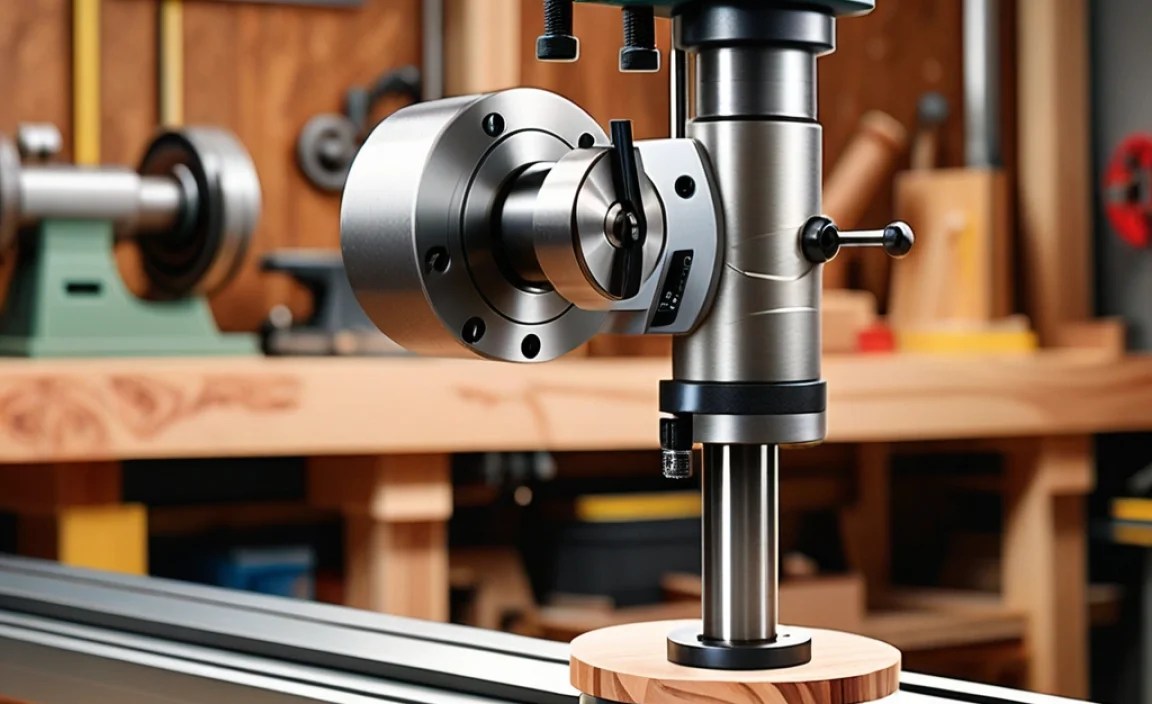
A wood lathe faceplate is a metal disc that screws onto the lathe spindle. It provides a flat, sturdy surface to attach larger, flatter, or irregularly shaped pieces of wood that can’t be easily held by a chuck or between centers. Think about turning a large, shallow bowl blank or a special type of decorative piece – a faceplate is often the ideal solution. It distributes the holding force over a larger area, offering stability and preventing “wobble” that could lead to disaster.
Using a faceplate opens up a world of possibilities for larger projects. It’s essential for turning:
- Large or wide bowls
- Platters and trays
- Pieces with an off-center mounting point
- Wood that might be too thin for a chuck but needs a secure grip
- Irregularly shaped blanks
Understanding Your Wood Lathe Faceplate

Wood lathe faceplates are typically made of cast iron or steel. They have a threaded hole on one side that matches the thread size of your lathe’s spindle. The other side is flat and features a series of holes. These holes are crucial – they allow you to attach your wood workpiece using screws.
There are a few common types of faceplates, though they all serve the same basic purpose:
- Standard Faceplates: These are the most common, featuring a flat surface with evenly spaced screw holes around the perimeter.
- Offset Faceplates: These have an off-center threaded hole, allowing you to mount a workpiece away from its center, useful for creating eccentric designs.
- Faceplate Rings: For very large diameter projects, you might use a faceplate ring that attaches to a base faceplate, providing even greater flexibility.
Essential Tools and Materials

Before you even think about mounting your faceplate, gather your tools. Having everything ready makes the process smooth and safe.
Tools You’ll Need:
- Wood Lathe: Of course! Make sure it’s in good working order and stable.
- Faceplate: Ensure it has the correct thread size for your lathe spindle. You can usually find this information in your lathe’s manual or by measuring the spindle.
- Screws: Sturdy wood screws. The length and diameter will depend on the thickness of your workpiece and how deep you want the screws to bite.
- Drill and Drill Bits: For pre-drilling screw holes in your workpiece.
- Screwdriver: A manual or powered screwdriver that fits your screw heads.
- Wrench or Spanner: To tighten the faceplate onto the spindle.
- Safety Glasses: Absolutely crucial. Always protect your eyes.
- Dust Mask: Especially when drilling or sanding.
- Workbench or Stable Surface: For preparing your workpiece.
- Measuring Tape or Ruler: For accurate placement.
- Pencil: For marking.
Step-by-Step: How to Mount a Wood Faceplate

Mounting a faceplate is a straightforward process. Let’s break it down into clear, manageable steps.
Step 1: Prepare Your Wood Workpiece
First, you need a piece of wood that’s suitable for faceplate turning. It should be roughly cut to the desired shape – don’t worry about perfect circles at this stage. For best results, ensure the wood is relatively flat on the side that will be against the faceplate. If your wood is significantly warped, you might need to flatten one side using a jointer or a large planer first. Measure the diameter of your intended turning to ensure it will clear the lathe bed and any tool rests.
Step 2: Mark the Center
This is a critical step for balance. Accurately find and mark the center of the side of your workpiece that will be attached to the faceplate. A good method is to draw intersecting diagonal lines from corner to corner. Where they meet is your center point.
Step 3: Prepare the Faceplate for Attachment
Make sure your faceplate is clean and free of debris. Check the threads to ensure they are in good condition. If it’s a brand-new faceplate, it’s ready to go. If it’s been used, give it a quick wipe-down.
Step 4: Mount the Faceplate to the Lathe Spindle
Turn off your lathe. Gently screw the faceplate onto the lathe spindle by hand. Turn it clockwise as you look at the end of the spindle. Once it’s hand-tight, use an appropriate wrench or spanner to tighten it securely. You don’t need to overtighten it, but it must be snug enough not to vibrate loose during turning. Many lathes have a spindle lock or a method for holding the spindle stationary while you tighten the faceplate; consult your lathe’s manual if you’re unsure.
A securely mounted faceplate is essential for safety. A loose faceplate can cause severe injury or damage to your lathe. Always double-check that it is firmly attached before starting the lathe.
Step 5: Position the Wood Workpiece on the Faceplate
With the faceplate mounted to the spindle, carefully place your flat side of the wood workpiece against the faceplate. Align the marked center of your wood with the center of the faceplate. Ensure the edges of the wood don’t interfere with the turning radius of the faceplate or the screws.
Step 6: Mark Screw Hole Locations
Using a pencil, mark through the screw holes on the faceplate onto the surface of your wood. You can mark all of them, or just a few to start, especially if your wood is somewhat irregular. For very large pieces, you might use all the screw holes available on the faceplate for maximum stability.
Step 7: Remove the Workpiece and Pre-drill Holes
Turn off the lathe and remove the faceplate with the attached wood (or at least loosen it enough to remove the wood from the faceplate). Take the wood workpiece to your workbench. Using your drill and a drill bit that is slightly smaller than the diameter of your screw’s shank (not the threads), drill pilot holes at the marks you made. The depth of these holes should be sufficient to allow the screws to grip well into the wood without going all the way through. A good rule of thumb is to drill about 2/3rds the depth of the screw you plan to use.
Example: If you are using 1.5-inch screws, drill pilot holes that are about 1 inch deep.
Pre-drilling prevents the wood from splitting when you drive in the screws and makes the process much easier.
Step 8: Attach the Wood to the Faceplate
Now, bring your workpiece and faceplate back to the lathe. Align the pre-drilled holes in the wood with the holes in the faceplate. Drive the wood screws through the faceplate holes and into the wood. Use a driver that fits the screw head properly to avoid stripping it.
For a secure mount, progressively tighten the screws in an alternating pattern (like tightening lug nuts on a car wheel). This ensures even pressure and a flush fit without stressing the wood. Make sure the wood is pulled up firmly and evenly against the faceplate surface. For very large or potentially unbalanced blanks, consider using as many screw holes as practical.
Step 9: Double-Check Everything
Before you turn on the lathe, give everything a final, critical check. Is the faceplate tight on the spindle? Are all the screws in the wood tight and flush? Is the wood securely fastened to the faceplate? Is there anything that could catch or interfere with the rotation? Ensure your tool rest is positioned correctly and securely.
Faceplate Mounting Best Practices and Tips

Here are some additional tips to make your faceplate mounting process even more successful and safe:
- Spindle Thread Match: Triple-check that your faceplate has the correct thread size and direction for your lathe spindle. Forcing the wrong size can damage the spindle or the faceplate. A 1-inch x 8 TPI (Threads Per Inch) is common in North America, but sizes vary by manufacturer and lathe model. Consult your lathe’s manual or measure your spindle. Here’s a great resource from Fine Woodworking on lathe thread sizes and compatibility.
- Screw Selection: Use high-quality wood screws with a good thread grip and a reasonably flat or washer head. Avoid overly long screws that might poke through your workpiece if it’s thin. Coarse-thread screws generally hold better in wood.
- Workpiece Stability: For very large or unbalanced blanks, consider using a thicker piece of wood and longer screws. For extra security on potentially problematic pieces, you can add wood glue between the wood and faceplate, though this makes removal harder.
- Counterboring Screw Heads: For a smoother workpiece surface while turning, you can counterbore the screw heads slightly into the wood. This means drilling a shallow, wider hole around the pilot hole so the screw head sits flush or slightly below the wood surface.
- Securing in Place: If you are going to remove the workpiece and faceplate for some reason (e.g., to adjust something or just to set it aside), consider marking the position of the faceplate on the spindle with a pencil. This helps you remount it in the exact same spot if needed.
- Using a Scroll Saw or Bandsaw: Before mounting to the faceplate, you can use a scroll saw or bandsaw to cut your blank roughly to shape. This removes excess weight and makes mounting easier.
Troubleshooting Common Faceplate Mounting Issues

Even with good instructions, you might encounter a few hiccups. Here’s how to tackle them.
| Problem | Cause | Solution |
|---|---|---|
| Faceplate won’t screw on | Wrong thread size or damaged threads on spindle/faceplate. | Verify thread size. Clean threads on both parts carefully. If damaged, you may need a new faceplate or spindle repair. |
| Workpiece still wobbles after mounting | Faceplate not tight on spindle; screws not tight; workpiece not flat on faceplate; pilot holes too large. | Tighten faceplate on spindle. Ensure all screws are tight and even. Try to flatten the wood surface against the faceplate. Use smaller pilot holes. |
| Wood splits when inserting screws | Pilot holes too small; wood is very hard or brittle; screws driven in too fast or at an angle. | Use a drill bit closer to the screw’s shank diameter. Pre-drill deeper. Drive screws slowly and straight. Consider wood glue and screws for a stronger hold. |
| Screw heads strip | Wrong screwdriver bit; screw head is soft; screw driven at an angle. | Use the correct size and type of screwdriver bit (Phillips, pozi, square, etc.). Drive screws straight and with steady pressure. |
| Faceplate difficult to remove | Paint, rust, or glue; threads are slightly seized. | Try tapping lightly on the faceplate with a rubber mallet while turning counter-clockwise. Use a penetrating oil if rust is suspected. (Be cautious with glues in threaded areas). |
Safety First: Always!

Working with lathes, including faceplate mounting, demands respect for safety. Here are the golden rules:
- Eye Protection: Always wear safety glasses or a full face shield. Wood chips and debris can fly at high speeds.
- Secure Mounting: Never turn the lathe on if the faceplate or workpiece feels loose. Stop immediately and re-secure.
- Tool Rest Placement: Position your tool rest close to the workpiece (but not touching) and at the correct height. This is your primary defense against catches. A tool rest positioned too far away or too low can lead to dangerous “catches.”
- Proper Clothing: Avoid loose clothing, dangling jewelry, or long hair that could get caught in the rotating lathe.
- Listen to Your Lathe: Strange noises are a warning. If something sounds off, stop the lathe and investigate.
- Know Your Wood: Be aware of knots, cracks, or inclusions in your wood. They can cause imbalance or unexpected breaks.
- NEVER reach over a spinning chuck or faceplate.
The Occupational Safety and Health Administration (OSHA) provides excellent general guidelines on personal protective equipment (PPE) that are highly relevant to workshop safety.
Frequently Asked Questions (FAQ)
Q1: What size faceplate do I need for my wood lathe?
The size you need depends on the size of your workpiece and your lathe’s spindle thread. Faceplates come in various diameters (e.g., 3-inch, 4-inch, 6-inch). Always ensure the faceplate’s threaded insert matches your lathe’s spindle thread size. Consult your lathe manual or a spindle thread chart.
Q2: Can I use any screws to attach wood to a faceplate?
It’s best to use sturdy wood screws with a good thread and a head type that allows for flush mounting (like pan head or flat head, if counterbored). Ensure they are long enough to grip well but not so long that they will poke through your workpiece. High-quality screws resist stripping.
Q3: How tight should a faceplate be on the spindle?
It needs to be snug and secure, so it doesn’t vibrate loose. Hand-tight is a good start, followed by a final snugging with a wrench or spanner. Avoid aggressive overtightening, which can damage the threads. The lathe’s spindle lock mechanism can help achieve this securely. Always double-check before starting the lathe.
Q4: What is the difference between a faceplate and a chuck?
A chuck typically grips the workpiece from the outside or inside (like jam chucks) and is often used for round stock or tenons/sockets. A faceplate screws onto the spindle and provides a flat surface with screw holes to securely mount larger, flatter, or irregularly shaped blanks that cannot be easily held by a chuck.
Q5: How do I remove a faceplate that’s stuck?
If it’s stuck due to rust or slight seizing, try gently tapping on the faceplate’s rim with a rubber mallet while attempting to unscrew it counter-clockwise. A penetrating oil can help if rust is the issue. Ensure you are turning it the correct way (counter-clockwise to remove). If it’s glued, you might need to carefully work some solvent into the threads, but this can be tricky.
Q6: Can I turn a very large diameter project with a faceplate?
Yes, faceplates are ideal for larger projects. For extremely large diameters, you might use a faceplate ring attached to a base faceplate, which extends the mounting surface. Always ensure your lathe is rated for the size and weight of the project and that you have adequate clearance around the lathe bed.
Conclusion
Mastering wood lathe faceplate mounting is a cornerstone skill for any woodturner looking to expand their project repertoire. By understanding the purpose of the faceplate, gathering the right tools, and following these step-by-step instructions carefully, you can confidently and securely attach your workpieces. Remember that preparation and safety checks are paramount; a well-mounted workpiece leads to a more enjoyable and successful turning session, and more importantly, keeps you safe. So go ahead, embrace those larger projects, and let your creativity spin!
