Master Wood Lathe Faceplate Turning: Securely Mount and Shape Your Projects with Confidence! This tutorial provides essential tips for beginners, explaining faceplate basics, setup, safe operation, and turning techniques to achieve smooth, reliable results. Get ready to tackle larger or awkwardly shaped wood with ease.
Turning larger or irregularly shaped pieces of wood on your lathe can seem daunting, especially when the standard chuck just won’t do. That’s where the wood lathe faceplate comes in! It’s an underappreciated but incredibly useful accessory that opens up a world of possibilities for your woodworking projects. Many beginners find themselves scratching their heads, wondering how to securely attach odd-shaped stock or how to even start turning with this simple disc.
Don’t worry, we’ve all been there! This guide is designed to demystify wood lathe faceplate turning, breaking down everything you need to know into easy-to-follow steps. We’ll cover the essentials, from choosing and mounting your faceplate to safely and effectively turning your workpiece. Get ready to gain confidence and expand your turning capabilities!
What is Wood Lathe Faceplate Turning?

Wood lathe faceplate turning is a method of attaching wood directly to the lathe’s headstock using a faceplate, a flat metal disc with threaded holes. This is ideal for turning very large, unbalanced, or irregularly shaped workpieces that cannot be securely held by a standard lathe chuck. Think of large bowls, platters, or hollow forms where the wood’s center of gravity is far from its geometric center. The faceplate provides a stable, flat mounting surface, allowing you to turn the entire piece safely.
Why Use a Faceplate?
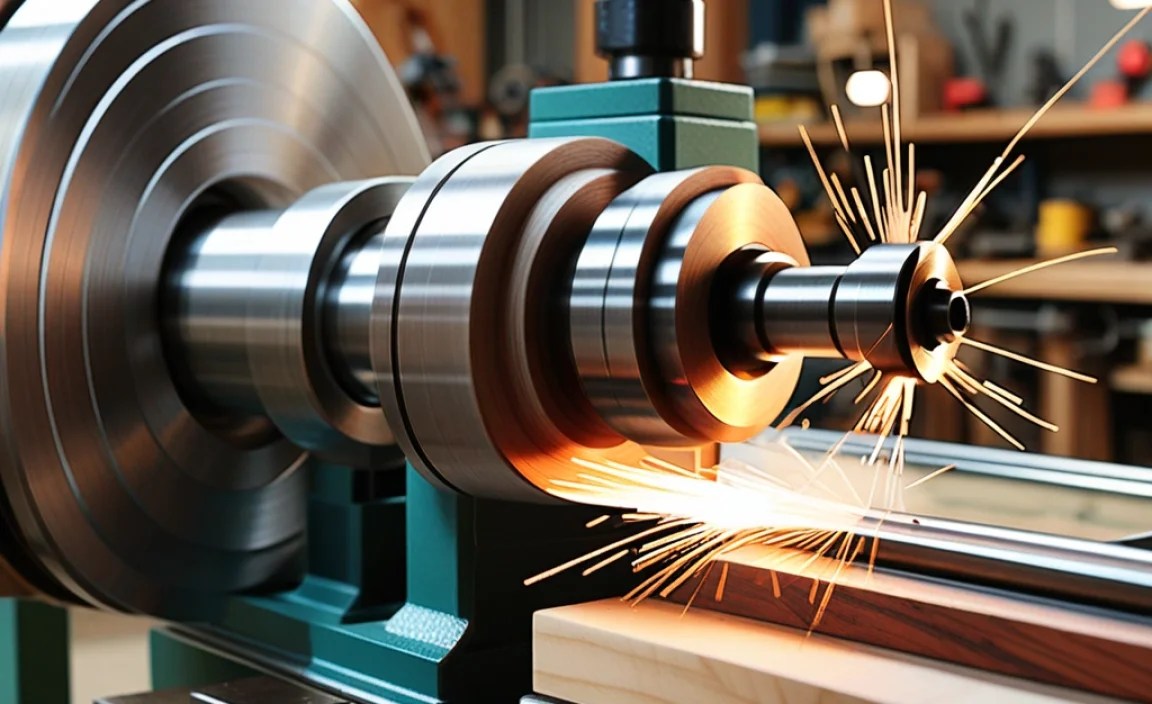
Chucks are fantastic for many turning projects, but they have limitations. When you need to turn pieces that are wider than your chuck can grip, heavier than your lathe can comfortably handle on a standard mount, or have an odd shape that makes chucking impractical, a faceplate is your best friend. It’s particularly useful for:
- Large Bowls and Platters: When the diameter exceeds standard chuck capacity.
- Hollow Forms: Especially those with a wide opening and significant depth.
- Awkwardly Shaped Stock: Such as irregular natural edge pieces or pre-cut blanks that don’t have a convenient shape for chuck jaws.
- Re-turning Old Projects: When you need to refine a piece already mounted on a faceplate.
Understanding Your Faceplate

A wood lathe faceplate is typically a thick metal disc with a threaded hole that screws onto the headstock spindle. It also features several evenly spaced holes around its perimeter. These holes are used to attach the workpiece using screws. There are a few main types and considerations:
- Thread Size: Ensure the threaded hole matches your lathe’s headstock spindle thread. This is crucial for a secure fit. Common sizes include 1″ x 8 TPI (Threads Per Inch) or 3/4″ x 10 TPI. Always check your lathe’s specifications.
- Diameter: Faceplates come in various diameters. A larger faceplate provides more screw locations and a better mounting base for larger workpieces.
- Hole Configuration: Some have simple drilled and tapped holes, while others might have counterbored holes for screw heads to sit flush or recessed.
For those interested in the specifics of lathe spindles and threads, the Woodturners’ Guild of North America offers helpful information on spindle thread standards, empowering you to make informed decisions about your lathe accessories.
Essential Tools and Materials for Faceplate Turning
Before you start, gather these items. Having everything ready makes the process smoother and safer.
Tools:
- Wood Lathe with a suitable spindle thread
- Wood Lathe Faceplate (threaded for your lathe spindle)
- Wood Screws: Appropriate length and diameter for your workpiece and faceplate holes. Coarse thread screws are usually best for wood.
- Drill/Driver or Screwdriver
- Pencil or Marker
- Measuring Tape or Ruler
- Safety Glasses (absolutely essential!)
- Face Shield (highly recommended for added protection)
- Hearing Protection
- Dust Mask
- Chisels (Gouges for roughing, skew for detailing if needed)
- Calipers (optional, for precise dimensions)
- Center Punch (optional, for starting screw holes)
Materials:
- Wood Blank: Your chosen piece for turning.
- Wood Glue (optional, for reinforcing screw positions)
Step-by-Step Wood Lathe Faceplate Turning Tutorial
Let’s get turning! Follow these steps carefully to ensure a safe and successful faceplate turning experience.
Step 1: Prepare Your Wood Blank
This is a critical step. Your blank needs to be stable and ready for mounting. If you’re using a large, rough piece, you might want to do some initial shaping to make it more manageable and to establish a rough center.
- Inspect the Wood: Check for cracks, voids, or loose knots that could pose a safety risk. If you find significant weaknesses, it might be best to use a reinforced mounting method or choose a different piece.
- Rough Shape (Optional): For very large or irregular pieces, you might want to saw off the most extreme protrusions to create a more manageable octagon or rough circle. This isn’t strictly necessary but can make mounting easier and reduce excess weight during the initial stages.
- Mark the Center: This is crucial for balanced turning. Find the approximate center of your blank on the face that will attach to the faceplate. You can do this by drawing intersecting diagonal lines from corner to corner on a roughly square/rectangular blank. For irregular shapes, use a compass to find the largest inscribed circle and mark its center, or estimate as accurately as possible. The center doesn’t need to be perfect, but accuracy here contributes to less vibration.
Step 2: Prepare the Faceplate and Blank for Mounting
Now, you’ll mark where the screws will go and prepare the blank to receive them.
- Position the Faceplate: Place the faceplate’s threaded end against the marked center of your wood blank.
- Mark Screw Hole Locations: Using a pencil or marker, carefully mark the locations of the faceplate’s mounting holes onto the surface of your wood blank. Aim for accuracy so the screws will enter the wood cleanly.
- Pre-drill Screw Holes: This is a vital safety step. Select a drill bit that is slightly smaller than the shank (the smooth part) of your wood screws, not the threads. This allows the screw threads to bite into the wood for a strong hold. Drill pilot holes at each marked location, ensuring the drill bit is held perpendicular to the blank’s surface. The depth of these holes should be sufficient for the screws to engage well into the wood, ideally at least 1 to 1.5 inches deep, depending on your screw length and wood thickness. For very hard woods, you might consider pre-drilling a slightly larger diameter hole where the screw shank will pass through.
Step 3: Mount the Faceplate to the Wood Blank
With pilot holes pre-drilled, it’s time to attach the faceplate. This is where the security of your setup is established.
- Align the Faceplate: Place the faceplate over the pre-drilled holes on your wood blank, aligning its screw holes with yours.
- Insert and Tighten Screws: Begin inserting the wood screws. Start all screws loosely before tightening any single one completely. This helps draw the faceplate onto the wood evenly.
- Tighten Securely: Gradually tighten the screws, working in a star or crisscross pattern. Ensure the faceplate is drawn flush against the wood surface. Tighten each screw firmly, but avoid over-tightening, which could strip the holes or crack the wood. The goal is a solid, wobble-free connection.
Pro Tip: For critical projects or if your wood is slightly prone to splitting, consider applying a bit of wood glue into the pilot holes before inserting the screws. Wipe away any excess. This can add extra strength to the mounting.
Step 4: Mount the Wood Blank and Faceplate Assembly to the Lathe
This is where the magic happens! Carefully attach your prepared blank to the lathe.
- Turn Off the Lathe: Ensure the lathe is completely stopped and unplugged, or the power switch is off.
- Clean the Spindle Threads: Before mounting, ensure the lathe’s headstock spindle threads are clean and free of debris. A wire brush can be helpful here.
- Thread the Faceplate: Carefully screw the assembled wood blank and faceplate onto the lathe’s headstock spindle. Turn it clockwise until it’s snug.
- Tighten with Spindle Wrench (if applicable): Some lathes come with a spindle wrench or knockout bar that fits into a hole on the faceplate or spindle flange. Use this to give the faceplate a final, firm tightening. Make sure it’s snug enough not to move, but don’t force it excessively.
Step 5: Initial Balancing and Rotation Test
Safety first! Before you even think about turning, you must perform a crucial balance check.
- Remove Tools: Clear your lathe bed and surrounding area of any tools or obstructions.
- Set Tool Rest: Position your tool rest close to the workpiece, but not so close that it will hit when the wood starts to move. A gap of about 1/4 inch is usually good.
- Low-Speed Rotation Test: Turn the lathe on at its lowest speed setting. If your lathe has variable speed, start at the absolute minimum.
- Observe for Vibration: Watch the workpiece closely. If you experience extreme wobbling or vibration, turn the lathe off immediately. This indicates a significant imbalance.
- Troubleshoot Imbalance: If there’s minor vibration, you can sometimes mitigate it by slightly loosening the faceplate screws, rotating the blank slightly, and re-tightening. For severe vibration, you may need to stop, remove the blank, and re-evaluate your mounting or blank preparation. It might mean you need to add more screws, or your blank is too unbalanced for faceplate turning without further shaping. Weighting the opposite side with a temporary clamp (only for the initial slow-speed test and removed before actual turning) can sometimes help on extremely unbalanced pieces to get it round enough to turn.
For more information on lathe speeds and safety, check out resources from the Occupational Safety and Health Administration (OSHA) regarding machine guarding and safe operation principles, which are universally applicable to workshop machinery like lathes.
Step 6: Rough Turning and Shaping
Once your workpiece is securely mounted and balanced at low speed, you can begin turning.
- Increase Speed Gradually: Slowly increase the lathe speed to a safe working speed for the diameter of your workpiece. Larger diameters generally require slower speeds. Consult your lathe’s manual for recommended speed ranges based on diameter.
- Use Appropriate Tools: For initial roughing, a large bowl gouge or roughing gouge is ideal. Start by removing the corners and creating a basic cylindrical or symmetrical shape.
- Cut with the Grain: For most of the turning process, you’ll want to cut “with” the wood grain, meaning the tool moves generally from nose to tailstock.
- Take Light Cuts: Especially when starting, take shallow cuts. Don’t try to remove large amounts of material at once. This reduces stress on the mounting and your tools, and makes for a cleaner cut.
- Work Towards Your Desired Shape: Begin to establish the outer profile of your bowl, platter, or other project. If turning a bowl, you’ll typically create a tenon or recess on the bottom face (which is currently towards the tailstock) for later chucking if you plan to hollow it out.
- Monitor for Vibration: As you remove material, the balance of the workpiece changes. Be attentive to any increase in vibration. If it becomes significant, stop the lathe, check the mounting, and potentially adjust your speed.
Step 7: Hollowing Out the Workpiece (for Bowls/Hollow Forms)
If you’re turning a bowl or hollow form, you’ll eventually need to hollow out the inside.
- Leave Sufficient Thickness: Don’t try to hollow out too deeply from the start. Leave a substantial amount of wood for stability.
- Create a Mounting Tenon or Recess: On the face that will become the bottom of the bowl (currently accessible as you turn the outside), you’ll need to create a way to remount it for hollowing. This is typically done by:
- Creating a Tenon: Turning a cylindrical “tenon” that can grip into the jaws of your chuck. Mark the desired diameter and depth for your chuck jaws.
- Creating a Recess: Machining a dovetailed recess into which your chuck jaws can expand and grip.
- Change Tools: Once the tenon or recess is finalized, stop the lathe.
- Remount for Hollowing: Carefully remove the faceplate assembly from the headstock. Mount your chuck, and then securely grip the tenon or recess with the chuck jaws.
- Hollow the Inside: Now, with the inside facing you, use appropriate hollowing tools (e.g., a dedicated bowl gouge or hollowing rig) to remove material from the center outwards. Work in stages, gradually deepening the hollow.
- Consider Re-spindle Mounting: For very large or deep hollow forms, after hollowing, you might need to remount the piece on the faceplate (perhaps on the inside face you just hollowed) to refine the exterior or shape the rim.
Step 8: Finishing and Detailing
Once the basic shape is achieved and the inside is hollowed (if applicable), you can focus on fine-tuning.
- Refine the Exterior Shape: Continue to use your gouges and skew chisels to smooth the outer surfaces.
- Create the Bottom: Turn the piece around (using the tenon or recess you created) and finish the bottom surface. This is where you’ll turn off the tenon or clean up the recess.
- Sanding: For a smooth finish, sand the workpiece while it’s on the lathe. Start with a coarser grit sandpaper and progressively move to finer grits. You can use handheld sandpaper, sandpaper on a stick for larger pieces, or specialized sanding systems. Ensure the lathe is at a moderate speed for sanding, and wear your dust mask!
- Apply Finish: While the piece is still on the lathe, you can apply a finish like oil, lacquer, or wax. This allows for an even application as the piece rotates.
Step 9: Safely Removing the Workpiece
The final step is as critical as the first. Always prioritize safety.
- Stop the Lathe: Ensure the lathe is completely stopped.
- Remove Tool Rest: Move the tool rest completely out of the way.
- Unscrew the Assembly: Carefully unscrew the wood blank and faceplate assembly from the headstock by turning it counter-clockwise. You might need to hold the blank steady initially if it’s heavy.
- Inspect the Faceplate: Check the threads on both the spindle and the faceplate for any damage.
Faceplate Mounting Techniques and Considerations
Beyond the basic screw mounting, there are other ways to use faceplates, and things to keep in mind:
Table: Faceplate Mounting Options
| Method | Description | Pros | Cons | Best For |
| Direct Screw | Screwing directly into the wood blank through faceplate holes. | Simple, requires minimal tools. | Can split wood if not pre-drilled properly; limited by screw strength. | Most general-purpose faceplate turning. |
| Reinforced | Using glued-in inserts (e.g., dowels, threaded inserts) or larger washers on the back of the blank for screws. | Increased holding power, reduces risk of splitting. | More complex preparation, requires extra hardware. | Large, heavy, or slightly weaker wood. |
| Recessed | Countersinking screw heads into the faceplate or blank so they sit flush or below the surface. | Provides a flat surface for further work or for the piece to sit. | Requires precise drilling and countersinking. | When the faceplate side will be the bottom of the piece. |
