Wood lathe finishing tools are critical for achieving smooth, professional-looking surfaces. They allow you to remove tool marks and refine your work with precision, making your projects shine. Mastering these tools will elevate your woodworking.
Hey makers! Daniel Bates here, your guide at Lathe Hub. Ever spun a perfectly shaped piece on your wood lathe, only to be disappointed by the surface finish? You’re not alone. Getting that glass-smooth, professional sheen that makes your work truly stand out can be a real head-scratcher. Chasing away those frustrating tool marks used to feel like a battle. But don’t worry, with the right finishing tools and a few simple techniques, you’ll be achieving those envy-inducing finishes in no time. Ready to unlock that perfect polish?
The Magic Behind Wood Lathe Finishing Tools


When we talk about wood lathe finishing tools, we’re not just talking about sandpaper. While sandpaper is a crucial part of the finishing process, the primary tools we’ll focus on are those that remove material with controlled precision, giving you that clean slate before you even think about abrasives. These tools are designed to shave off thin layers of wood, smoothing out the irregularities left by rougher turning tools. Think of them as the sculptors’ fine chisels for your turning projects. They transform a roughly shaped blank into a piece ready for that final, glorious shine.
The goal of using specialized wood lathe finishing tools is to create a surface that is as smooth as possible directly off the lathe. This drastically reduces the amount of sanding required, saving you time and effort. A good finish directly from the lathe means fewer abrasive grits to work through, less dust, and ultimately, a more satisfying outcome for your woodworking projects.
Why Are Specialized Finishing Tools Necessary?
Roughing gouges and other initial turning tools are great for shaping, but they leave distinct marks. These marks, often called scallops or chatter, are essentially tiny valleys and ridges on the wood’s surface. To get a smooth finish, you could just keep sanding, but that’s like trying to smooth a rough wall with a coarse grit sandpaper indefinitely – it’s inefficient and can even introduce new problems.
Specialized finishing tools are designed to create a slicing action rather than a scraping or digging one. This shearing cut removes wood cleanly with minimal tear-out or vibration, leaving a much smoother surface. They are particularly effective on harder woods and stabilize pieces that might be prone to vibration.
The Right Tool for the Job: Beyond the Basics
While a sharp spindle gouge can do a decent job of finishing, dedicated finishing tools offer distinct advantages:
Blade Geometry: Designed for a cleaner shearing cut.
Ergonomics: Often more comfortable for sustained use.
Material: Made from high-quality steel that holds an edge longer.
Let’s dive into the types of tools that will become your best friends when it comes to getting that perfect final surface.
Essential Wood Lathe Finishing Tools


When you’re ready to move beyond roughing and basic shaping, a select few finishing tools will become indispensable in your workshop. These are the workhorses that will help you achieve those coveted smooth surfaces.
1. The Scraper Family: Detail and Flattening Powerhouses
Scrapers are some of the most fundamental finishing tools. They work by “bending” the wood fibers rather than cutting them cleanly like a gouge. This action can produce a very smooth finish, especially on end grain and difficult woods, but they require a specific technique.
Round Nose Scraper: This is perhaps the most common and versatile scraper. Its rounded edge allows it to smoothly traverse curves and remove material without digging in. It’s excellent for refining cove shapes, smoothing the bottom of bowls, and general surface smoothing.
Flat/Straight Scraper: The name says it all. This rectangular scraper is used for flattening surfaces, such as the bottoms of bowls or platters. When held at a slight angle, it can create a very fine shaving and a smooth surface.
Hook Scraper: As the name suggests, this scraper has a hook-like tip. It’s designed for removing tougher imperfections, such as dried glue or stubborn tool marks, especially in hard-to-reach areas like the inside of small bowls or the bottom of vessel interiors. It can also be used to create crisp details or shoulders on spindles.
How to Use Scrapers Effectively:
Sharpening is Key: Scrapers need a sharp “wire edge” to work. This is achieved by flattening the bevel and then honing the burr created on the opposite side. A burnisher is often used to create and maintain this wire edge.
Controlled Pressure: Apply gentle, consistent pressure. Too much pressure can cause the scraper to dig in or chatter.
Angle Matters: The angle at which you hold the scraper relative to the wood dramatically affects the cut. Experiment to find the sweet spot for a smooth shave.
Direction: Scrapers generally cut best when moving against the direction of the lathe’s rotation.
2. The Scallop Scraper (or Shear Scraper)
While traditional scrapers can be tricky to master for a perfectly smooth surface in one pass, the scallop scraper (sometimes called a shear scraper or card scraper adapted for the lathe) is designed to overcome some of these challenges. It typically has a slightly curved blade with a beveled edge that is then burnished to create a fine cutting edge.
When presented at an angle to the spinning wood, it shaves off a very thin curl, much like a very sharp plane. This tool is excellent for removing fine ridges and achieving a highly refined surface before sanding.
Key Benefits:
Produces very fine shavings.
Less prone to digging compared to some traditional scrapers.
Can achieve an exceptionally smooth surface with practice.
###3. Hollowing Tools (for Bowls)
When it comes to bowls, the interior curve presents unique challenges. Specialized hollowing tools, often featuring curved or angled blades, are designed to reach into these concave areas and remove wood cleanly.
Bowl Gouges: While also used for shaping the exterior, larger bowl gouges (like fingernail or deep flute gouges) can be used for surface finishing inside bowls, especially at slower speeds. However, they often leave finer scallops than a scraper.
Negative Rake Scrapers: These are a more advanced type of scraper specifically designed for hollowing. They have a negative rake angle on the cutting edge, which helps prevent digging and allows for a slicing action that cleans up tool marks very effectively. They are particularly useful for aggressive cleanup of the interior of bowls before moving to finer grits.
###4. Parting Tools (Precision and Final Cuts)
While primarily used for separating projects from the chuck or live center, a sharp, well-maintained parting tool can also be used for fine detailing and creating crisp edges on spindles, which contributes to a cleaner overall finish. Using a parting tool for a final, shallow pass can clean up minor imperfections in these critical areas.
5. Detail Gouges and Spindle Gouges
Spindle gouges are the workhorses for much of spindle turning. While their primary role is shaping, a sharp spindle gouge, used with a slicing motion (often called a shearing cut), can leave a surprisingly smooth surface. Mastering the bevel angle and the presentation of the tool to the wood is key here. For very fine details on spindles, especially tenons or decorative beads, small detail gouges with finely ground bevels are excellent.
Preparing Your Lathe for Finishing


Before you even pick up a finishing tool, ensuring your lathe is set up correctly is paramount. A stable, well-maintained lathe is the foundation for any good turning project, especially when aiming for a fine finish.
1. Lathe Stability and Alignment
Leveling: Ensure your lathe bed is perfectly level. An unlevel lathe can lead to vibrations and uneven cuts.
Secure Mounting: If your lathe is on a stand, make sure it’s sturdy and doesn’t wobble. Bolt it down if necessary.
Tailstock Alignment: For spindle turning, proper tailstock alignment is crucial to prevent binding and ensure centered work.
2. Tool Rest Positioning
Close Proximity: The tool rest should be positioned as close to the workpiece as possible without actually touching it. This minimizes leverage and vibration, allowing for more control.
Correct Height: The tool rest should generally be aligned with the center of the workpiece for most operations. For scraping, you might want to set it slightly below center to allow for a better presentation angle.
Angle: For spindle work, the tool rest is typically parallel to the lathe bed. For bowl work, it will follow the curve of the bowl.
3. Tool Sharpness: The Non-Negotiable Step
This cannot be stressed enough: dull tools are the enemy of a good finish. A sharp edge cleanly slices or shaves wood. A dull edge tears, burns, and vibrates.
Grinding: Use a grinder with a gentle speed and a grinding jig to maintain the correct bevel angles for your tools.
Honing: Regularly hone your tools on sharpening stones or diamond plates to maintain that razor-sharp edge.
Burnishing (for Scrapers): For scrapers, use a burnisher to create and maintain the fine “wire edge” that actually does the cutting. This burr is delicate but essential.
4. Wood Selection and Preparation
Dry Wood: Ensure your wood is properly dried. Green wood can move and warp, making a consistent finish impossible.
Clean Surface: Remove any bark, dirt, or knots that could interfere with the tool.
Mastering the Technique: A Step-by-Step Approach to Finishing
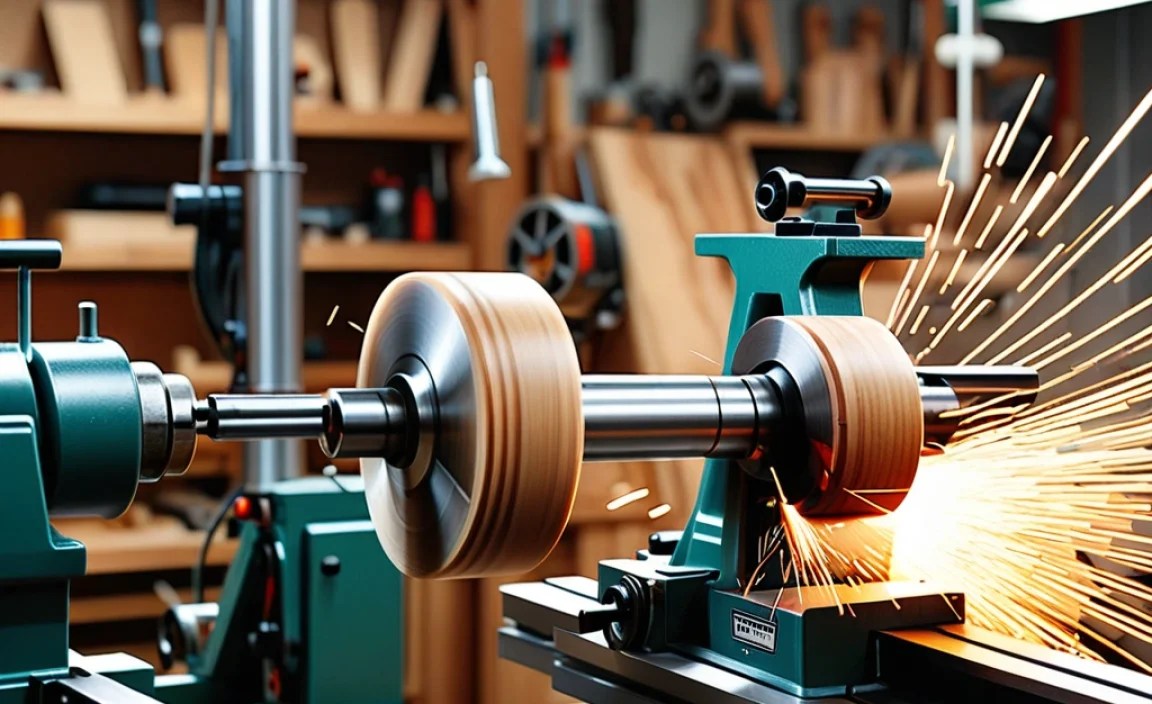
Achieving a great finish isn’t just about the tools; it’s about how you use them. Here’s a general approach that works for many projects, focusing on creating a smooth surface before you hit the sandpaper.
Step 1: Rough Shaping (Briefly Mentioned)
Start with your roughing gouge to establish the basic form. Don’t strive for perfection here; that’s what the finishing tools are for.
Step 2: Refining with Gouges (Shearing Action)
Once the basic shape is roughed out, switch to your spindle gouge (for spindles) or bowl gouge (for bowls).
Spindles: Use a slicing or shearing cut. Present the flute of the gouge at an angle to the wood, using the bevel to guide the cut. Move the tool smoothly along the wood.
Bowls: For the exterior of bowls, use a swept-back cut with your bowl gouge. For the interior, use an angled cut, again aiming for a slicing action.
Focus: Aim to remove the most prominent tool marks left by the roughing gouge. Work your way around the piece, refining the curves and profiles.
Step 3: Using Scrapers for Final Surface Prep
This is where your scrapers really shine. They excel at removing the finer ridges left by gouges.
Round Nose Scraper: For general smoothing and refining curves. Hold it at an angle presenting the burnished edge to the wood. Move it smoothly across the surface, taking light cuts.
Flat Scraper: For flattening areas like bowl bottoms or tenon shoulders.
Hook Scraper: For stubborn marks or tight interior curves.
Technique for Scrapers:
1. Prepare the tool: Ensure your scraper has a clean, sharp wire edge from burnishing.
2. Position: Place the scraper on the tool rest. For most work, orient it so the edge is presented to the wood at a slight angle.
3. Engage: Gently bring the scraping edge into contact with the spinning wood.
4. Cut: Apply light, steady pressure and move the scraper smoothly across the surface. Take very thin “shavings.”
5. Work Systematically: Work your way around the piece, overlapping your passes slightly.
Step 4: Addressing Specific Areas
Tenons and Collars: Use a flat scraper or a sharp spindle gouge to create clean, parallel tenons for chucking or collars for joinery.
Beads and Coves: Detail gouges and small scrapers are excellent for crisply defining these features.
Foot/Base: Ensure the bottom of bowls or the end of spindles are perfectly flat and clean. A flat scraper is ideal here.
Step 5: The Sanding Transition
Once you’ve used your tools to get the surface as smooth as possible, you can transition to abrasives.
Start Coarse (if needed): If there are still some minor imperfections, start with a relatively coarse grit (e.g., 100-120).
Progress Gradually: Move through the grits sequentially (e.g., 150, 220, 320, 400). Avoid skipping grits, as this significantly reduces the effectiveness of the finer grits.
Sanding Technique:
Stop the Lathe (for hand sanding): For critical sanding stages, stopping the lathe and sanding by hand can offer more control and prevent sanding the same spot too much, which can create flat spots.
Moving Sandpaper: If sanding with the lathe spinning, keep the sandpaper moving constantly to avoid creating divots.
Abrasive Cord/Belts: Tools like Abranet sanding discs or abrasive cords can be useful for reaching into tight areas.
Step 6: Final Touches (Oils, Waxes, Finishes)
After reaching your desired grit, apply your chosen finish. This could be a friction polish, wax, oil, or a wiped-on lacquer. Always follow manufacturer instructions.
Understanding Different Tool Steels
The quality of your wood lathe finishing tools significantly impacts their performance and longevity. Most quality turning tools are made from one of a few key types of steel.
1. High-Speed Steel (HSS)
This is the most common type of steel used for turning tools. It’s known for its ability to retain hardness even when subjected to high temperatures generated by friction during. This means HSS tools can maintain their sharp edge longer during a turning session compared to older carbon steels.
Pros: Excellent wear resistance, good heat resistance, readily available.
Cons: Can be more challenging to sharpen than carbon steel if you let it get very dull.
Common Alloys: M2, M42 are popular variants of HSS.
2. Carbon Steel
Older, traditional turning tools were made from carbon steel. While it can achieve an extremely sharp edge, it loses its hardness much faster when heated. This means it can dull more quickly during aggressive turning.
Pros: Can be sharpened to a very fine edge, generally easier to sharpen than HSS.
Cons: Poor heat resistance, dulls quickly under heavy use, prone to rust if not maintained.
3. Powder Metal (PM) Steel
These are advanced steels that combine the wear resistance of Tungsten Carbide with the toughness of HSS. They are typically made through a process that creates a very fine and uniform distribution of carbides within the steel, leading to exceptional edge retention and durability.
Pros: Superior edge retention, excellent toughness, high wear resistance.
Cons: Can be more expensive, and sharpening can require specialized wheels or techniques.
Recommendation: For most beginners and intermediate woodturners, High-Speed Steel (HSS) tools offer the best balance of performance, durability, and cost. Investing in a few quality HSS finishing tools will serve you well.
Troubleshooting Common Finishing Issues
Even with the best tools, you might encounter problems. Here are some common issues and how to fix them:
Issue: Fuzzy or “Fuzzy” Surface After Sanding
Cause: This often happens when you sand too aggressively, with dull sandpaper, or when sanding too slowly and building up heat. It can also occur if the wood is slightly damp.
Solution:
Ensure your sandpaper is sharp and free of loading.
Use a lighter touch and keep sandpaper moving.
For severe fuzz, try a quick pass with a very sharp scraper before resanding, or use a very light sanding pass with 80-100 grit, then re-progress through your grits.
Ensure your wood is thoroughly dry.
Issue: Chatter Marks or Vibration
Cause: This is usually due to a combination of factors:
Dull tools.
Tool rest too far from the workpiece.
Workpiece not securely mounted.
Lathe vibrations.
Wood that is not uniform or has defects.
Solution:
Sharpen your tools! This is the most common fix.
Move the tool rest closer.
Check that your workpiece is mounted securely.
Ensure your lathe is stable and level.
For certain woods or shapes, consider using a slower lathe speed.
Issue: Tool Digging In (Especially with Scrapers)
Cause: This can happen if the scraper’s wire edge is too aggressive, if you apply too much pressure, or if the angle of presentation is incorrect.
Solution:
Re-burnish or lightly hone your scraper.
Reduce the pressure slightly.
Experiment with the presentation angle of the scraper. You “push” or “pull” it at an angle to shear the wood.
Issue: Burning the Wood
Cause: This is almost always caused by friction from a dull tool, too much speed, or the tool staying in one spot for too long.
Solution:**
Sharpen your tools.
Reduce lathe speed.
Keep your tools moving smoothly across the surface.
Ensure your tool rest is close enough to support the tool.
Sanding Strategies: The Bridge to Perfection
While we emphasize the power of finishing tools to reduce sanding, it’s still an essential part of the process for most projects. The goal is to use sanding to refine what your tools have started.
