Wood lathe live center removal is often made simple with the right techniques, preventing damage and frustration. Learn the easiest ways to get your live center off quickly and safely.
Hey woodworkers! Daniel Bates here, your guide from Lathe Hub. Ever get stuck with a live center that just won’t budge on your wood lathe? It’s a common hiccup that can stop your project in its tracks and, worse, potentially damage your tools if you’re not careful. Don’t sweat it! I’ve seen this challenge countless times, and the good news is there are straightforward, reliable methods to free that stubborn live center. We’ll walk through some genius tips that make this task much easier, ensuring you can get back to turning in no time. Let’s make sure your lathe stays happy and productive!
Why Is Live Center Removal Tricky Sometimes?

A wood lathe’s live center, while essential for supporting your workpiece, can sometimes become a wrestling match. This usually happens due to a few common culprits:
- Friction and Heat: As you turn, the live center (and often the workpiece) experiences friction and heat. This expansion can create a tight, almost welded-bond-like grip.
- Wood Swelling: If your work piece absorbs moisture, even slightly, the wood can swell around the live center’s taper, making it incredibly difficult to dislodge.
- Impact and Vibrations: Over time, the constant vibrations and minor impacts during turning can cause the taper to seat itself more deeply and firmly within the tailstock spindle.
- Improper Installation or Removal: Forcing the live center or not using the correct technique during installation can set it up to be a nightmare to remove later.
These factors can make a simple task feel like a Herculean effort. But fear not, a few smart tricks can turn frustration into a smooth operation. We’ll cover the most effective methods, straight from my workshop to yours.
Essential Tools for Live Center Removal

Before we get to the methods, let’s make sure you have the right gear. Having these on hand will make the process go from potentially frustrating to remarkably simple.
The Must-Haves:
- Tailstock Handwheel/Lever: Your lathe’s tailstock assembly is your primary tool here.
- Mallet (Rubber or Wooden): A gentle persuader that often does the trick without damaging anything. Avoid metal hammers at all costs!
- Piece of Wood (Scrap): A simple block can act as a buffer and leverage point.
- Gloves: For a better grip and protection.
- Safety Glasses: Always protect your eyes, even for simple tasks.
For Stubborn Cases (Advanced):
- Prick Punch or Awl: To create a slight tapping point if needed.
- Penetrating Oil (e.g., WD-40, PB Blaster): Can help loosen rust or binding. Use sparingly around wood where possible, or clean thoroughly after.
- Lathe Tool Rest: Can be used for leverage assistance.
- Shop Towels/Rags: For cleanup.
Genius Tip #1: The Tailstock Quake (Gentle Vibration)

This is my go-to for most situations. It leverages the natural movement of your tailstock to break the friction bond.
Step-by-Step:
- Ensure Safety First: Make sure the lathe is off and the power is disconnected. Remove any workpiece.
- Position for Striking: Move the tailstock so the live center is accessible but not hitting anything important.
- Locate the Taper: Identify the point where the live center’s Morse taper shaft meets the tailstock spindle. This is where the friction is.
- Gentle Tapping: Take your rubber or wooden mallet and give the webbing or flange of the tailstock body a few sharp, firm taps. Aim these taps at a slight angle, as if you’re trying to push the tailstock spindle outwards (away from the headstock). The key here is vibration, not brute force.
- Alternative Tapping Point: If tapping the main body doesn’t work, you can try tapping directly and gently on the collar of the live center itself, again aiming to push it outwards. Use a piece of scrap wood as a buffer between your mallet and the live center collar.
- Check for Looseness: After a few taps, try to wiggle or pull the live center out by hand. If it moves even a little, keep wiggling and pull.
- Repeat if Necessary: Sometimes, a few rounds of tapping and wiggling are needed. Don’t get discouraged if it doesn’t pop out on the first try.
This method is fantastic because it uses vibration to shock the metal taper loose without putting excessive stress directly on the live center or the tailstock bore. Think of it like gently rattling something stuck – it often works wonders.
Genius Tip #2: The Leverage Twist
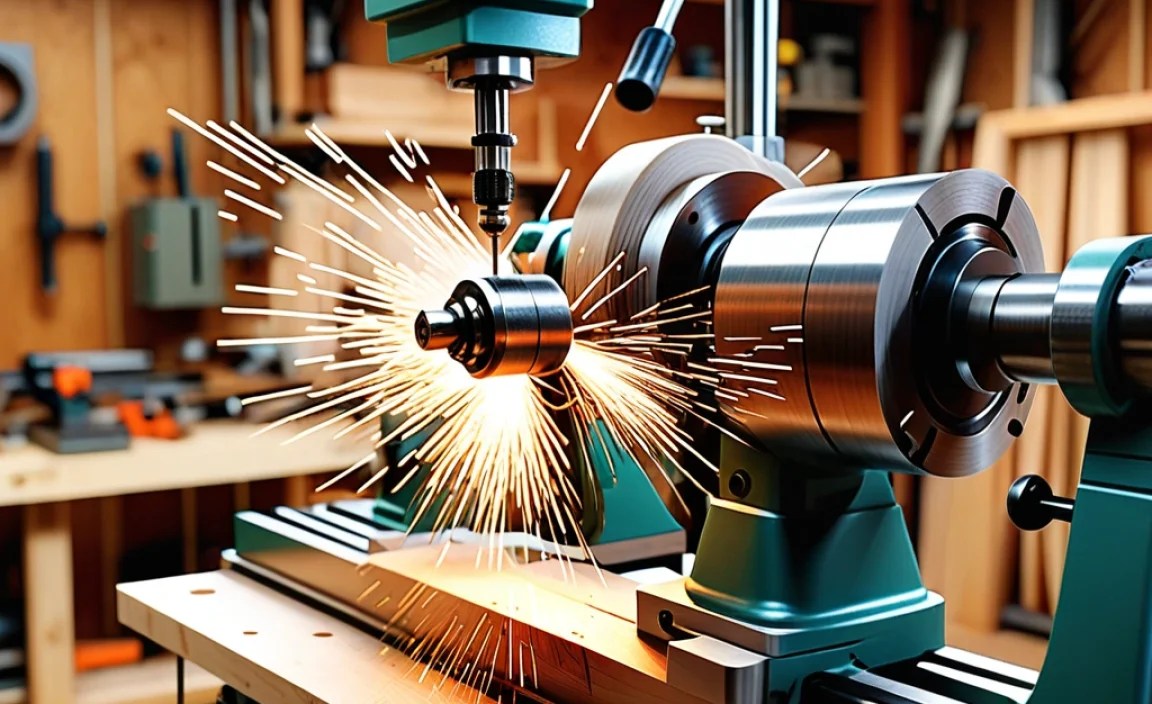
Sometimes, a simple twist combined with a pull is all that’s required. This method uses your body’s natural leverage.
Step-by-Step:
- Turn Off and Secure: Ensure the lathe is completely off and safely unplugged. Remove the workpiece.
- Grip Firmly: Get a solid grip on the live center with one hand. With your other hand, place it on the tailstock handwheel or casting.
- Apply Outward Pressure: While pulling the live center outwards with one hand, gently rotate the tailstock handwheel in the direction that would extend the tailstock. This is crucial – you’re essentially trying to unscrew it slightly while pulling.
- The Twist and Pull: Combine a steady outward pull with a slight twisting motion of the handwheel. The goal isn’t to crank the tailstock fully out, but to create a rotational force that helps break the taper’s grip.
- Coordinate Your Movements: You want to feel the live center loosen as you apply outward pressure and the twist. It can take a bit of coordination.
- Wiggle and Remove: Once you feel any give, continue wiggling and pulling the live center out.
Using the tailstock’s own mechanism to help unscrew the live center is a brilliant way to leverage its design. This is often more effective than just yanking, which can be hard on your wrists and the Morse taper.
Genius Tip #3: The Wood Block Buffer Attack
When direct force is needed, a block of wood acts as a safe intermediary, protecting your live center and tailstock.
Step-by-Step:
- Safety First: Lathe off, power disconnected. Workpiece removed.
- Position the Wood Block: Place a sturdy block of scrap wood against the flange or collar of the live center. Ensure it’s flat against the part you want to push.
- Ready the Mallet: Have your rubber or wooden mallet ready.
- Controlled Strikes: Give the wood block firm, controlled strikes with the mallet. The force is transferred through the wood block to the live center, pushing it outwards.
- Angle Matters: Just like with the tailstock quake, try to strike at a slight angle to encourage outward movement.
- Clear the Path: Make sure you have clearance for the live center to slide out once it breaks free.
- Intermittent Checks: After a few strikes, try to pull the live center out by hand. If it’s still stuck, repeat the process.
This method is a step up in force from the “Tailstock Quake” but remains safe because the wood block absorbs the direct impact of the mallet, preventing dents or deformation of the live center’s critical taper surfaces.
Genius Tip #4: The Penetrating Oil and Tap-Tap-Tap Method (For Really Stuck Centers)
When rust, grit, or extreme binding is the culprit, a little help from penetrating fluid and a more precise tapping technique can work wonders. This is for those truly stubborn cases.
Step-by-Step:
- Safety and Prep: Lathe off, power disconnected. Workpiece removed. Clean the area around the live center and tailstock bore as much as possible.
- Apply Penetrating Oil: Carefully apply a small amount of penetrating oil to the seam where the live center’s taper meets the tailstock spindle. Let it sit for 10-15 minutes. Work the oil in by gently rocking the live center if possible.
- The Prick Punch/Awl Technique: This requires a bit more control. You’ll use a blunt prick punch or a sturdy awl.
- Find a point on the body of the live center near the taper, ideally on an edge that you can strike to push outwards.
- Hold the punch at a slight angle.
- Give the punch a few sharp, firm taps with a small hammer (a ball-peen hammer works well here, but be precise). The goal is to create a shockwave that helps break the seal.
- Work Around the Taper: Move the punch around the circumference of the live center, tapping at different points. Imagine you’re gently trying to “walk” it out.
- Combine with other methods: After tapping, try the “Leverage Twist” or “Wood Block Buffer Attack” again. The penetrating oil and shock could have done enough to loosen it.
- Clean Thoroughly: If you used penetrating oil, ensure you clean the tailstock bore and the live center taper thoroughly with a degreaser and then a light lubricant suitable for lathe use to prevent future rust or binding.
This method requires more care but can be incredibly effective. The penetrating oil works its way into microscopic imperfections, and the focused impact from a punch can break bonds that a mallet can’t. For additional authoritative guidance on Morse tapers and their care, the National Institute of Standards and Technology (NIST) provides valuable information on standards and best practices for tooling systems.
Table: When to Use Which Method
Not all stuck live centers are the same. Here’s a quick guide on choosing the right approach:
| Problem Severity | Recommended Method(s) | Why It Works | Cautions |
|---|---|---|---|
| Slightly Tight | Leverage Twist | Uses lathe’s mechanism for smooth, rotational release. | Requires coordination; don’t force the tailstock too much. |
| Moderately Stuck (Friction/Heat) | Tailstock Quake | Vibration breaks friction bonds effectively and safely. | Use firm, direct raps, not wild swings. |
| Resistant (Needs a Little More Force) | Wood Block Buffer Attack | Controlled impact transfer via a safe buffer. | Ensure good mallet control; protect live center flange. |
| Really Stuck (Rust/Severe Binding) | Penetrating Oil + Tap-Tap-Tap | Breaks corrosion and seating with targeted impact. | Requires precision; clean thoroughly afterward. |
Preventing a Stuck Live Center in the Future
The best way to deal with a stuck live center is to prevent it from getting stuck in the first place! Here are a few proactive habits:
- Keep Tapers Clean: Always ensure both the live center’s Morse taper and the tailstock spindle bore are clean and free of dust, debris, or old grease before installation. A quick wipe with a clean rag usually suffices.
- Light Lubrication: Apply a very thin coat of appropriate lathe lubricant or even a bit of wax when installing the live center. This reduces friction and prevents galling or seizing. For woodworking, avoid greases that can attract sawdust and gunk up. A light machine oil or paraffin wax works well.
- Proper Installation: Insert the live center firmly into the tailstock spindle. Give it a gentle tap with a mallet or block of wood to ensure it’s fully seated. A properly seated taper is less likely to seize.
- Regular Taper Maintenance: Periodically check the condition of your Morse tapers. If you notice any rust, nicks, or damage, address it promptly. For metal lathes, proper taper reconditioning tools exist. For wood lathes, good cleaning and light re-polishing with fine steel wool can help.
- Avoid Over-Tightening: While you want the live center seated firmly, unnecessary force during installation isn’t beneficial and can actually make removal harder.
These simple maintenance steps will save you a lot of headaches down the line and ensure your lathe tools perform reliably every time you use them. For detailed information on Morse taper standards, which are critical for proper fits and function, resources from manufacturers like Army Field Manuals on Tooling (Section 1-1.1 discusses Machine Tool Accessories and their fitting) offer insights into the precision required.
FAQ: Your Live Center Removal Questions Answered
Q1: What exactly is a “live center” and why does it get stuck?
A live center is a rotating point that mounts in the tailstock of a lathe. It supports the end of your workpiece, allowing it to spin freely without the stress on the tailstock spindle. It gets stuck due to friction, heat expansion, wood swelling against the taper, or vibrations causing it to seat very tightly.
Q2: Can I use a metal hammer to get the live center off?
Absolutely not! Using a metal hammer can easily damage the Morse taper on your live center or the bore of your tailstock spindle. Always use a rubber mallet, wooden mallet, or a block of wood as a buffer.
Q3: How much force is too much when trying to remove a live center?
You should never have to use excessive force that risks damaging your lathe. If a method isn’t working, stop and try a different technique or a more advanced one. The goal is to “persuade” it out, not “break” it out. Excessive force can bend the tailstock screw or damage the taper seat.
Q4: What if my live center or tailstock taper is rusty?
For rust, the “Penetrating Oil and Tap-Tap-Tap” method is usually best. Apply penetrating oil, let it soak, then use controlled tapping with a punch to break the rust bond. After removal, clean and re-lubricate both tapers thoroughly to prevent it from happening again.
Q5: Is it okay to spray WD-40 directly into the tailstock bore?
It’s generally better to apply penetrating oil sparingly to the seam between the taper and bore, and let it wick in. If you do use it in the bore, clean it out very thoroughly afterward with a degreaser and then apply a proper cutting fluid or light machine oil for lathes. You don’t want leftover WD-40 attracting dust or interfering with the smooth operation.
Q6: How often should I remove and clean my live center?
It’s a good practice to remove, clean, and inspect your live center and tailstock taper every few months, or whenever you notice issues like sticking or rough turning. Regular light maintenance prevents major problems.
Conclusion: Turning Troubleshooting into Technique
Dealing with a stuck wood lathe live center might seem daunting at first, but as we’ve explored, it’s a common issue with straightforward solutions. By understanding why it happens and having a few “genius essential tips” in your toolkit—from the gentle vibration of the tailstock quake to the precise taps for stubborn cases—you can confidently tackle this task. Remember, safety always comes first. Ensure your lathe is powered off and secure before you begin any adjustment or removal process.
Mastering these techniques not only saves you time and frustration but also helps extend the life of your valuable tools. Keep those Morse tapers clean, lightly lubricated, and properly seated, and you’ll find live centers much easier to manage. Happy turning, and may your projects always spin smoothly!
