Quick Summary: Create a custom, budget-friendly wood lathe polishing kit at home! This guide walks you through essential components and assembly, making it easy to achieve a professional finish on your turned projects without breaking the bank.
Hey everyone, Daniel Bates here from Lathe Hub! Ever finished turning a beautiful piece on your wood lathe, only to struggle with getting that perfectly smooth, professional polish? It’s a common frustration, especially when you’re starting out. Those expensive commercial kits can put a dent in your workshop budget. But what if I told you building your own essential polishing kit is not only possible, but also surprisingly straightforward and rewarding? We’ll break down exactly what you need and how to put it all together, so you can achieve stunning results with confidence. Let’s get your projects shining!
Why Build Your Own Wood Lathe Polishing Kit?

As a fellow tinkerer and machinist, I know the value of a well-equipped workshop. But I also know that specialized tools and kits can add up quickly. For woodworkers, achieving that flawlessly smooth, high-gloss finish can be the difference between a good project and a great one. Store-bought polishing kits often come with a hefty price tag, and sometimes they contain items you don’t really need, or lack something crucial you do. Building your own DIY wood lathe polishing kit from scratch lets you customize it to your specific needs, budget, and the types of finishes you prefer. You gain control over the quality of the materials and can learn so much more about the finishing process. Plus, the satisfaction of creating something yourself that directly enhances your work is unbeatable!
This guide is your roadmap to assembling a practical, effective, and affordable polishing kit. We’ll cover the core components, from abrasive materials to buffing compounds, and how to best utilize them with your wood lathe. You’ll be well on your way to achieving those glass-like finishes in no time.
Essential Components of Your Homemade Wood Lathe Polishing Kit

Putting together a DIY wood lathe polishing kit is all about understanding the stages of refining a surface and the tools that achieve them. Think of it as a progression, moving from coarser imperfections to the finest shine. Here are the key elements you’ll want in your kit:
1. Sandpaper and Abrasive Systems
This is the foundation of your polishing process. The goal here is to gradually remove tool marks and scratches, leaving a progressively smoother surface. You’ll want a range of grits, from coarser ones to tackle initial shaping marks, down to incredibly fine grits for that silken feel. For a wood lathe, it’s crucial to have sandpaper that can conform to curved surfaces.
- Grit Selection: Start with grits around 120-220 to remove any significant marks left from turning tools. Then, move through the grits: 320, 400, 600, 800, 1000, 1500, and even up to 2000 or 3000 grit. The higher the number, the finer the grit and the smoother the finish.
- Types of Sandpaper:
- Standard Sandpaper Sheets/Rolls: These are versatile and can be folded or cut to size. Look for good quality aluminum oxide or silicon carbide papers.
- Sanding Belts (for Oscillating Spindle Sanders or Belt Sanders): If you have these tools, belts offer efficient material removal and can be used to prep turned items.
- Abrasive Buffs/Pads: These are often made with impregnated abrasive material on a non-woven nylon backing. They come in various grits and are excellent for getting into details or for a final pre-polish smoothing. Brands like Alox or similar offer these.
- Sanding Rope/Cord: Especially useful for sanding between the chuck jaws or in tight spots on smaller spindles.
- Pro Tip: For finer grits (800 grit and up), it’s often beneficial to wet sand. This can be done with water, mineral spirits, or a specialized sanding lubricant. Wet sanding helps prevent dust build-up, keeps the abrasive surface clean, and can produce a smoother finish.
2. Buffing Compounds
Once your surface is as smooth as possible with fine abrasives, buffing compounds come into play. These are often a waxy or greasy substance loaded with very fine abrasive particles. They work by further abrading and polishing the surface to a high sheen.
- Types of Compounds:
- Pre-Polish Compound: This is a slightly coarser compound, good for removing very fine scratches left by the highest grit sandpaper you used.
- Color Compound/Super Fine Compound: This is the final step. It contains extremely fine abrasives that bring out the highest possible gloss. Many wood turners use specific brands formulated for wood, like Hut Plastics (often mistaken for wood polish, but excellent fine abrasive compounds) or specialized wood polishing waxes that contain micro-abrasives.
- General Purpose Compounds: Some kits offer a simpler two-step system (e.g., one for cutting, one for finishing).
- Application: Compounds are typically applied to a buffing wheel or pad. You can apply a small amount to the wheel, and then hold your workpiece against the spinning wheel.
3. Buffing Wheels and Pads
These are the workhorses that carry the buffing compound to your workpiece. The material and construction of the buffing wheel significantly influence the finish. For wood lathes, you’re usually looking for softer, flexible materials that can conform to the shape of the wood.
- Types of Buffing Wheels:
- Cotton Flannel Buffs: These are very popular for wood. They are soft and flexible, allowing them to conform to the workpiece and hold compounds well. They are great for achieving high gloss. Look for sewn or loose-leaf cotton buffing wheels.
- Foam Buffing Pads: Similar to those used in automotive detailing, these can be effective for applying polishes and waxes, especially for flatter surfaces or smaller turned items.
- Felt Buffs: These can be a bit stiffer than cotton and are often used with coarser compounds or for initial polishing stages.
- Sisal Buffs: These are stiffer and more abrasive, typically used with cutting compounds for metal or very rough wood finishes. They are less common for final wood polishing but can be useful in certain stages.
- Arbor Adapters: Ensure you have the correct arbor adapter to fit your wood lathe’s spindle and the bore size of your buffing wheels.
- Safety Note: Always wear safety glasses when buffing. The friction can generate heat and can fling compound or small particles.
4. Application Tools and Accessories
These are the supporting cast that make the polishing process smoother and more effective.
- Clean Cloths: Plenty of soft, lint-free cloths (microfiber is excellent) are needed for wiping away dust and excess compound between steps, and for final buffing.
- Masking Tape: Useful for protecting areas you don’t want to sand or polish, or for holding sandpaper in place.
- Small Brushes: For cleaning dust from intricate turned details.
- Spray Bottle: If you plan on wet sanding or using spray finishes/lubricants.
- Face Shield: For maximum eye and face protection, especially when buffing.
- Dust Mask/Respirator: Essential for any sanding operation, and recommended for buffing to avoid inhaling fine dust and compound particles.
Assembling Your DIY Wood Lathe Polishing Kit: Step-by-Step

Now let’s put it all together. The process of assembling your kit mirrors the polishing process itself: preparation, intermediate steps, and the final shine.
Step 1: Gathering Your Abrasives
Start by acquiring your sandpaper. If you’re buying in bulk, consider a variety pack or individual sheets/rolls of the grits listed previously. Store them in a way that keeps them flat and undamaged, perhaps in a portfolio or a sturdy box. For convenience, pre-cut some sheets into manageable sizes, or consider using PSA (Pressure Sensitive Adhesive) sandpaper which can be cut into strips and applied to a sanding block or foam pad.
Step 2: Selecting Your Buffing Wheels and Adapters
Choose one or two types of buffing wheels that best suit the work you do. For most woodturners, a couple of cotton flannel buffing wheels are a great starting point. Ensure you have an appropriate arbor adapter that securely mounts to your lathe’s spindle. Check your lathe’s manual for spindle thread size and taper. Many lathes use a standard Morse taper, but thread sizes can vary.
Step 3: Acquiring Buffing Compounds
Do some research on highly-regarded wood polishing compounds. Read reviews from other woodturners. A good starter strategy is to get a two-part system: a “cut” compound and a “finish” or “super fine” compound. Avoid compounds with harsh solvents if you’re concerned about the finish reacting badly with your sealant or oil.
Step 4: Organizing Your Kit
Invest in a sturdy container for your kit. A small toolbox, a compartmentalized storage bin, or even a durable canvas bag will work. Group similar items together:
- Compartment 1: Sandpaper of all grits.
- Compartment 2: Buffing compounds and applicators.
- Compartment 3: Buffing wheels and arbor adapters.
- Compartment 4: Cleaning cloths, brushes, and safety gear.
Labeling compartments can be very helpful, especially when you’re starting out.
Step 5: Initial Test Run
Before tackling a valuable piece, grab a scrap piece of wood similar to your project. Practice the entire sanding progression and buffing process. This will help you get a feel for the pressure, speed, and technique needed for each step. It’s also a great way to troubleshoot any issues before they affect your actual project.
Practical Considerations and Safe Usage
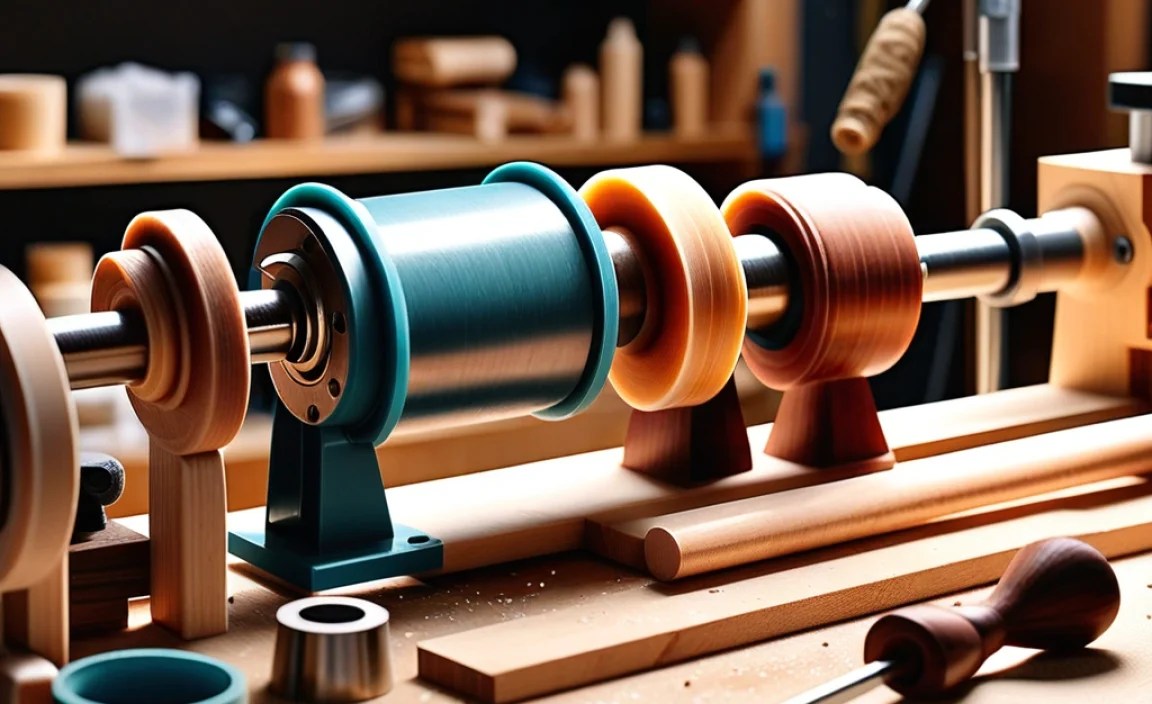
Working with any lathe, especially during sanding and buffing, requires a strong emphasis on safety. Rotating machinery can be dangerous if not treated with respect.
| Safety Gear | Why It’s Important |
|---|---|
| Safety Glasses/Face Shield | Protects eyes from flying debris, dust, and buffing compound. A full face shield offers more comprehensive protection. |
| Dust Mask/Respirator | Crucial for preventing inhalation of fine wood dust and particles from compounds. |
| Hearing Protection | Lathes and associated equipment can be noisy. |
| Secure Clothing | Avoid loose sleeves, dangling jewelry, or long hair that can get caught in rotating parts. |
Wood Lathe Speed Recommendations
Speed is critical when sanding and buffing on a wood lathe. Generally:
- Sanding: Start with lower speeds, especially when using coarser grits. As you move to finer grits, you can often increase speed slightly, but always keep it well below the speed you would use for turning. A good rule of thumb for sanding is to keep the surface speed to a point where you can comfortably hold your hand near (but not touching) the rotating surface without feeling excessive heat. Many sources recommend speeds between 500-1500 RPM for sanding, depending on the grit and wood type.
- Buffing: Buffing often requires higher speeds than sanding to be effective. However, excessive speed can generate too much heat, potentially scorching the wood or melting some compounds. A good starting point for buffing with cotton wheels is often between 1500-2500 RPM. Always start at a lower speed and increase gradually while observing the workpiece.
Always consult your wood lathe’s manual for specific speed recommendations regarding attachments and operations like sanding and buffing.
Techniques for Effective Sanding and Buffing
- Sanding:
- Work through your grits sequentially. Never skip a grit, as you’ll be trying to sand out scratches left by a coarser grit.
- Apply light, consistent pressure. Let the sandpaper do the work.
- Move the sandpaper across the surface, rather than holding it stationary for too long, to avoid creating flat spots or burn marks. For spindle turnings, running sandpaper down the length of the workpiece is often effective.
- For bowls, move the sandpaper across the face of the bowl.
- Clean your sandpaper frequently by brushing it or using a rubber sanding block, especially as you move to finer grits.
- Buffing:
- Apply compounds sparingly to the buffing wheel. Let the wheel spin for a moment to distribute the compound.
- Hold the workpiece gently against the spinning buffing wheel. Move the workpiece around to ensure even coverage and avoid staying in one spot.
- Allow the workpiece to cool between passes if it becomes warm.
- Use separate buffing wheels for different compounds to prevent cross-contamination. Label them clearly.
- For a final buff by hand, a soft microfiber cloth can be used with a specialized paste wax or just for some light friction buffing.
Advanced Techniques and Enhancements

Once you’ve mastered the basics, your DIY kit can evolve. Consider these additions and techniques:
- Specialized Abrasives: Explore various abrasive systems like abrasive cords for intricate details, or foam-backed finishing pads for controlled pressure on curved surfaces.
- Water-Based Finishes: Some modern wood finishes are water-based and can be applied and buffed using specific techniques. Research these if you’re looking for eco-friendlier options.
- Shellac and Friction Polishes: Traditional friction polishes often involve applying a finish (like shellac or a specialized paste) and then buffing it vigorously with a cloth or paper on the spinning lathe. This creates a very quick, high-gloss finish. Your kit’s fine cloths and possibly a buffing compound can be adapted for this. For step-by-step guidance on friction polishing, resources like Woodworking For Mere Mortals offer excellent advice.
- Micro-Mesh® or Similar Abrasive Systems: For an ultra-high gloss finish, consider investing in a multi-step abrasive system like Micro-Mesh®. These kits contain very fine abrasive cloths in a wide range of grits, designed for achieving mirror-like finishes, often used by luthiers and model makers.
- DIY Buffing Compound Recipes: Some ambitious DIYers experiment with making their own buffing compounds by mixing very fine abrasives (like cerium oxide or jewelers rouge) with a binder like beeswax or carnauba wax. This requires careful research and testing to ensure the abrasives are fine enough and compatible with wood.
FAQ: Your Wood Lathe Polishing Questions Answered
Q1: What is the most important thing to have in a homemade wood lathe polishing kit?
A1: The most critical components are a comprehensive range of sandpaper grits, from around 220 up to at least 1000 grit, and at least one good quality buffing compound suitable for wood. These allow you to progressively smooth the surface and then enhance its sheen.
Q2: Can I use automotive polishing compounds on my wood projects?
A2: Some very fine automotive polishing compounds can be used on wood, especially for the final gloss stage. However, many automotive compounds are designed for paint and clear coats and may contain chemicals that could react with certain wood finishes or sealants. It’s generally safer and more predictable to use compounds specifically formulated for wood.
Q3: How do I prevent burning the wood when buffing?
A3: Use moderate pressure and keep the workpiece moving. If you’re applying too much pressure or keeping one spot against the buffing wheel for too long, friction will build up and scorch the wood. Also, ensure your buffing wheel is clean; a dirty wheel can clog and generate excess heat.
Q4: What’s the difference between wet sanding and dry sanding on wood?
A4: Dry sanding can create a lot of fine dust. Wet sanding (using water, mineral spirits, or a lubricant) helps to keep the abrasive clean, reduces dust, lubricates the surface, and can often produce a smoother finish. It’s generally recommended for the finer grits (600 grit and above).
Q5: How many buffing wheels do I really need?
A5: For a basic kit, one or two cotton flannel buffing wheels are sufficient. It’s best practice to dedicate one wheel per compound (one for your pre-polish, one for your final polish) to avoid contamination. If you only have one, clean it thoroughly between compounds.
Q6: Can I use my wood lathe polishing kit on metal?
A6: While some of the abrasive principles are similar, wood and metal require different tools and compounds. The soft, flexible wheels and compounds for wood are generally not aggressive enough for metal. For metal, you’d typically use stiffer sisal and airway buffs with specific metal polishing compounds.
