Discover the secrets to a stunning wood bowl finish using polishing wax on your wood lathe. Achieve a brilliant, durable shine with simple steps, perfect for beginners. This guide simplifies the process, ensuring a professional look for your turned creations.
Are you dreaming of those mirror-smooth, gleaming wood bowls you see in craft shows? Maybe you’ve tried finishing your own turned pieces, but they just don’t seem to have that special ‘wow’ factor. You’re not alone! Getting a truly brilliant finish on a wood bowl can feel like a bit of a mystery. Different finishes can be confusing, and sometimes the results are less than stellar, leaving you frustrated. But don’t worry, achieving that essential brilliance is simpler than you think. It all comes down to understanding the right materials and a straightforward process. We’re going to walk through exactly how to use wood lathe polishing wax for bowls, making it easy for you to achieve professional-looking results. Get ready to transform your turned creations from good to absolutely gorgeous.
Why Wood Lathe Polishing Wax is Your Secret Weapon


When it comes to finishing wood bowls, there are many options. You might have experimented with oils, lacquers, or other sealants. While these can create a nice finish, polishing wax offers a unique set of advantages, especially for beginners. It’s forgiving, easy to apply, and can produce a deep, lustrous shine that feels wonderfully smooth to the touch. Unlike some finishes that soak into the wood or form a thick film, a good quality wood lathe polishing wax hardens slightly, providing a protective layer that enhances the natural beauty of the wood grain.
Think of it as the final polish on a classic car. It brings out the depth, the color, and the subtle variations in the wood. For bowls, which are often appreciated for their tactile qualities as much as their visual appeal, a waxed finish feels fantastic. It’s also generally a very safe finish, often made from natural ingredients like beeswax or carnauba wax, which are non-toxic once cured. This makes it an excellent choice for items that might come into contact with food (though always check the specific product’s safety data). Proper application on a lathe ensures an even coat and that beautiful, consistent sheen. We’ll cover the best practices, tools you’ll need, and the step-by-step process to get that essential brilliance.
Understanding Wood Lathe Polishing Wax

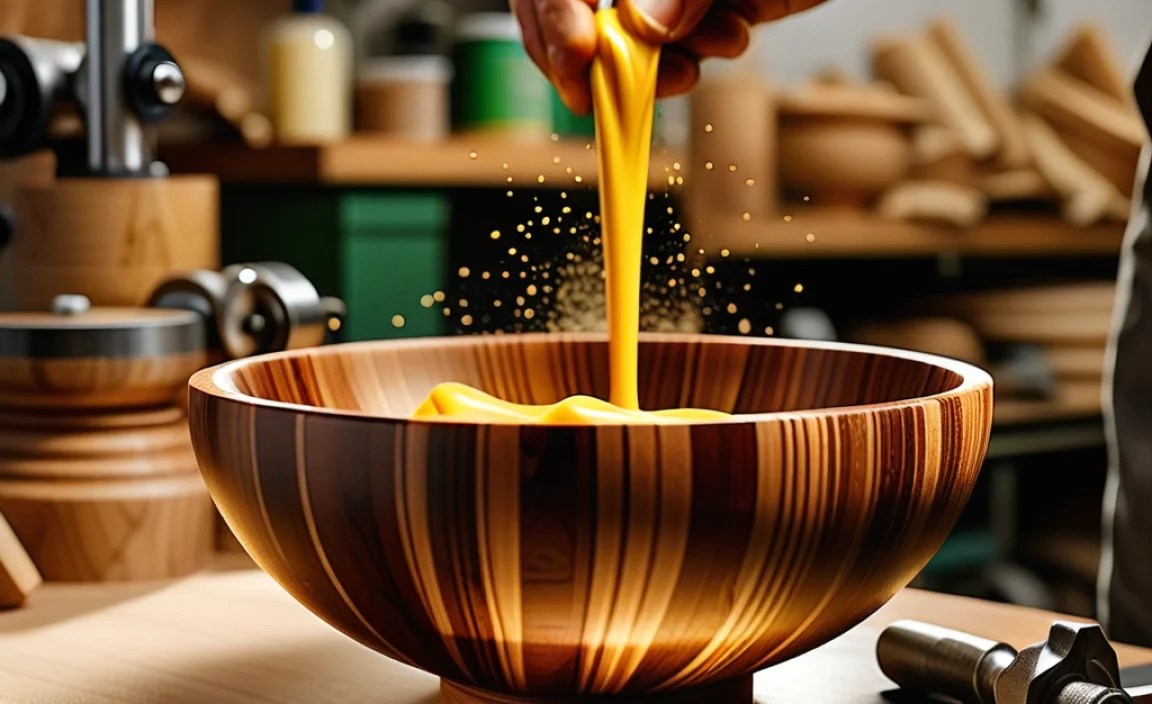
So, what exactly is this magic stuff? Wood lathe polishing wax is typically a blend of hard waxes, soft waxes, and sometimes solvents to make it workable. The star ingredients are usually:
- Beeswax: A natural, softer wax that imparts a lovely sheen and a pleasant aroma. It’s relatively soft and can be prone to scratching if not combined with harder waxes.
- Carnauba Wax: This is a very hard wax derived from a Brazilian palm tree. It’s one of the hardest natural waxes available, providing excellent durability, water resistance, and a high-gloss finish. It’s often the key to that deep, brilliant shine.
- Solvents: Ingredients like mineral spirits or naphtha are often added. They help to dissolve the waxes, making them easily spreadable and allowing them to penetrate the wood surface slightly before evaporating. This also means the wax dries to a hard finish.
You’ll find waxes pre-mixed in convenient forms, like cakes, pastes, or even liquids. For woodturning, paste or cake waxes are most common. They’re designed to be applied while the lathe is spinning, allowing centrifugal force and friction to melt the wax and spread it evenly across the bowl’s surface. The evaporation of the solvent leaves behind a hard, protective, and beautiful layer of wax.
Types of Wood Lathe Polishing Waxes
While the core ingredients remain similar, waxes can vary. Here’s a quick breakdown:
- All-Purpose Lathe Wax: These are great all-rounders, suitable for most wood types and projects. They strike a good balance between ease of use and a durable finish.
- High-Gloss Waxes: Often containing a higher percentage of carnauba, these are formulated to achieve that deepest, most reflective shine.
- Beeswax-Based Blends: Prioritizing natural ingredients, these might offer a slightly softer sheen but a wonderfully smooth feel and natural scent.
- Color-Tinged Waxes: Some waxes include pigments to subtly enhance or deepen the wood’s natural color, adding another layer of richness to the finish.
For beginners focusing on ‘essential brilliance,’ an all-purpose lathe wax is usually the best place to start. It’s forgiving and provides excellent results without being overly complicated.
Essential Tools and Materials

Before you can achieve that brilliant finish, you need the right gear. Thankfully, you likely already have most of what you need if you’re working with a wood lathe. Here’s a checklist:
| Item | Description | Why You Need It |
|---|---|---|
| Wood Lathe | Your turning machine. | The platform for turning and applying wax. |
| Bowl | Your finished turned piece. | The star of the show! Ensure it’s sanded smooth. |
| Wood Lathe Polishing Wax | Your chosen wax product. | The key ingredient for achieving brilliance. |
| Paper Towels / Shop Rags | Clean, lint-free material. | For applying, buffing, and removing excess wax. |
| Sandpaper (various grits) | From ~120 up to 400 grit or finer. | Crucial for preparing the wood surface before waxing. |
| Optional: Micro-mesh or Polishing Pads | Specialized abrasive pads. | For achieving an ultra-smooth surface before waxing, if desired. |
| Optional: Dust Mask & Safety Glasses | Standard personal protective equipment (PPE). | Always protect yourself from dust and debris. |
| Optional: Bench Apron | For protecting your clothes. | Wax and wood dust can be messy. |
The most critical step before waxing is proper sanding. A waxed finish will highlight any imperfections in the wood surface. So, if your sanding isn’t thorough, the wax will simply magnify those scratches. Aim to sand your bowl through at least 320 or 400 grit. Some woodturners even go up to 600 or 800 grit, or use specialized abrasive systems like Micro-mesh, to achieve an incredibly smooth surface that allows the wax to truly shine.
Step-by-Step Guide: Applying Wood Lathe Polishing Wax
Now for the exciting part! Let’s get that bowl gleaming. This process is designed to be straightforward and effective, even for your first attempt.
Step 1: Prepare Your Workspace and Bowl
First, ensure your lathe is in good working order, clean, and that you have adequate lighting. This is your chance to review safety procedures. Put on your safety glasses and dust mask. Make sure your bowl is securely mounted on the lathe. Give the exterior of the bowl a final inspection. Is it smooth? Are there any tool marks or dust remaining? If you sanded up to 400 grit, you’re likely in good shape. If you notice any rough spots, address them with finer grit sandpaper. A clean surface is paramount for a flawless wax finish.
Step 2: Initial Sanding (If Not Already Done)
Even if you think you’ve sanded enough, a quick pass is often worthwhile. I like to use a random orbital sander at very low speeds for the initial stages, but power sanding tools can create dust. If you’re working with sandpaper by hand, start around 150-220 grit to remove any major imperfections, then progressively move up.
Here’s a common sanding progression:
- 150 Grit: Removing tool marks and shaping imperfections.
- 220 Grit: Smoothing out the 150 grit scratches.
- 320 Grit: Further smoothing, preparing for finer grits.
- 400 Grit: Achieving a very smooth surface.
- (Optional) 600-800 Grit or Micro-mesh: For that extra-deep, mirror-like finish.
Ensure you sand with the grain as much as possible, especially on flatter areas. For curved surfaces, gentle, consistent pressure will do. The goal is a uniform smoothness across the entire exterior of the bowl. Remove all dust thoroughly with a tack cloth or a slightly damp paper towel after your final sanding. Let it dry completely. Any residual dust or oil will prevent the wax from adhering properly.
Step 3: First Wax Application – Gentle Melting
Turn your lathe on at a slow speed. You don’t need high RPMs for this. Hold your cake or paste wax against the spinning surface of the bowl. Just a light touch is needed. As the bowl rotates, the friction will generate a little heat, melting a thin layer of wax onto the surface. Don’t try to coat the entire bowl perfectly in one go. The idea is to get a light, even coat of melted wax distributed across the surface. Keep the wax moving to avoid building up too much in one spot.
After this light first pass, turn off the lathe. Take a clean paper towel or soft cloth and gently spread this melted wax around. You are essentially beginning to buff it in. This initial application fills the microscopic pores of the wood and starts the polishing process.
Step 4: Second Wax Application – Building Layers
Turn the lathe back on, again at a slow to medium speed. This time, apply the wax a bit more liberally, but still in a controlled manner. You’re looking to build up a thin, even layer over the entire exterior. You’ll notice the wax starting to melt and spread more easily due to the initial coat. Keep the wax moving across the surface in long, sweeping motions. The goal is not to create a thick, goopy layer, but a consistent film. If you see any areas where the wax looks clumpy or uneven, simply keep moving the wax product over those areas.
Once you feel a decent layer is applied and distributed, turn your lathe off. Now, take a clean section of your paper towel or shop rag and start buffing. Use moderate pressure in circular motions. You’ll feel the wax begin to resist slightly as it starts to set up. This buffing action is what starts to bring out the shine. You’re essentially polishing the wax itself, which in turn polishes the wood beneath it.
Step 5: Buffing and Curing
This is where the “brilliance” really starts to show. Continue buffing the bowl, turning the paper towel to a clean section frequently. As you buff, the friction generates gentle heat, which helps to further melt and spread the wax, and then polishes it to a shine. You’ll notice the surface transforming from a dull, waxy look to a distinct sheen. Don’t be afraid to use a bit of elbow grease here. The more you buff, the shinier it gets!
After a good buffing session, it’s beneficial to let the wax cure. Turn the lathe off completely, and let the bowl sit for anywhere from 30 minutes to a couple of hours, depending on the wax product and room temperature. Curing allows the solvents to fully evaporate and the wax to harden, creating a more durable and scratch-resistant finish. A well-cured wax finish is significantly more resilient than a freshly applied one.
Step 6: Final Buff and Inspection
Once the wax has had a chance to cure, give it a final buff. Use a clean, soft cloth (a fresh paper towel or a dedicated soft buffing cloth works well). You can lightly spin the lathe at a slightly higher speed for this final buffing step if you wish, but it’s not strictly necessary. You’ll be amazed at how much more shine you can bring out with this final polishing. The surface should feel smooth as glass and have a lovely depth and luster.
Inspect your masterpiece. There should be no streaks, no dull spots, and the wood grain should be beautifully enhanced. Congratulations, you’ve achieved essential brilliance on your wood bowl using lathe polishing wax!
Tips for Achieving the Best Shine
Getting that perfect, deep shine isn’t just about following steps; it’s also about a few little tricks:
- Always Start with a Smooth Surface: I can’t stress this enough. Sanding is 80% of the finish. If you skimp here, the wax won’t look its best.
- Apply Thin, Even Coats: Resist the urge to glob it on. Multiple thin layers are always better than one thick, uneven layer.
- Vary Lathe Speed: Lower speeds are great for initial application and melting, while slightly higher speeds can be used for the final buffing to generate more friction and shine.
- Use Clean Cloths: Swapping to a fresh section of your paper towel or rag frequently prevents you from spreading dust or old wax back onto the surface you’re trying to polish.
- Work in a Clean Environment: Wood dust is everywhere in a workshop. Try to wipe down the bowl and your workspace before waxing to avoid embedding dust into the finish.
- Don’t Rush the Curing: Patience pays off. Letting the wax cure properly makes it much more durable and easier to get a brilliant shine.
- Consider Multiple Waxes: For advanced users, sometimes applying a harder wax (like carnauba-based) over a slightly softer wax (like beeswax-based) can offer both durability and a. beautiful feel.
For those interested in understanding wood finishes more deeply, resources like the Forest Products Laboratory provide valuable research on wood properties and treatments.
Pros and Cons of Using Wood Lathe Polishing Wax
Like any finishing technique, wax has its advantages and disadvantages. Understanding these will help you decide if it’s the right choice for your project.
Pros:
- Easy to Apply: Especially on a lathe, the application process is straightforward, making it ideal for beginners.
- Enhances Natural Beauty: Wax doesn’t hide the wood grain; it accentuates it, bringing out depth and color.
- Smooth, Tactile Feel: The resulting finish is incredibly smooth and pleasant to touch.
- Non-Toxic (Generally): Many waxes are made from natural ingredients and are considered safe for many uses once cured. Always check product labels.
- Repairable: Minor scratches or dull spots can usually be buffed out or re-waxed easily.
- Quick Drying/Curing: Solvents evaporate relatively quickly, allowing for a finished project in a reasonable timeframe.
- Affordable: Lathe waxes are generally not expensive, providing a cost-effective way to achieve a high-quality finish.
Cons:
- Not Highly Durable: Compared to modern film finishes like polyurethane or lacquer, wax can be less resistant to heat, water, and abrasion.
- Can Be Marred by Heat: Hot items placed directly on a waxed surface can soften or damage the finish.
- Requires Reapplication: Over time, the wax layer will wear down, especially on frequently used items, requiring periodic re-waxing.
- Not Waterproof: While some waxes offer water resistance, they are generally not considered a waterproof finish.
- Susceptible to Solvents: Harsh cleaning chemicals can dissolve or damage the wax finish.
For decorative bowls, display pieces, or items that won’t be subjected to extreme conditions, the pros of a waxed finish heavily outweigh the cons. It’s a fantastic way to showcase beautiful wood.
Common Beginner Mistakes and How to Avoid Them
Even with a simple process, there are a few pitfalls beginners can stumble into. Here’s how to steer clear:
- Insufficient Sanding: As we’ve said, this is the number one killer of a good wax finish. Always sand thoroughly.
- Applying Too Much Wax: Excessive wax leads to a gummy, uneven finish that’s hard to buff. Think thin and even.
- Buffing Too Soon or Not Enough: There’s a sweet spot. Buffing too early can smear the wax; not buffing enough leaves it dull. Wait for it to set slightly or buff vigorously to achieve shine.
- Using Dirty Rags: Lint and dust embedded in your buffing cloth will transfer to the bowl, creating imperfections.
- Rushing the Curing Process: If you try to use or heavily handle the bowl too soon.
