Learn how to set up a reversible motor on your wood lathe affordably. This guide makes reversing your lathe simple, enhancing efficiency and expanding your creative possibilities without breaking the bank. Get ready to turn in both directions with ease.
Hey there, fellow shop enthusiasts! Daniel Bates here, your guide from Lathe Hub. Ever found yourself wishing your wood lathe could spin the other way? Maybe you’re wrestling with a tricky cut, or you just want to experience the smoother finish that reverse turning can offer. Many beginners run into this early on, and it can feel like a roadblock. The good news is, adding a reversible motor setup doesn’t have to be complicated or expensive. Today, we’re going to walk through an affordable way to get your wood lathe spinning both ways, making your turning sessions more versatile and enjoyable. Let’s get your lathe working smarter, not harder!
Why Reverse? The Unexpected Benefits of a Reversible Wood Lathe

At first glance, spinning your wood lathe only one way seems perfectly adequate. After all, that’s how most beginner lathes are set up, and you can certainly create beautiful things that way. However, as you gain experience and tackle different types of projects, you’ll discover that the ability to reverse your lathe’s direction opens up a whole new world of possibilities. It’s not just a fancy feature; it’s a practical upgrade that can significantly improve your turning experience and the quality of your work.
One of the most immediate benefits is for finishing. When you turn wood in the conventional direction, the cutting edge of your tool tears fibers away from the wood. For certain woods, especially those with challenging grain patterns, this can lead to tear-out, fuzzy surfaces, and frustrating sanding sessions. By reversing the motor, you can make your final scraping or shearing passes against the grain. This technique, often called “cutting into the grain,” can leave a remarkably smooth surface that requires minimal sanding. Think of it like combing tangled hair – sometimes you need to go against the flow to get it smooth!
Beyond finishing, a reversible motor is a game-changer for specific projects. Creating perfectly symmetrical bowls, for instance, becomes much easier when you can use a gouge or scraper to smooth both the inside and outside curves in both directions. This is particularly helpful when dealing with the bottom of a bowl, where a conventional cut might leave an unsightly line. For turning spindles, especially those with intricate details or fine threads, reversing the lathe can provide better control and a cleaner cut. Imagine threading, where a conventional tool might snag, being smoothly achieved by reversing the direction. It allows for a more controlled and less aggressive cut, minimizing the risk of chipping or splintering delicate areas.
Furthermore, some specialized turning techniques, like jam chucking or certain types of segmenting, benefit from the ability to reverse. It can make mounting and working on awkwardly shaped pieces more manageable. This versatility means you’re not limited by your lathe’s capabilities; instead, your lathe becomes a more adaptable tool that can help you achieve your creative vision. For those working with delicate woods or those that are prone to splitting, the ability to make very light finishing cuts in reverse can be crucial for avoiding damage.
Understanding Your Lathe’s Motor and Control Options

Before we dive into the “how-to,” it’s essential to understand the heart of your wood lathe: the motor and its controls. Most entry-level and many mid-range wood lathes use AC induction motors. These motors are generally reliable and offer good power for their size. The way these motors are controlled dictates whether your lathe can easily be made reversible.
Types of Motor Control on Wood Lathes:
- Basic On/Off Switch: This is the simplest setup. The motor spins in one direction only. To reverse, you’d physically need to rewire the motor, which is often complex and not recommended for beginners.
- Belt-Driven Lathes with Stepped Pulleys: Many older or simpler lathes rely on changing the belt position between pulleys of different sizes to alter speed. These almost always run in a single direction.
- Variable Speed Controls (Mechanical): Some lathes use a mechanical system (like a friction drive or a variator) to change speed. These usually still spin in one direction.
- Variable Speed Controls (Electronic/Digital): This is where things start to change. Many modern lathes, especially those with a digital display for speed, use electronic speed controllers. These controllers often incorporate a forward/reverse switch. If your lathe already has an electronic speed controller with a forward/reverse switch, you’re in luck! You might already have the capability, or a simple upgrade might be possible.
When considering a reversible motor setup, we’re usually looking at lathes that either have an existing electronic speed controller that can be modified or replaced, or a basic motor that we can connect to a robust speed controller that does offer reversing capabilities.
The key component for reversibility in an electronically controlled lathe is the ability of the controller to change the motor’s phase rotation. For AC induction motors, reversing the direction of rotation is achieved by swapping any two of the three wires that supply power to the motor. A good electronic speed controller will have a built-in mechanism, often a simple toggle switch or a button, to accomplish this electronically. This is by far the safest and most user-friendly method. If your lathe doesn’t have this, we’ll explore how to add it.
The Affordable Upgrade Path: Adding a Reversing Controller
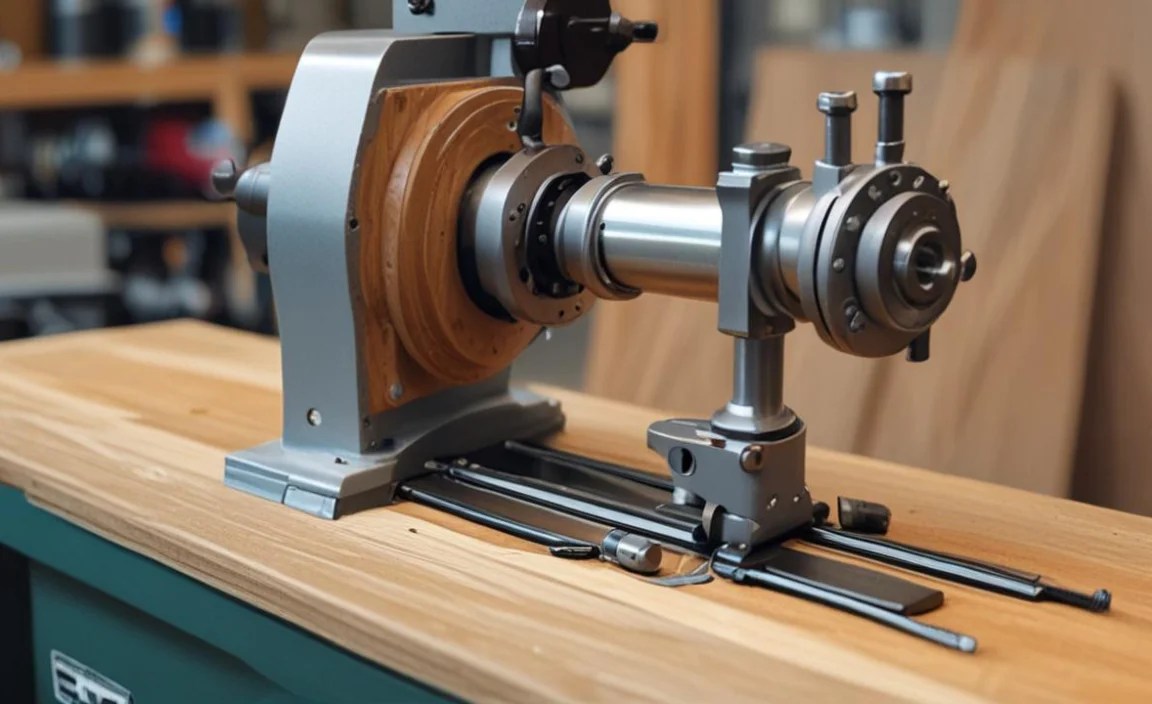
For many hobbyists, the goal is to get reversible functionality without spending hundreds or even thousands of dollars on a brand-new lathe. The most cost-effective way to achieve this is by adding a standalone electronic speed controller that specifically offers a reverse function. This approach bypasses the need to replace your entire lathe or its motor.
Choosing the Right Controller: Key Features to Look For
- Reversing Capability: This is non-negotiable. Ensure the controller explicitly states it supports forward and reverse operation for AC induction motors.
- Motor Compatibility: Check the amperage and voltage ratings of the controller against your lathe’s motor. It needs to be able to handle the power draw of your motor safely. Common wood lathe motors are 1/2 HP to 2 HP.
- Speed Control: While the primary goal is reverse, good speed control is essential. Look for smooth, consistent speed adjustment.
- Ease of Installation: While some electrical work is expected, look for controllers with clear wiring diagrams and straightforward connections.
- Durability and Safety Features: Overcurrent protection, thermal overload protection, and a sturdy enclosure are all important for longevity and safe operation.
- Cost: This is our primary focus. Look for reputable brands that offer good value. We’re aiming for solutions that are significantly less than a new lathe.
One popular and often affordable option for this type of upgrade is using a dedicated Variable Frequency Drive (VFD). While VFDs are commonly associated with metalworking machines, many smaller, single-phase input VFDs can be adapted for wood lathe motors. For example, a common setup uses a 1.5kW (2 HP) single-phase input, three-phase output VFD. This type of VFD is designed to take standard household single-phase power and convert it into a variable three-phase output to control a three-phase motor. However, most wood lathes come with single-phase AC induction motors. If your motor is a standard single-phase AC induction motor, a VFD might not be the direct answer unless you’re willing to swap your motor for a three-phase one (which adds cost and complexity). More on this later!
A more direct approach for single-phase motors involves using a specific type of electronic speed controller designed for AC induction motors that incorporates reversing functionality. These are often simpler than full VFDs but achieve the same goal of controlled forward and reverse operation. You can find these controllers from various online suppliers specializing in workshop equipment. Companies like Grizzly Industrial, Laguna Tools, or even specialized electronics suppliers might carry suitable options. Always double-check the specifications to ensure they match your motor’s requirements.
Example of a Controller Type:
Consider a “Wood Lathe Reversing Control Box” from a reputable supplier. These are often pre-wired or come with clear instructions for connecting to your motor and your existing power switch. They typically include a toggle switch for reversing and a dial for speed control.
Steps to Install a Reversible Motor Controller
This is where we get hands-on. Remember, safety is paramount when working with electrical components. If you’re not comfortable with basic wiring, it’s always best to enlist the help of a qualified electrician or a friend who is experienced.
Step 1: Safety First – Disconnect Power!
Before touching any wires or components, ensure your lathe is completely unplugged from the power source. Double-check that the switch is off and the plug is out of the wall. It’s good practice to tape over the plug or switch to prevent accidental power-up.
Step 2: Identify Your Motor and Existing Wiring
Open up the electrical enclosure on your lathe. This is usually a panel at the back or base of the machine. You’ll need to identify:
- The Motor: Locate the terminal box on your motor.
- Power Input: Where the main power cord enters the lathe’s electrical system.
- Existing Switch/Controls: How the motor is currently turned on and off, and how the speed is controlled (if applicable).
- Motor Wires: The wires connecting the power input and any existing controls to the motor. Note how they are connected. For a typical single-phase AC motor, you’ll see at least two, often three or four wires going to the motor itself, depending on whether it has start/run capacitors.
Take clear photos of your existing wiring before you disconnect anything. This is your roadmap.
Step 3: Select and Prepare Your New Controller
You’ll need a controller that is designed for your motor’s horsepower and voltage. Many affordable reversing controllers are sold as a unit that includes a new speed control dial and a reverse switch. You’ll also need appropriate gauge wire, wire nuts, and possibly a new enclosure if the controller doesn’t come integrated.
Step 4: Wiring the New Controller
This is the core of the installation. The exact wiring will depend on your chosen controller, but the general principle is:
- Power Input to Controller: Connect your lathe’s main power cord to the input terminals of the new controller.
- Controller Output to Motor: Connect the output terminals of the controller to your motor. This is where the reversing action happens. The controller will have terminals that allow you to switch the polarity of two of the wires going to the motor, thus reversing its direction.
- (Optional) New Switch/Dial: If your controller comes with its own on/off switch and speed dial, you’ll wire the existing lathe switches out of the circuit.
Refer to the wiring diagram provided with your new controller. It’s crucial to match the wires correctly. For a common single-phase motor, you’ll typically be connecting line and neutral to the controller’s input, and then two “hot” wires from the controller’s output to the motor. The controller’s internal switch will swap these two “hot” wires.
Important Note on Motor Types: Some wood lathe motors are AC Induction motors with internal capacitors (start/run capacitors). The reversing controller needs to be compatible with this. Some controllers might require you to disconnect or bypass certain capacitor wires, while others handle it automatically. Always consult your controller’s manual.
| Component | Purpose | Details |
|---|---|---|
| Wood Lathe Motor | Drives the spindle rotation. | Typically 1/2 HP to 2 HP, Single-Phase AC Induction. |
| Reversing Controller | Manages motor speed and allows direction change. | Electronic control box with forward/reverse switch and speed dial. Must match motor HP/voltage. |
| Power Cable & Plug | Connects lathe to mains power. | Standard grounded plug (NEMA 5-15P or similar). |
| Wire & Connectors | For making electrical connections. | Appropriate gauge wire (e.g., 14 AWG), wire nuts, spade terminals, heat shrink tubing. |
| Enclosure (Optional) | Houses the controller and wiring. | For safety and neatness, especially if the controller isn’t self-contained. |
Step 5: Mounting the Controller and Controls
If your controller comes as a separate box, you’ll need to find a suitable location on your lathe to mount it. This might be on the headstock end, the tailstock end, or the leg of the lathe. Ensure it’s accessible but out of the way of moving parts. If it includes a new speed dial and reverse switch, you’ll want to mount these in an easily reachable position, often on the front of the lathe’s body or a convenient mounting plate.
Step 6: Test Safely
Once all connections are secure and insulated, it’s time for the moment of truth. Start with caution:
- Ensure the area is clear.
- Plug the lathe into the wall socket.
- Turn the controller to the “off” or neutral position if it has one.
- Turn on the power.
- Gently try turning the motor on in the forward direction. Listen for any unusual noises.
- Test the speed control – does it change speed smoothly?
- Now, carefully try the reverse function. Turn the lathe off, engage the reverse, then turn it back on. Does it spin in the opposite direction?
- Test reverse speed control.
If everything operates as expected, congratulations! You’ve successfully upgraded your lathe.
The VFD Route: A More Advanced (and Powerful) Option
For those seeking more precise speed control, smoother operation, and potentially greater power management, a Variable Frequency Drive (VFD) is an excellent option. However, there’s a catch for most common wood lathes:
- VFDs typically output three-phase power.
- Most wood lathes use single-phase motors.
This means you have two main paths for a VFD setup:
- Swap your motor for a three-phase motor: This is a popular upgrade, especially for more powerful lathes. You gain the benefits of VFD control (infinite speed adjustment, soft start/stop, precise speed holding, and reversing) and the inherent robustness of three-phase motors.
- Use a VFD that accepts single-phase input and outputs single-phase (or a specific type designed for this): These are less common and can sometimes be less efficient or offer less torque at low speeds compared to a three-phase setup.
Pros of using a VFD:
- Precise Speed Control: Infinite adjustment between high and low speeds.
- Soft Start/Stop: Reduces mechanical stress and allows for smoother acceleration and deceleration.
- Torque at Low Speeds: Three-phase motors driven by VFDs often maintain much better torque at very low RPMs than traditional single-phase setups.
- Forward/Reverse: Built-in reverse functionality.
- Overload Protection: VFDs offer advanced electronic protection for the motor.
Cons of using a VFD (especially with a motor swap):
- Cost: VFDs and new three-phase motors are generally more expensive than simple reversing controllers.
- Complexity: Wiring and configuration can be more involved. You’ll need to understand motor wiring diagrams for both single-phase and three-phase motors, as well as the VFD’s specific parameters.
- Space: VFDs and new motors might require modifications to fit your lathe’s frame.
External Resource: For those interested in the technical details of VFDs and motor compatibility, the U.S. Department of Energy’s Office of Energy Efficiency & Renewable Energy offers excellent information on VFD technology and their applications.
If you decide to go the VFD route, ensure you purchase a VFD that is rated for your motor’s horsepower and voltage (e.g., 2 HP, 115V single-phase input, and either 115V three-phase output for a new motor, or a specialized single-phase output VFD if you’re keeping your existing motor). Always follow the VFD manufacturer’s installation and wiring guidelines meticulously. This often involves connecting the incoming power to the VFD, then the VFD’s output to the motor, and configuring the VFD’s parameters (like acceleration time, overload settings, and motor poles) to match your motor.
