Wood Lathe Sharpening Jig Plans: Build Your Own for Razor-Sharp Tools! Get effective, easy-to-follow plans to build a reliable wood lathe sharpening jig, ensuring your chisels and gouges stay perfectly sharp. This guide makes sharpening simple and precise for any woodworker.
Keeping your wood lathe tools sharp is the secret to effortless turning and beautiful results. Dull tools don’t just make your work harder; they can be downright dangerous, wandering unpredictably. That’s why a good sharpening jig is a game-changer in any woodshop. But buying one can be expensive. What if you could build your own, tailored to your tools and workbench? This guide will walk you through why you need a sharpening jig and how to get the plans to build one that’s perfect for you.
Why a Wood Lathe Sharpening Jig is a Must-Have

Imagine this: you’re halfway through a beautiful piece, and your gouge starts dragging, tearing the wood instead of slicing it cleanly. Frustrating, right? Sharp tools are non-negotiable for woodturners. They allow for cleaner cuts, reduce tear-out, require less effort, and significantly improve your safety. A sharpening jig takes the guesswork out of sharpening by holding your tool at a consistent, accurate angle against the sharpening surface, whether that’s a stone, belt, or wheel.
Without a jig, achieving a repeatable and precise sharpening angle is incredibly difficult. Your hand might be steady one moment, but waver the next. This leads to unevenly sharpened edges, which then translate to uneven cuts on your workpiece. A proper jig ensures that each time you sharpen, you’re hitting the exact same angle, delivering a consistent, razor-sharp edge that makes turning a joy.
Understanding Sharpening Angles
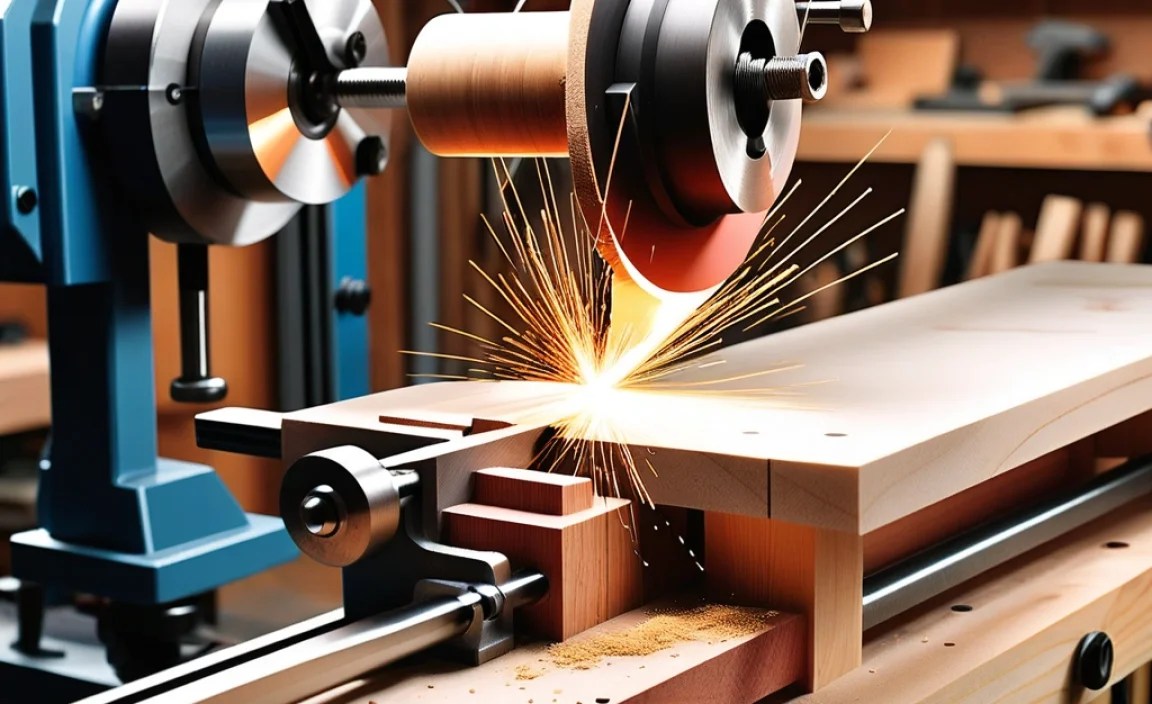
Different tools and woods benefit from different sharpening angles. A general-purpose woodturning gouge might need an angle between 35 and 45 degrees. Detail gouges often need a steeper angle, while skew chisels can have very different bevels depending on their intended use. A sharpening jig allows you to dial in these specific angles precisely. This consistency is key to understanding how your tools will perform and how to best achieve the desired results on your lathe.
It’s important to have an idea of the common angles you’ll need for your typical woodworking projects. For example:
- Spindle Gouges: Often sharpened to a point with a swept-back wing, typically between 30-45 degrees.
- Roughing Gouges: Need a strong, robust edge, often around 40-50 degrees.
- Skew Chisels: These have specialized bevels that can range from 15 degrees to over 45 degrees, depending on whether they’re used for flatting, beading, or parting.
- Scrapers: While not typically “sharpened” in the same way as gouges, their edges are burnished or honed to a burr, and a jig can help maintain the correct nose profile.
Knowing these angles will help you design or choose a jig that can accommodate them effectively.
Types of Sharpening Setups and Jigs

There are several ways to sharpen lathe tools, and the jig you choose or build might depend on your preferred method. Common sharpening methods include:
- Sharpening Stones (Waterstones, Oilstones): These are traditional and effective. Sharpening stones often require a jig to hold the tool at the correct angle for consistent results.
- Grinding Wheels (Bench Grinders): A bench grinder with grinding wheels is a fast way to reshape and sharpen tools. Jigs are essential here to prevent overheating the tool and to maintain the correct bevel angle. Many woodturners use a slow-speed grinder with a water trough for this purpose.
- Belt Sanders/Sharpeners: Machines like the Work Sharp or dedicated belt sharpening systems offer a fast and efficient way to sharpen. Many of these have built-in jigs, but custom jigs can also be made to adapt them for specific lathe tools.
The jig’s primary role is to consistently present the tool’s edge to the abrasive surface at the desired angle. This ensures that you’re grinding or honing away metal exactly where you want it, creating a sharp, repeatable bevel.
Benefits of Building Your Own Sharpening Jig

Why go through the trouble of building your own jig when you can buy one? Here are some compelling reasons:
- Cost Savings: Commercially available sharpening jigs can be quite expensive. Building one yourself using readily available materials can save you a significant amount of money.
- Customization: You can design a jig that perfectly suits your specific tools, your preferred sharpening method (stones, grinder, belt sander), and the space available in your workshop. Need to accommodate a specific type of gouge? Want it to mount directly to your grinder? You can build it that way.
- Deepened Understanding: The process of designing and building a jig gives you a much deeper understanding of how sharpening actually works. You’ll appreciate the mechanics of bevel angles and edge geometry more thoroughly.
- Sense of Accomplishment: There’s a unique satisfaction that comes from using a tool you’ve made yourself, especially when it performs exceptionally well.
Essential Wood Lathe Sharpening Jig Plans: What to Look For
When you’re looking for wood lathe sharpening jig plans, or when you design your own, there are a few key features to keep in mind. The best plans are clear, detailed, and cater to different skill levels and tool types.
Key Features of Good Jig Plans:
- Adjustability: Does the jig allow for easy adjustment of the sharpening angle? Being able to quickly change angles for different tools is a big plus.
- Tool Compatibility: Can it hold the various types of lathe tools you use (e.g., spindle gouges, roughing gouges, skew chisels, scrapers)?
- Sharpening Method Integration: Is it designed for your specific sharpening method (stones, grinder, belt)? Some jigs are versatile, while others are specialized.
- Durability and Stability: Are the plans for a robust design that won’t flex or wobble during sharpening? A stable jig is crucial for consistent results.
- Ease of Construction: Are the plans straightforward, with clear measurements and easy-to-understand diagrams? This is vital for beginners.
- Material Availability: Can you easily find the materials needed for the build in your local hardware store or workshop?
Where to Find Wood Lathe Sharpening Jig Plans
Finding reliable plans can be an online treasure hunt. Here are some excellent starting points:
- Woodworking Forums and Communities: Websites like Woodworking Stack Exchange or dedicated woodturning forums often have sections where members share their DIY projects, including jigs. Search for “DIY sharpening jig” or “lathe tool sharpening jig plans.”
- Woodworking Magazines and Websites: Many reputable woodworking publications and websites feature DIY project plans. Look for articles by experienced woodturners. Some designers also offer free or paid plans directly on their sites.
- YouTube Channels: Numerous woodturners share video tutorials on building their own sharpening jigs. Watching the build process can often be as helpful as reading plans. Some creators might offer downloadable plans in their video descriptions.
- Books on Woodturning and Tool Sharpening: Classic books dedicated to woodturning techniques often include sections on tool maintenance and demonstrate how to build essential jigs.
- Manufacturer Resources: Sometimes, companies that make sharpening equipment offer plans or ideas for jigs that work with their systems.
For example, brands like Tormek, while selling their own jigs, often feature articles or design ideas on their websites that can inspire DIY builds. Similarly, many woodturners who are proficient with specific types of sharpening systems might share their custom jig designs.
A Basic Wood Lathe Sharpening Jig: Simple Plan Example
Let’s outline a straightforward jig that you can build to sharpen your gouges using a sharpening stone or a bench grinder. This design focuses on simplicity and effectiveness.
Materials You’ll Likely Need:
- Plywood (1/2″ or 3/4″ thickness)
- Hardwood (for wear resistance, e.g., maple or oak)
- Wood screws
- Knobs or T-handles (for adjustments)
- Drill bits
- Saw (hand saw, table saw, or band saw)
- Sandpaper
- Optional: Metal rod or threaded insert and bolt for pivot point.
Construction Steps (Conceptual):
- Base Plate: Cut a piece of plywood for the base. This will sit on your sharpening stone or in front of your grinder.
- Angle Adjustment Plate: Cut a second piece of plywood that will pivot on the base. Slots will be cut into this piece to allow screws with knobs to slide the top plate forward or backward, thus changing the angle.
- Tool Rest (Top Plate): Cut a piece of hardwood for the top plate. This is where the tool will rest. The angle of this surface relative to the base determines the sharpening angle. You might cut a channel into this piece for different tool shapes.
- Pivot Mechanism: Drill a hole through the base and the angle adjustment plate. Use a bolt with nuts, a threaded rod, or a metal rod with pins to create a pivot point. Ensure it allows free movement but is secure.
- Angle Locks: Drill holes in the slots of the angle adjustment plate and corresponding holes in the base. Use screws with knobs or T-handles. When loosened, the top plate can slide; when tightened, the angle is locked.
- Tool Guide/Channel: Depending on your design, you might cut a V-groove or a flat channel into the top plate where the tool shank will sit. This helps stabilize the tool.
- Assembly: Assemble the parts, ensuring smooth movement and a secure locking mechanism. Sand all edges and work surfaces smooth.
A fantastic resource for detailed plans is the Wood Magazine website, which often provides free project plans for shop-made jigs like these. Another excellent source is the National Institute of Standards and Technology (NIST), which sometimes publishes research or reports on tool design and mechanics that can inform jig construction, though you might need to dig to find applicable information for woodworking.
Sharpening Your Lathe Tools with a Jig: Step-by-Step
Once you have your jig built or acquired, the sharpening process becomes much more straightforward. Here’s a general guide, assuming you’re using a jig with a sharpening stone or grinder:
Step 1: Set Your Sharpening Angle
Determine the correct angle for the tool you are sharpening. For most general-purpose gouges, this is often around 35-45 degrees. Consult your jig’s design or manufacturer’s recommendations if you’re unsure. Adjust your jig by loosening the locking knobs, sliding the top plate to achieve the desired angle (some jigs have angle indicators), and then securely tightening the knobs.
Step 2: Position Your Tool
Place the flute of your gouge or the bevel of your chisel into the designated slot or channel on the jig’s top plate. Ensure the tool is held firmly and its bevel is presented to the sharpening surface. For gouges, you’ll typically want the hollowed side facing upwards, so the jig holds the bevel correctly toward the abrasive. For chisels, the flat underside of the bevel should rest against the jig’s rest surface.
Step 3: Sharpen One Side
With the tool securely in the jig and the desired angle set, bring the tool’s bevel into contact with the sharpening stone or grinding wheel. Move the jig (and tool) against the abrasive in a smooth, consistent motion. If using a stone, start at one end of the bevel and sweep across to the other, maintaining consistent pressure. On a grinder, you’ll often hold the jig steady and move the tool’s bevel across the wheel. Work until a burr forms on the opposite side of the edge. A burr is a tiny ripple of metal that forms when the edge is sharp; you can feel it by gently running your fingernail across the freshly ground edge from heel to toe (away from the cutting edge).
Step 4: Sharpen the Other Side (if applicable)
For tools like skew chisels that have a specific bevel angle on both sides, you may need to adjust the jig or flip the tool to sharpen the opposing bevel. For most gouges, the jig should be set to sharpen the primary bevel. The secondary bevel (the fingernail grind) is sharpened by rocking the tool in the jig.
Step 5: Refine the Edge
After grinding, you’ll typically want to hone the edge. You can often use the same jig with a finer grit stone or a leather strop for this stage. Hone using a lighter pressure and fewer passes than grinding. The goal is to remove the burr and refine the apex of the cutting edge, making it incredibly sharp and smooth.
Step 6: Test and Repeat
Test the sharpness of your tool on a scrap piece of wood. A sharp tool should cut smoothly with minimal effort. If it’s not sharp enough, assess your angle and technique, and repeat the sharpening process. It might take a few tries to get the feel for your jig and your tools.
A Table of Common Woodturning Tool Sharpening Angles
Here’s a quick reference for common sharpening angles. Remember that these are general guidelines, and personal preference or specific tasks might call for slight variations. Using your jig allows you to experiment and find what works best for you.
| Tool Type | Typical Angle Range | Notes |
|---|---|---|
| Spindle Gouge (primary bevel) | 35 – 45 degrees | A common angle for general cuts on spindles. |
| Roughing Gouge | 40 – 50 degrees | A stronger, more robust angle for heavy material removal. |
| Detail Gouge (primary bevel) | 25 – 35 degrees | A finer, sharper angle for delicate work. |
| Skew Chisel (long bevel type) | 15 – 30 degrees | Sharper angle for slicing cuts on difficult grain. |
| Skew Chisel (short bevel type) | 35 – 45 degrees | More versatile angle for general shaping. |
| Scraper (Scraping edge) | N/A (Honing/Burnishing) | Edge is burnished to create a burr; often a 90-degree profile is maintained. |
| Carving Gouge (for bowls) | 40 – 55 degrees | Can vary widely depending on specific use and wood. |
It’s important to note that many woodturners prefer a “swept-back” or “fingernail” grind on their gouges. This involves a secondary, lower-angle bevel that extends further up the flute, often adding another 10-15 degrees to the primary angle. This shape can be achieved by slightly rocking the gouge in the jig as you sharpen the primary bevel.
Maintaining Your Sharpening Jig
Your sharpening jig is a tool, and like any tool, it benefits from a little care:
- Keep it Clean: After each sharpening session, brush away any metal dust or abrasive particles. Metal dust can be corrosive and abrasive particles can interfere with smooth movement.
- Lubricate Moving Parts: If your jig has sliding parts or pivot points, a little wax or light oil can help them move smoothly. Avoid over-lubrication, which can attract dust.
- Check for Wear: Periodically inspect the surfaces where your tools make contact. If they become worn or damaged, they can affect your sharpening angles. Minor wear can often be fixed with epoxy or a new piece of wood.
- Store Properly: Keep your jig in a clean, dry place. Storing it somewhere it won’t be subjected to excessive moisture or impact will prolong its life.
Frequently Asked Questions About Wood Lathe Sharpening Jigs
Q1: What’s the easiest way to sharpen my lathe tools?
The easiest way for beginners is often with a dedicated sharpening system that includes a jig, like a slow-speed grinder with a jig, or a belt sander sharpener with appropriate jigs. A well-built DIY jig for your preferred sharpening method will also make it significantly easier and more consistent than freehand sharpening.
