A wood lathe speed reducer pulley is designed to increase torque and allow for slower, safer spindle speeds when working with larger or dense wood blanks on your lathe. This is crucial for preventing tear-out, achieving smoother finishes, and maintaining control during challenging turning projects, ultimately making your woodworking safer and more enjoyable.
Unlock Your Wood Lathe’s Potential: Mastering Speed with a Reducer Pulley

Hey there, woodworkers! Ever wrestled with a chunky piece of wood on your lathe, feeling like you’re fighting for control? Or maybe you’ve experienced that frustrating splintering, known as tear-out, even when you thought you were doing everything right? You’re not alone. Choosing the right speed for your wood lathe is one of the biggest keys to success, especially when you’re working with larger diameter pieces or tougher woods. Too fast, and things can get dangerous and messy. Too slow, and you might be battling rough surfaces. That’s where a wood lathe speed reducer pulley comes in. It’s a fantastic tool that can dramatically improve your turning experience, giving you more power and control at slower, safer speeds. Don’t worry if this sounds a bit technical; we’re going to break it down step-by-step, making it easy for you to understand and implement.
Why Speed Matters on Your Wood Lathe
Think of your wood lathe like a car. You wouldn’t drive your car at 100 mph in first gear, right? It just wouldn’t work well and could cause damage. The same principle applies to your wood lathe. The speed of the spindle, the part that spins your wood, needs to be appropriate for the task.
Safety First: This is the most important reason. Wood spinning at high speeds can be unpredictable. If it catches, it can fly off the lathe, causing serious injury. Slower speeds give you more reaction time and reduce the force of any potential ejection.
Wood Type and Size: Denser hardwoods and larger diameter blanks require slower speeds. They have more mass and inertia, making them more prone to vibration and tear-out at higher RPMs. Softwoods and smaller pieces can often handle faster speeds.
Tool Type and Cut: Aggressive cuts or using large gouges might require slower speeds for better control. Finishing passes, especially with very sharp tools, can often be done at slightly higher speeds.
Surface Finish: Getting a smooth finish is often about finding that sweet spot. Too fast can cause fuzziness or burning, while too slow might leave tool marks that are harder to sand out. Tear-out, where wood fibers are ripped away instead of cut cleanly, is a common problem that slower speeds help combat.
Getting the speed dialed in is a skill that develops with practice, but understanding the factors involved is the first step to making better decisions.
Understanding Wood Lathe Speed Reducer Pulleys

So, what exactly is a wood lathe speed reducer pulley system, and how does it help? Essentially, it’s a way to change the gear ratio between your lathe’s motor and the spindle. Most wood lathes have a motor that spins at a relatively high RPM. The standard pulley system on your lathe allows you to select a few different speed ranges by moving a belt between different sized pulleys.
However, even the lowest pulley setting on many lathes might still be too fast for turning large diameter bowls or very hard woods. This is where a speed reducer pulley system shines. It introduces an additional layer of gearing, often using a secondary shaft and different pulley arrangements, to significantly lower the spindle’s RPM without drastically reducing the motor’s torque.
Think of it like this:
- Direct Drive (No Reducer): Motor RPM directly influences spindle RPM, with limited options via belt changes. Torque is generally decent but decreases significantly as speed increases.
- Standard Pulley System: Offers a few selected speed ranges by moving a belt. This provides some flexibility.
- Speed Reducer Pulley System: Adds extra gearing to further reduce spindle RPM, critically increasing torque at those lower speeds.
The key takeaway is that a speed reducer pulley system allows you to run your lathe at much lower spindle speeds while still having enough power (torque) to effectively turn the wood. This is precisely what you need for safely and effectively working with larger, more challenging pieces.
How Does a Speed Reducer Pulley System Work?
The most common type of speed reducer pulley system for wood lathes involves a secondary shaft. Here’s a simplified breakdown of the mechanism:
1. Motor to Primary Shaft: The motor from your lathe drives a pulley on a first shaft, often the lathe’s original drive shaft or a specially designed input shaft for the reducer.
2. Primary Shaft to Secondary Shaft: A belt connects a pulley on the first shaft to a pulley on a second, intermediate shaft. The size difference between these pulleys determines the initial speed reduction.
3. Secondary Shaft to Spindle: Another belt connects a pulley on the secondary shaft to the spindle pulley on your lathe’s headstock. The size difference here provides further speed reduction.
By carefully selecting the pulley sizes on both shafts, you can achieve significant speed reductions. Many systems offer multiple pulley size options so you can tailor the speed reduction to your specific needs and lathe.
Example Pulley Setup (Hypothetical]
Let’s imagine a simple two-step speed reducer:
| Stage | Input Pulley Size | Output Pulley Size | Speed Reduction Ratio | Example Motor RPM | Resulting Spindle RPM | Torque Impact |
|---|---|---|---|---|---|---|
| Stage 1 (Motor to Reducer Shaft) | Small (Motor) | Large (Reducer Shaft) | 3:1 | 1750 RPM | ~583 RPM | Medium Increase per stage |
| Stage 2 (Reducer Shaft to Spindle) | Small (Reducer Shaft) | Large (Spindle) | 2:1 | ~583 RPM | ~292 RPM | Further Increase |
| Total Effect | 6:1 | 1750 RPM | ~292 RPM | Significant Torque Boost |
This table illustrates how a pulley ratio works. A larger output pulley relative to the input pulley creates a slower speed but increased torque. A speed reducer takes these ratios to extremes, allowing for very low spindle speeds with robust torque.
Benefits of Using a Speed Reducer Pulley
The advantages of incorporating a speed reducer pulley system onto your wood lathe are manifold. They go beyond just fitting a part; they transform your turning capabilities.
- Enhanced Safety: This is paramount. Significantly slower spindle speeds reduce the risk of the workpiece flying off if it becomes unbalanced or if your tool catches. This is especially critical when starting a new piece or working with irregular shapes.
- Improved Torque: As speed decreases, torque increases. This means your lathe will have more power to cut through dense hardwoods, large blanks, and rough logs without bogging down the motor.
- Reduced Vibration: Larger unbalanced workpieces at high speeds can cause intense vibrations, leading to poor finishes and potential safety hazards. Slower turning speeds drastically minimize these vibrations.
- Better Control for Heavy Cuts: When you’re turning large bowls or furniture legs, you often need to remove a lot of material. Slower speeds provide the control needed to make these aggressive cuts confidently without chattering or losing your grip.
- Minimized Tear-Out: One of the most frustrating issues for woodturners is tear-out, where the wood fibers are ripped rather than cut cleanly. Slower speeds allow your tools to engage the wood more cleanly, resulting in a smoother surface finish right off the lathe.
- Easier Sanding: A smoother surface achieved during turning means less sanding later. This saves you time and effort, letting you get to the finishing stage quicker.
- Turning Larger Blanks: Without a speed reducer, working with natural-edge bowls, large diameter logs, or irregularly shaped pieces at safe speeds might be impossible on many standard lathes. The reducer opens up these possibilities.
- Increased Tool Life: By reducing the strain on your tools and allowing for cleaner cuts, a speed reducer can indirectly contribute to the longevity of your turning tools.
When is a Speed Reducer Pulley Essential?
While any woodturner can benefit from better speed control, certain scenarios make a speed reducer pulley system not just beneficial, but practically essential.
Turning Large Bowl Blanks (over 10-12 inches diameter): As the diameter increases, the peripheral speed (the speed of the outer edge of the workpiece) increases dramatically, even at moderate RPMs. A speed reducer brings this down to a safe and manageable level.
Working with Very Dense or Hardwoods: Woods like oak, maple, walnut, or exotics can demand more power and slower speeds, especially when roughing out.
Roughing Out Irregularly Shaped Blanks: Natural edge bowls, burls, or logs with significant imperfections are often unbalanced. Slower, more powerful turning is vital for safety and control.
The “Banana Rule”: A common guideline for safety is the “banana rule” (or sometimes “apple rule”). If your workpiece is larger than your forearm, or roughly the size of a banana, you should be using a significantly reduced speed. A speed reducer pulley makes this easily achievable.
Beginner Turners: Especially when starting with larger or potentially challenging pieces, the added safety margin and control of slower speeds are invaluable for building confidence and good habits.
Choosing the Right Speed Reducer Pulley System

Not all speed reducer pulley systems are created equal, and the best one for you will depend on your lathe, your typical projects, and your budget.
Types of Speed Reducer Systems
1. Belt-Driven Reducers: These are the most common. They typically involve an extra set of pulleys and belts that connect to your lathe’s existing drive system, either at the motor or the headstock. They can be a bolt-on kit or a more integrated system.
2. Gearbox Reducers: Less common for typical hobbyist wood lathes, these use enclosed gear trains to reduce speed. They are often very robust but also more expensive and can add bulk. Most wood lathe speed reduction systems are belt-driven.
Factors to Consider When Buying
Compatibility: Does the system explicitly state it is designed for your specific lathe model? Some systems are universal, while others are model-specific. Check mounting points, belt lengths, and pulley shaft diameters.
Speed Reduction Ratio: How much does it reduce the speed? Look for systems that offer significant reduction, often in the range of 2:1 to 6:1 or even higher. A good starting point is a 3:1 or 4:1 reduction.
Torque Increase: While speed reducer systems inherently increase torque, some are designed better than others. Read reviews and look for systems praised for maintaining power at low speeds.
Ease of Installation: How difficult is it to install? Some are simple bolt-on affairs, while others might require more mechanical aptitude. Watch installation videos if available.
Quality of Components: Are the pulleys made from durable materials (e.g., machined aluminum or steel)? Are the belts robust? A well-built system will last longer and perform better.
Adjustability: Can you change the speed reduction ratio by swapping out different pulley sizes? This adds flexibility for different projects.
Price: Speed reducer pulley systems can range from a couple of hundred dollars to much more. Determine your budget and look for the best value within that range.
Reviews and Reputation: What do other users say about the product? Look for reputable brands that have a good track record in the woodworking tool market.
DIY vs. Commercial Systems
You might find yourself wondering if you can build your own. While possible for the mechanically inclined, designing and fabricating a reliable speed reducer pulley system can be challenging.
Commercial Systems:
Pros: Engineered for specific lathes, designed for optimal performance, often come with instructions and support, generally safer and more reliable when properly chosen.
Cons: Can be expensive.
DIY Systems:
Pros: Potentially cheaper, customizable, rewarding if successful.
Cons: Requires significant design and fabrication skills (machining, welding, etc.), risk of poor performance or failure, potential safety hazards if not engineered correctly, time-consuming to develop.
For most beginners and intermediate woodturners, investing in a well-designed commercial speed reducer pulley kit is usually the most straightforward and safest route to achieving the benefits of slower, powerful turning.
Installation and Setup Guide
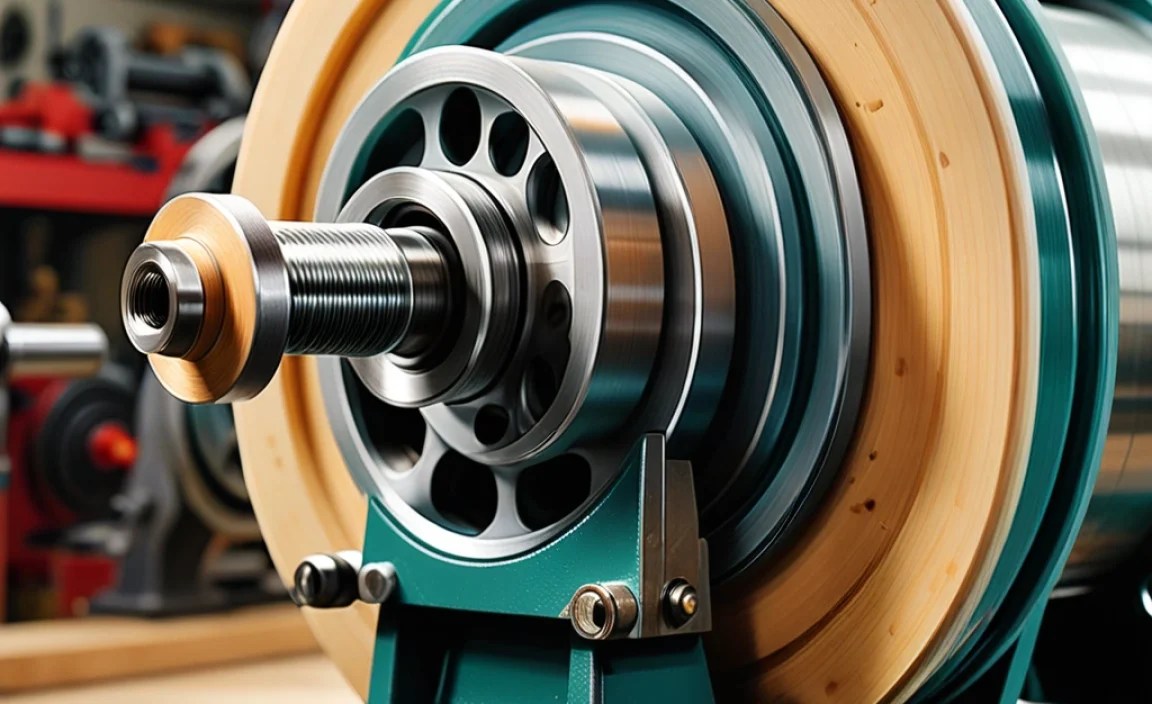
Installing a speed reducer pulley system can seem daunting, but if you take it step-by-step, it’s usually quite manageable. Always refer to the specific instructions that come with your chosen kit, as designs can vary.
Tools You’ll Likely Need
Basic Socket/Wrench Set
Screwdrivers (Phillips and Flathead)
Allen Wrenches (Hex Keys)
Tape Measure or Ruler
Level (optional, but helpful)
Belt Tension Gauge (optional, but recommended for optimal performance)
Safety Glasses (always!)
* Gloves (optional, for handling greasy parts)
General Installation Steps (Illustrative Example – Varies by Kit)
1. Safety First! Ensure the lathe is unplugged from the power source before starting any work.
2. Access the Drive System: This might involve removing existing pulley covers, guards, or even the motor mount, depending on the system.
3. Mount the New Input Pulley: If the system replaces your original motor pulley, you’ll need to remove the old one and install the new, larger input pulley onto the motor shaft. Ensure it’s seated correctly and secured tightly. If it’s an inline system, you might be mounting a new pulley onto an extended motor shaft or a separate input shaft.
4. Mount the Reducer Shaft and Pulleys: This is often the most involved step. The kit will include mounting brackets or a frame to hold the secondary shaft. This entire assembly needs to be securely attached to your lathe. You’ll then mount the pulleys onto the secondary shaft as per the instructions, paying attention to which pulley goes on the input side (driven by the motor) and which goes on the output side (driving the spindle).
5. Mount the Output Pulley: This pulley mounts onto your lathe’s spindle. You may need to remove your existing headstock pulley to install this one.
6. Install the Belts: Drape the belts around the appropriate pulleys. You’ll likely have one belt connecting the motor (high-speed pulley) to the input pulley on the reducer shaft, and another belt connecting the output pulley on the reducer shaft to the lathe’s spindle pulley.
7. Adjust Belt Tension: This is crucial for smooth operation and belt life. Most systems will have an adjustment mechanism on the mounting brackets to move the reducer shaft assembly, thereby increasing or decreasing belt tension. The belts should be snug but not overly tight. A common test is that you should be able to deflect the belt about half an inch with moderate finger pressure. Overtightening can damage bearings and belts, while undertightening can cause slippage and noise.
