Wood lathe live center types are crucial for successful turning by providing stable support without damaging your workpiece. This guide details the different kinds, like the standard, revolving, and cup centers, helping you choose the right one for your project to ensure accuracy and a smooth finish.
Working on a wood lathe can be incredibly rewarding, bringing your creative ideas to life with smooth, shaped wood. But sometimes, things don’t turn out quite right. You might notice a bit of wobble, or maybe the end of your workpiece gets a little damaged by the lathe itself. Often, the culprit is the part that supports your wood against the tailstock: the live center.
Choosing the right type of live center can make a huge difference in the quality of your work and the overall enjoyment of the process. Don’t worry if it seems a bit confusing at first; we’re going to break down all the different live center types in a way that’s easy to understand. We’ll cover what each one is best for, so you can pick the perfect live center for your next project and avoid those frustrating little problems. Get ready to turn with more confidence!
Understanding the Wood Lathe Live Center

So, what exactly is a live center, and why is it so important? Think of your wood lathe like a spinning easel. The headstock has a drive spur that grips one end of your wood, making it spin. The tailstock, located on the other end of the lathe bed, provides support. While a dead center can do this, it’s basically just a sharp point that digs into the wood, creating friction and potentially damaging the fibers. A live center, on the other hand, has a bearing inside. This means the point (or cup, or whatever support it offers) spins with your workpiece.
This spinning action is key. It dramatically reduces friction. Why is less friction good?
- Prevents Burning: Friction creates heat. Too much heat can scorch your wood, leaving ugly burn marks that are hard to fix.
- Preserves Wood Fibers: A dead center can crush the wood fibers at the tailstock end. A live center, spinning in sync, applies less stress, keeping those delicate wood fibers intact.
- Reduces Wear: Less friction means less wear on both the live center point and your workpiece.
- Smoother Operation: With less resistance, your lathe will run more smoothly, and you’ll generally have an easier time turning.
A live center screws or fits into the tailstock quill, and its sharp point (or other feature) is pressed firmly into the end grain of your workpiece. This creates a stable, yet dynamic, support system that’s essential for almost all turning projects. Think of it as a quiet, dependable partner for your workpiece during its spin.
Common Wood Lathe Live Center Types Explained

The world of wood turning offers several types of live centers, each designed with specific tasks and materials in mind. For beginners, understanding these variations is step one to choosing the right tool for the job, ensuring better results and a more pleasant turning experience. Let’s dive into the most common ones you’ll encounter.
1. The Standard Live Center (Pointed Live Center)
This is the workhorse, the most common type of live center you’ll see. It features a pointed tip that’s designed to be pressed into the end grain of your workpiece.
How it works: The sharp point digs lightly into the wood, holding it securely. The internal bearing allows the point to rotate with the wood, just like a miniature wheel bearing.
Best for:
- General Purpose Turning: From small decorative items to larger bowls and spindles, the standard live center is versatile.
- Spindle Turning: It’s excellent for turning items like table legs, chair spindles, and other elongated pieces where the tailstock provides primary support.
- When you need a secure point: For many projects, a clean, sharp point is all you need.
Considerations:
- Requires a pilot hole: For best results and to prevent splitting, it’s good practice to drill a small pilot hole for the center to engage with. This also helps in precise centering.
- Can mar the wood: While it spins, the point still creates a small indentation. This is usually minor and easily sanded away, but it’s something to be aware of, especially with very soft woods or if you’re aiming for a pristine end grain finish without sanding.
- Not ideal for very large or thin pieces: For extremely large bowls or delicate, thin projects, other types might offer better support or less risk of damage.
When you’re starting out, a good quality standard live center is usually your first and most important purchase for the tailstock end. It’s reliable and handles a vast majority of turning tasks with ease.
2. The Revolving Live Center (Cup Live Center with a Revolving Tip)
This type is similar to the standard live center but instead of a sharp point, it has a wider, often conical or cupped, surface that contacts the wood. The entire head of the live center revolves.
How it works: The broader contact area distributes pressure over a slightly larger surface. The “revolving” aspect means the entire head unit spins, driven by the bearing, providing smooth support.
Best for:
- Supporting Facegrain Projects: This is where the revolving live center truly shines. When turning bowls or other facegrain work, the tailstock often supports the chucked piece from underneath, or the piece is between centers. A revolving live center is excellent for supporting the “tailgate” end of a bowl blank being turned between centers, offering more contact than a simple point.
- Preventing Center Marks on Face Grain: Because it doesn’t dig in, it leaves a much cleaner, less noticeable mark on facegrain surfaces.
- Larger Workpieces: The wider contact can offer more stable support for larger or heavier blanks.
Considerations:
- Less penetration: It doesn’t dig into the wood, so you rely more on a firm press from the tailstock to keep it in place.
- Can be more expensive: These often cost a bit more than basic pointed live centers.
If you plan to turn a lot of bowls or other facegrain items, a revolving live center will quickly become an indispensable tool, saving you from those annoying center marks and providing robust support.
3. The Spur Center (or Drive Spur Live Center)
While technically not just a live center for the tailstock, it’s an important related item and sometimes confused with live centers. A spur center is designed to be mounted in the tailstock quill and has sharp spurs that dig into the wood to provide a driving force.
How it works: You press the spurs into the end grain of your workpiece, and the entire unit is mounted in the tailstock quill. When you engage the tailstock, the spurs grip the wood, allowing you to turn it. The point that presses into the wood is often slightly off-center (a spur center) or has a small bearing allowing it to swivel (a revolving spur center) so it doesn’t get stuck. Some very basic spur centers are essentially dead centers with spurs, while others are live centers with spurs.
Best for:
- Spindle Turning and Initial Blank Preparation: Often used when you don’t have a drive spur on the headstock or for specific turning techniques.
- When you need a positive grip: The spurs bite into the wood, offering a strong hold.
Considerations:
- Damages wood significantly: The spurs dig in deeply, leaving substantial holes that will need to be repaired or incorporated into the design.
- Primarily for end grain: The spurs are designed to bite into the end grain.
- Often used in conjunction with a live center: For a piece supported between centers, the headstock would have a drive spur, and the tailstock might use a live center to provide stable, non-driving support. A spur center in the tailstock is less common for standard turning and more for specialized applications where you want to drive from the tailstock.
For most beginners focusing on spindle turning or bowls, the standard and revolving live centers are far more common. Spur centers are more specialized.
4. The Combination Live Center
As the name suggests, these are designed to offer multiple functions. A common combination is a standard pointed live center that can be unscrewed or otherwise converted to reveal different tips or functions.
How it works: Typically, you might have a pointed tip that screws into a base. By removing the point, you might expose a cup-shaped holder or a more specialized tip. Some higher-end combination centers come with a set of interchangeable tips.
Best for:
- Versatile Woodworkers: If you have limited space or budget, a combination center can offer more functionality in one tool.
- Swapping between functions easily: Quickly change from a point for spindle turning to a cup for bowl support.
Considerations:
- Can be pricier initially: While saving over buying multiple dedicated centers, they can have a higher upfront cost.
- Potential for wear on threads: If switching parts frequently, ensure the threads are robust.
A combination live center is a great option for those who want flexibility and don’t want to purchase a whole set of specialized live centers right away.
5. The Offset Live Center
This is a more advanced tool designed for specific operations, most commonly for turning large-diameter platter-like objects or for creating specific off-center effects.
How it works: Instead of the bearing being directly in line with the center of the tailstock quill, the offset live center has a shaft that is designed to be slightly out of the way. You mount a disc or plate onto the offset spindle, and this disc is what contacts your workpiece. By rotating the workpiece manually, you can turn very wide platters that wouldn’t fit within the standard distance between the headstock and tailstock centers.
Best for:
- Turning Large Platters: Essential for creating very wide, flat pieces that extend far beyond the normal turning radius.
- Creating off-center effects: Used in specialized decorative turning techniques.
Considerations:
- Requires specific techniques: Not a beginner-friendly tool for regular turning.
- Can be unstable if not used correctly: Because you’re turning off-balance loads, safety is paramount.
While fascinating, the offset live center is a tool for more experienced turners exploring specific project types.
Technical Specifications and Choosing Wisely
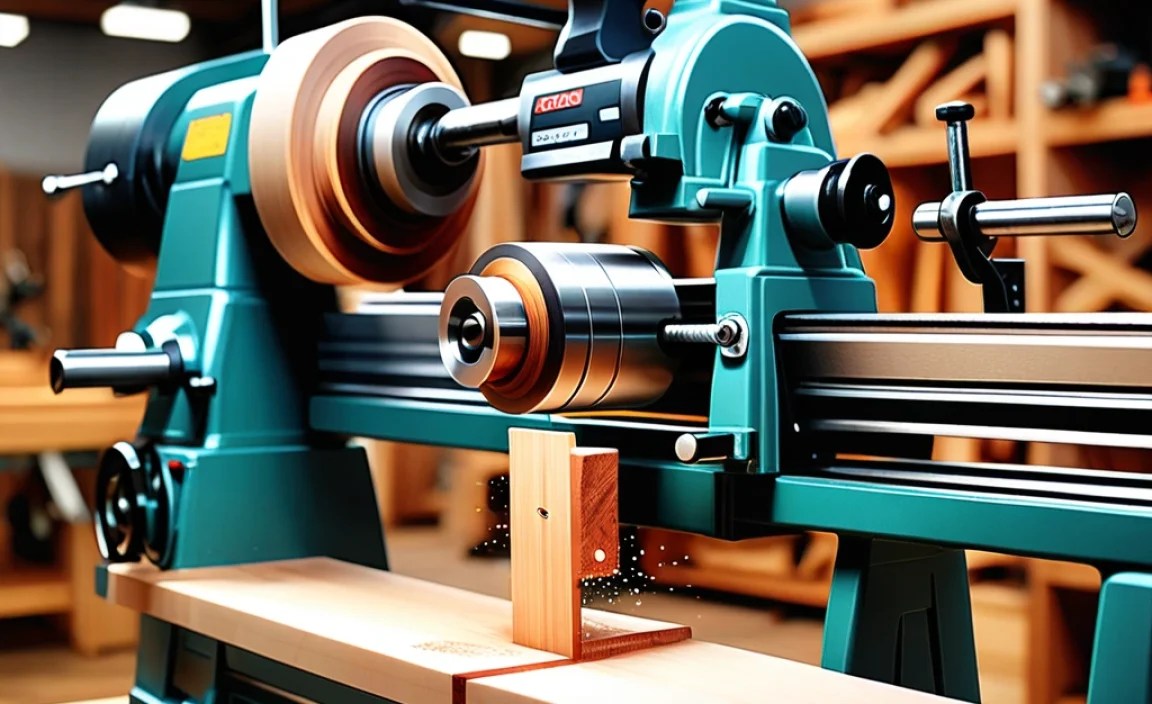
Beyond the type of live center, there are a few technical aspects to consider that will impact your choice.
Thread Size
Live centers screw into the tailstock quill. The end of the tailstock quill has a threaded hole. This threading needs to match the threading on the live center. Common thread sizes for wood lathes include:
- 1″ x 8 tpi (threads per inch): This is a very common standard, especially on larger lathes.
- 3/4″ x 10 tpi: Frequently found on smaller or midi lathes.
- Metric sizes: Some European or specialized lathes may use metric threads, e.g., M33x3.5mm.
Always check your lathe’s specifications or measure the thread on your tailstock quill before purchasing a live center. Buying the wrong thread size means it simply won’t fit.
Bearing Quality
The heart of a live center is its bearing. A good quality bearing ensures smooth rotation, longevity, and reduced wear.
- Sealed Bearings: These are the best. They are protected from dust and wood chips, which can degrade performance over time.
- Open Bearings: Less common and generally less desirable for woodturning, as they are more susceptible to contamination.
- Bearing Type: Look for ABEC-rated bearings if specifications are available, indicating precision. However, for most woodworking tools, high-quality sealed bearings are the standard.
A well-built live center with good bearings will last for years and provide consistent performance. Cheaply made ones can develop play or seize up, which is both frustrating and dangerous.
Material and Construction
Most live centers are made from hardened steel for durability. The shaft that goes into the tailstock quill is typically smooth and unthreaded for a press-fit or it has the threads integrated. Ensure the material is robust and the construction feels solid.
When to Use Which Live Center: A Practical Guide

Let’s put this knowledge into practice with some common woodworking scenarios.
Scenario 1: Turning a Basic Bowl (Facegrain)
You have a round blank chucked securely in your headstock. It’s mounted using a faceplate or a chuck. You want to support the back of the bowl with the tailstock (this is called “between-centers turning” for bowls, or supporting the outboard edge).
Recommended Live Center: Revolving Live Center.
Why: The revolving live center has a wider contact area and doesn’t dig into the facegrain. This means you’ll leave a minimal, easily sanded mark on the bottom of your bowl. A standard pointed center would leave a more pronounced indentation.
Process: Drill a small recess or pilot hole into the back of your blank (optional, but helps seating). Mount the revolving live center into your tailstock. Extend the tailstock and press the revolving live center firmly into the recess. Lock the tailstock quill.
For more information on bowl turning techniques, see resources from the American Association of Woodturners (AAW) like their bowl finishing guide.
Scenario 2: Turning a Windsor Chair Leg (Spindle Turning)
You have a square or round blank mounted between the drive spur on your headstock and a live center on your tailstock. You’re shaping it into a leg with tenons at each end.
Recommended Live Center: Standard Pointed Live Center.
Why: For spindle turning, you need a sharp, defined point to locate the center of the end grain accurately. The pointed live center digs in just enough to provide a very secure, stable support for the entire length of the spindle. The small indentation it leaves is part of the tenon or waste end and is easily removed.
Process: Find the center of your blank after roughing it to a cylinder. Drill a small pilot hole into the center of the end grain that will meet the tailstock. Mount the standard live center into your tailstock. Extend the tailstock and press the point firmly into the pilot hole. Lock the tailstock quill.
Scenario 3: Roughing a Large Log for Potential Bowl Blanks
You’re starting with a large, often irregular log, and you want to mount it to turn it into manageable blanks, or perhaps turn it directly.
Recommended Live Center: This is where things get interesting.
- For very large, rough logs (platter work): An Offset Live Center might be needed if the diameter exceeds standard capacities.
- For general large turning (between centers): A robust Standard Pointed Live Center is often used, especially if the ends are relatively flat.
- Using a Faceplate: Many large logs are first mounted using a sturdy faceplate attached to one end, and then the tailstock might only be used for temporary support or not at all during initial shaping. If you are supporting the outboard end with the tailstock, a Revolving Live Center or a very substantial Pointed Live Center is recommended.
Considerations for Large Work: Ensure your lathe is powerful enough and that your tailstock can exert sufficient pressure. Safety is paramount, and often, turning large logs is best done after gaining experience with smaller pieces.
Table: Live Center Types at a Glance

To make quick comparisons easier, here’s a summary table:
| Live Center Type | Primary Use | Pros | Cons | Best For Beginners? |
|---|---|---|---|---|
| Standard Pointed Live Center | Spindle turning, general support | Secure grip; widely available; versatile | Leaves center mark; requires pilot hole for best results | Yes, essential |
| Revolving Live Center (Cup-style) | Facegrain turning (bowls), supporting large work | Minimal marks on facegrain; good support for wide pieces | Less penetration; relies on tailstock pressure | Yes, for bowl turners |
| Spur Center | Driving from tailstock, specialized use | Strong driving force; digs in securely | Significantly damages wood; specialized | No, generally too specialized |
| Combination Live Center |
