Replacing your wood lathe’s motor capacitor is a straightforward fix that can save your machine and get you back to turning wood quickly and safely. This guide provides essential steps for beginners.
Is your wood lathe struggling to start, or does it sound like it’s giving a half-hearted effort? Don’t worry, it’s a common issue that can often be fixed with a simple component replacement. Many wood lathe motors use a capacitor to help them “kick-start” and run efficiently. When this capacitor fails, your lathe might hum but not spin, or it might run weakly. Fixing it yourself is often much more affordable than professional repair and is a fantastic way to gain confidence with your tools. This guide will walk you through everything you need to know, step-by-step, to replace your wood lathe motor capacitor.
Why Your Wood Lathe Motor Capacitor Fails

Wood lathe motor capacitors are like the little helpers that give your motor a strong push to start spinning. They store electrical energy and release it at just the right moment to get the motor going. Over time, and with plenty of use, these little workhorses can wear out.
Several things can cause a capacitor to go bad:
Age and Heat: Like many electronic components, capacitors have a lifespan. The constant heat generated by the motor during operation can degrade them over time.
Power Surges: Sudden spikes in electrical power, like those that can happen during thunderstorms or if your home’s wiring isn’t stable, can stress and damage a capacitor.
Improper Voltage: Connecting a lathe to a power source with incorrect voltage can also put a strain on the capacitor.
Vibration: The general wear and tear from the operation of the lathe itself can contribute to capacitor failure.
When a capacitor fails, you might notice these symptoms:
The motor hums but doesn’t turn.
The motor struggles to start and then runs slowly.
The motor only starts if you give the spindle a manual push.
There’s a complete lack of power to the motor.
Understanding Your Wood Lathe Motor Capacitor

Before you even think about touching a wrench, it’s important to understand what a motor capacitor is and what it does. Most wood lathes use either a start capacitor or a run capacitor, or sometimes both.
Start Capacitors: These are designed to provide a large burst of energy specifically to get the motor turning. They are usually connected only during the startup phase and then disconnected by a centrifugal switch or a relay.
Run Capacitors: These stay connected to the motor for its entire operation. They help improve the motor’s efficiency and power factor, ensuring it runs smoothly and powerfully.
For most common wood lathe issues where the motor hums but won’t start, you’re likely dealing with a failed start capacitor. However, some motors might use a start/run capacitor (often called a PSC motor). Identifying which type you have is crucial.
Where to Find Your Lathe’s Capacitor
The capacitor is usually located in a metal enclosure mounted near the motor itself. This enclosure is often a small box attached to the motor housing or the lathe’s base, and it’s typically secured with a screw or two. If you can’t find it easily, consult your lathe’s user manual. It will have diagrams that show the location of all electrical components.
Identifying the Old Capacitor
Once you’ve located the capacitor, you’ll need to identify its specifications. This is super important because you need to replace it with one that matches. Look for markings on the capacitor’s casing. You’ll typically find:
Capacitance Value: Measured in microfarads (µF or mfd). You might see a single value (e.g., 200 µF) or a range (e.g., 170-205 µF). If it’s a range, you should aim for a replacement that falls within that range, ideally close to the higher end.
Voltage Rating: This indicates the maximum voltage the capacitor can handle safely. It’s usually in volts AC (VAC) or volts DC (VDC) – for motor capacitors, it’s typically AC. Never use a capacitor with a lower voltage rating than the original. A higher voltage rating is usually acceptable and can sometimes offer better durability.
Tolerance: This refers to how close the actual capacitance value is to the marked value (e.g., ±5% or ±10%).
Here’s a quick look at what typical capacitor markings might look like:
| Marking Example | Meaning |
|---|---|
| 250 µF ± 6% | Capacitance: 250 microfarads, within 6% of that value. |
| 100-120 µF | A capacitor designed to operate effectively between 100 and 120 µF. |
| 330 VAC | Voltage rating: 330 Volts Alternating Current. |
| 450V | Voltage rating: 450 Volts (usually implied AC for motor caps). |
Safety First! Discharging the Capacitor
This is the most critical step before you do ANYTHING else. Capacitors can store a significant electrical charge even when the power is completely disconnected. Touching the terminals without discharging it can give you a nasty shock.
Here’s how to safely discharge a capacitor:
1. Unplug Your Lathe: Make absolutely sure the machine is unplugged from the wall. Double-check this!
2. Use an Insulated Tool: Find a screwdriver with a well-insulated handle. A rubber or plastic grip is essential.
3. Bridge the Terminals: Carefully touch the metal shaft of the screwdriver across both terminals of the capacitor simultaneously. You might see a small spark – this is normal and means the capacitor is discharging. Hold it there for a few seconds to ensure it’s fully discharged.
4. If it Tries to Spark Again: If you hold it for a while and then lift the screwdriver and it still arcs, it means it’s still holding a charge. Repeat the process.
Never try to discharge a capacitor by touching the terminals with your fingers or a metal object without insulation.
You can also use a resistor (around 20,000 ohms, 5-watt) with insulated leads to discharge the capacitor. Touch the leads across the terminals for about 30 seconds. This is a more controlled method and minimizes sparking.
Step-by-Step Wood Lathe Motor Capacitor Replacement Guide

Now that you’re armed with knowledge and safety precautions, let’s get to the actual replacement.
Tools and Materials You’ll Need
Gather these items before you begin:
New motor capacitor (matching specifications of the old one)
Screwdriver set (Phillips and flathead, to open the enclosure and disconnect wires)
Insulated-handled needle-nose pliers
Voltmeter/multimeter (optional, but useful for testing the old capacitor if you have one)
Safety glasses
Gloves (optional, for extra protection)
Shop rags or paper towels
Step 1: Disconnect Power and Access the Capacitor
Unplug your wood lathe. Seriously, do this first. No exceptions.
Locate the capacitor enclosure. It’s usually a metal box near the motor.
Use the appropriate screwdriver to remove the screws holding the enclosure cover in place. Keep these screws and the cover in a safe spot so you don’t lose them.
Step 2: Photograph the Wiring
Before you disconnect any wires, take clear pictures of how everything is connected. Use your phone or camera. This is your backup reference. Make sure you can clearly see which wire goes to which terminal. This step alone will save you a lot of headache!
Step 3: Safely Discharge the Capacitor
As described in the “Safety First!” section above, use an insulated screwdriver to bridge the capacitor’s terminals. Watch for a spark, and ensure the charge is dissipated.
Step 4: Disconnect the Old Capacitor
Using your insulated pliers and screwdriver, carefully loosen any nuts or screws holding the wires onto the capacitor terminals.
Gently pull the wires off the terminals. Note which wire was connected to which terminal (your photos should confirm this).
The capacitor itself is usually held in place by a bracket or straps. Remove these to free the old capacitor.
Step 5: Install the New Capacitor
Place the new capacitor into the mounting bracket or secure it with the original straps. Ensure it’s snug and won’t vibrate loose.
Refer to your photos and the original configuration. Connect the wires to the corresponding terminals on the new capacitor. Ensure the connections are clean and firm. If your new capacitor has spade terminals, you might need to crimp new ones onto the wires if the old ones are damaged or incompatible.
Double-check that all wires are securely attached and that no bare wires are touching each other or any metal parts of the lathe’s housing.
Step 6: Reassemble the Enclosure
Carefully place the cover back onto the capacitor enclosure.
Reinstall the screws to secure the cover. Don’t overtighten them.
Step 7: Test the Lathe
Plug your wood lathe back into the power outlet.
Turn on the lathe and see if the motor starts smoothly and runs at the correct speed.
Listen for any unusual noises. If everything sounds normal and the lathe operates as it should, congratulations! You’ve successfully replaced your motor capacitor.
Troubleshooting Common Issues During Replacement
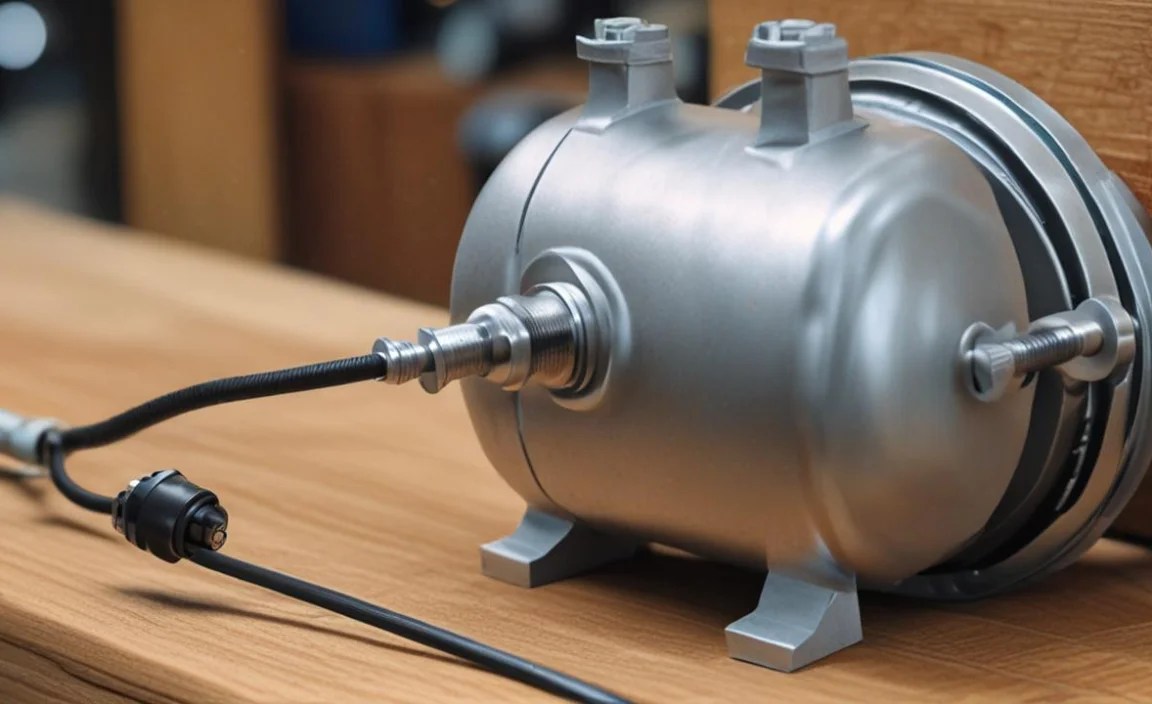
Even with careful steps, things can sometimes go a little sideways. Here are a few common issues and how to tackle them:
Lathe Still Won’t Start:
Did you discharge the capacitor properly? If not, revisit step 3 and try again.
Are the new capacitor’s specifications correct? Double-check the µF and voltage ratings against the old one. An incorrect rating could prevent it from working.
Are the wires connected correctly? Re-check your photos and ensure every wire is on its correct terminal.
Is the new capacitor faulty? Though rare, new parts can sometimes be defective.
The problem might be something else. If the capacitor is good and wired correctly, the issue could be with the start/run switch, thermal overload, motor windings, or the on/off switch itself.
Lathe Starts, But Runs Weakly or Makes Strange Noises:
Incorrect capacitance value: If your new capacitor has a noticeably lower µF rating than the original, it might not provide enough assistance.
Loose wire connections: Ensure all wires are making good, solid contact with the capacitor terminals.
Internal motor issue: This could indicate a problem with the motor itself, not just the capacitor.
Sparking When Plugging In: This can sometimes happen as the capacitor charges on startup. A small spark is usually normal for start capacitors. However, excessive, continuous arcing or a loud pop suggest a problem, likely a faulty capacitor or an incorrect connection.
When to Seek Professional Help

While replacing a motor capacitor is a common DIY fix, there are times when it’s best to call in an expert. If you’re uncomfortable with any part of the process, especially dealing with electrical components, it’s wise to err on the side of caution.
Also, if after replacing the capacitor, your lathe still doesn’t work, or if you suspect a more complex electrical issue with the motor itself, a qualified technician or electrician experienced with tools like lathes might be necessary. They have specialized diagnostic equipment and the knowledge to troubleshoot deeper problems.
Capacitor Types and Considerations
Let’s dive a bit deeper into the types of capacitors you might encounter and some important considerations when choosing a replacement.
AC Motor Start Capacitors
These are the most common type for wood lathes that hum but won’t start. They are designed for intermittent duty, meaning they are only engaged for the brief moment the motor needs a boost to get going.
Physical Appearance: Often black bakelite or plastic housing.
Typical Values: Capacitance can range widely, from 50 µF to over 500 µF for larger motors. Voltage ratings are typically between 125 VAC and 330 VAC.
Key Feature: High surge capability for starting.
AC Motor Run Capacitors
These are used to improve the motor’s running efficiency. They stay connected all the time. Some wood lathes might have a separate run capacitor, but it’s more common to find a start capacitor or a combined start/run capacitor.
Physical Appearance: Often metal cans (aluminum electroytic) or small black plastic boxes.
Typical Values: Capacitance is usually lower than start capacitors (e.g., 2 µF to 10 µF). But voltage ratings can be higher (e.g., 370 VAC or 440 VAC).
Key Feature: Continuous operation, improves power factor.
Start/Run Capacitors (PSC Motors)
Some motors, particularly those designed for quiet and efficient operation, use a Permanent Split Capacitor (PSC) design. These motors have a run capacitor that is also used in conjunction with the starting winding. In essence, it acts as both.
Physical Appearance: Usually a metal can (often aluminum) with two or more terminals.
Values: You’ll often see two values listed, e.g., “10 µF + 2 µF” with a high voltage rating like “370/440 VAC”. The higher value is the run capacitor component, and the lower value is the start component (though it operates continuously).
Important: If your old capacitor has dual values, your replacement must also have dual values that match or are very close.
Choosing the Right Replacement Capacitor
Match Capacitance (µF): This is the most critical factor for motor function. The replacement’s µF value should be as close as possible to the original. If the original had a range (e.g., 170-205 µF), choose a new one within that range, ideally closer to the higher end. A capacitor that is too low in µF won’t provide enough starting torque. One that’s too high can potentially damage the motor or associated components.
Match or Exceed Voltage Rating: Never use a capacitor with a voltage rating lower than the original. Using one with a higher AC voltage rating (e.g., 450V instead of 330V) is perfectly acceptable and can even offer increased durability and safety.
Check Tolerance: If your original capacitor had a tolerance (e.g., ±5%), try to find a replacement with a similar or tighter tolerance.
Physical Size and Mounting: Ensure the new capacitor will fit in the same space and can be mounted securely using the existing bracket or straps.
Where to Buy Replacement Capacitors
You can typically find replacement motor capacitors at:
Local Electrical Supply Stores: These stores often have a wide variety of industrial and common electrical components.
Online Retailers: Websites like Amazon, eBay, Grainger, and specialized electronic component suppliers are excellent sources. When searching online, use phrases like “wood lathe motor capacitor,” along with the µF and voltage ratings you need.
* Lathe Manufacturers/Parts Suppliers: Sometimes, the original manufacturer or specialized parts dealers will sell direct replacements. However, these can often be more expensive.
A good example of a reliable resource for electrical components is the National Renewable Energy Laboratory (NREL) website, which provides extensive research and data on energy efficiency and electrical systems, even if not directly selling parts. For general electrical safety standards, you can refer to Occupational Safety and Health Administration (OSHA) guidelines on electrical safety.
Frequently Asked Questions (FAQ)
Here are answers to some common questions beginner woodworkers have about wood lathe motor capacitors and their replacement.
Q1: How do I know if my wood lathe’s motor capacitor is bad?
A1: The most common signs are the motor humming but not starting, struggling to start, or needing a manual push to get going. You might also notice the motor runs much weaker than usual.
Q2: Can I use a capacitor with a higher voltage rating than the original?
A2: Yes, you can generally use a capacitor with a higher AC voltage rating. This is safer as it provides a greater buffer. However, never use one with a lower voltage rating.
Q3: What happens if I use a capacitor with the wrong microfarad (µF) value?
A3: If the µF value is too low, the motor may not start or will start weakly. If it’s too high, it can cause overheating, damage the motor windings, or shorten the life of the capacitor itself.
Q4: Do I need to discharge a capacitor before I replace it?
A4: Absolutely, yes! Capacitors can store a dangerous electrical charge even when the power is off. Always discharge it using an insulated tool before touching its terminals or removing it.
Q5: Can I use a capacitor from a different type of appliance, like a refrigerator?
A5: While some capacitors might look similar, it’s best to use a capacitor specifically designed for a motor with similar power requirements. The µF and voltage ratings, along with duty cycle (start vs. run).
