Make your own wood lathe sanding block for perfect finishes! This simple DIY guide shows you how to create custom sanding blocks that fit your projects, saving you money and giving you more control for smooth, professional results every time.
Ever struggled to get that perfectly smooth finish on your turned projects? You’re not alone! Achieving a flawless surface on a wood lathe can be tricky, especially on curved or intricate shapes. Standard sandpaper sheets can be awkward, leading to uneven pressure and frustrating imperfections. Thankfully, a simple DIY solution exists: the wood lathe sanding block.
Creating your own sanding blocks is an incredibly rewarding and practical project. It’s a fantastic way to tailor your sanding tools to your specific needs, ensuring you can reach every nook and cranny with ease. This guide will walk you through everything you need to know, from understanding why you need one to building your own custom masterpieces step-by-step. Get ready to elevate your woodworking game and say goodbye to sanding woes!
Why You Need a Wood Lathe Sanding Block (And How to Make One)

As woodturners, we all strive for that beautiful, smooth finish. It’s often the final touch that truly sets a piece apart. However, getting sandpaper to conform to the curves and details of a turned object can be a real challenge. That’s where specialized sanding blocks come into play. They provide a rigid or semi-rigid backing that helps distribute pressure evenly, preventing gouges and ensuring a consistent grit application.
While you can buy pre-made sanding blocks, making your own offers several advantages. You can customize the shape and size to perfectly match your typical projects. You can choose the exact hardness of the backing material. Plus, it’s a cost-effective way to expand your finishing toolkit. Let’s dive into what makes a good sanding block and how you can build one yourself.
Understanding the Anatomy of a Great Sanding Block

Think of a sanding block as an extension of your hand, designed to deliver sandpaper precisely where you want it. A good sanding block typically consists of two main parts:
- The Backing Material: This is the core of your sanding block. It provides the structure and shape. Common materials include wood, dense foam, or even hard rubber.
- The Abrasive Material: This is your sandpaper. The type and grit you choose will depend on the stage of sanding and the wood you’re working with.
The magic happens when these two components work together. The backing material allows you to apply consistent pressure, while the sandpaper does the actual smoothing. For wood lathe work, we’re often dealing with concave and convex curves. A DIY sanding block can be shaped to hug these curves perfectly, making your job much easier.
Essential Tools and Materials for Your Wood Lathe Sanding Block DIY Project

Gathering the right tools and materials is the first step to a successful DIY project. For this guide, we’ll focus on building a versatile wood-based sanding block, as wood is readily available, easy to work with, and offers excellent performance on the lathe. You can adapt these principles to other materials if you have them on hand.
Tools You’ll Need:
- Safety glasses
- Dust mask
- Ear protection
- Measuring tape or ruler
- Pencil
- Hand saw or bandsaw (for cutting the basic shape)
- Drill and drill bits
- Screwdriver (or drill with screwdriver bit)
- Clamps (optional, but helpful)
- Sandpaper (various grits)
- Scissors or utility knife (for cutting sandpaper)
- Spray adhesive or double-sided tape (for attaching sandpaper)
Materials You’ll Need:
- Scrap Wood: Look for a piece of hardwood that’s about 1/2 to 3/4 inch thick. Plywood can also work, but solid hardwood generally offers better durability. The size will depend on the shapes you want to create, but a piece roughly 4×6 inches is a good starting point.
- Screws: Small wood screws, around 1 to 1.5 inches long, are perfect for attaching any necessary handles or pieces.
Step-by-Step Guide: Building Your Custom Wood Lathe Sanding Block
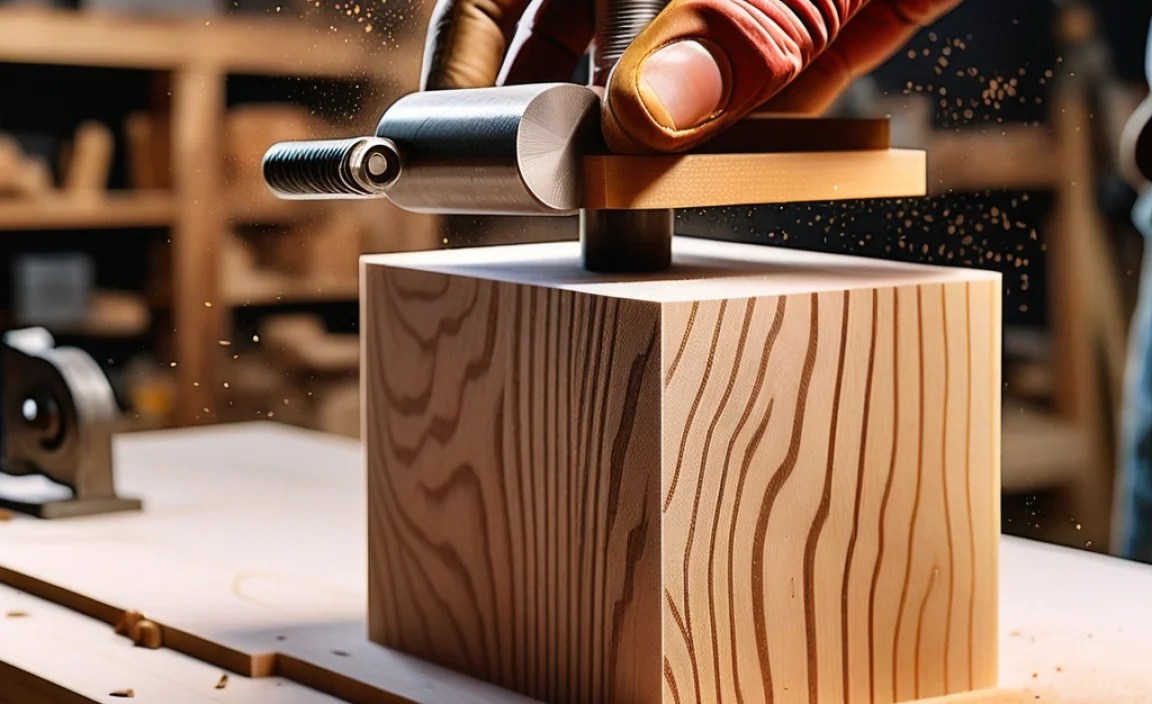
Let’s get building! This process is straightforward and highly customizable. We’ll build a basic block with a handle, perfect for a variety of sanding tasks.
Step 1: Design Your Sanding Block Shape
Before you cut anything, think about the shapes you typically sand on your lathe. Do you often work with bowls? Spindles? Small decorative items? This will influence the shape of your block.
- For Bowls: A curved sanding block that matches the outer radius of your bowls is incredibly effective. You can even make blocks with different curves to match various bowl diameters.
- For Spindles: A rectangular block with rounded edges, or even a V-shaped block for getting into tight corners, can be very useful.
- General Purpose: A simple oval or rectangular shape with beveled edges can handle most situations.
Draw your desired shape onto your scrap wood. Consider ergonomics – how will it feel in your hand? You’ll want a smooth, comfortable grip. If you plan to attach a handle, make sure there’s a logical place for it.
Step 2: Cut Out the Basic Shape
Once you’re happy with your design, it’s time to cut. Carefully cut out your shape using a hand saw, jigsaw, or bandsaw. Always wear your safety glasses and dust mask.
If you’re using a bandsaw, you can create more intricate shapes and curves. If you only have a hand saw, a simple rectangular or oval shape is easily achievable.
Step 3: Shape and Refine the Edges
This is where you make your sanding block user-friendly. Use sandpaper, a rasp, or a spindle sander (if you have one) to smooth all the edges. Round over any sharp corners to prevent them from snagging on your workpiece or leaving marks. You want the shape to glide smoothly against your turning.
Pay special attention to the edges that will contact your turning. They should be smooth and free of any splinters or rough spots. If you’re creating a curved block, ensure the curve is consistent and smooth.
Step 4: Add a Handle (Optional but Recommended)
A handle makes your sanding block much easier to control, especially when applying pressure. You can attach a simple handle in a few ways:
Method A: Simple Block Handle
- Cut a smaller piece of wood, about 1-2 inches wide and 4-6 inches long.
- Round over the edges of this handle piece for comfort.
- Position this handle piece onto the back of your main sanding block, perpendicular to its longest axis.
- Drill pilot holes through the handle and into the main block.
- Secure the handle with wood screws. Ensure the screw heads are flush or slightly countersunk so they don’t interfere with your grip.
Method B: Dowel Handle
- Drill a hole into the back of your main sanding block, deep enough to securely hold a dowel handle. The diameter of the hole should match your dowel.
- Cut a dowel to a comfortable length (e.g., 6-8 inches).
- Apply wood glue into the hole and onto the end of the dowel.
- Insert the dowel firmly into the hole. Clamp if necessary until the glue dries.
A handle gives you leverage and allows you to apply more consistent pressure without your hand getting tired or sore.
Step 5: Prepare for Sandpaper Application
You need a way to attach sandpaper securely. There are a few popular methods:
- Spray Adhesive: This is a tried-and-true method. Apply a light, even coat of spray adhesive to the sanding face of your block. Let it become tacky according to the manufacturer’s instructions before applying sandpaper.
- Double-Sided Tape: High-strength double-sided tape designed for crafting or general use can also work well. Apply it to the sanding face of the block, peel off the backing, and press the sandpaper on firmly.
- Hook-and-Loop (Velcro): For a system where you frequently change sandpaper grits, you can attach hook-and-loop fasteners to both your block and your sandpaper. You’ll need to cut sandpaper to size and attach the loop side of the fastener to it.
Clean the surface of your block thoroughly to ensure good adhesion. Any dust or debris can compromise the bond.
Step 6: Cut and Attach Sandpaper
Measure and cut your sandpaper so it’s slightly larger than the sanding face of your block. This allows you to wrap some of the paper around the edges, providing a cleaner finish and a more robust attachment.
If using spray adhesive or double-sided tape:
- Apply the adhesive or tape to the sanding face of your block.
- Carefully position the sandpaper onto the adhesive/tape, ensuring it’s centered and smooth.
- Press down firmly all over the sandpaper, paying attention to the edges.
- Wrap the excess sandpaper around the sides of the block and secure it with more adhesive/tape or small brads if desired.
If using hook-and-loop:
- Attach the hook side of the fastener to the sanding face of your block using adhesive or screws (ensure screws are countersunk).
- Cut your sandpaper slightly larger than the block, then attach the loop side of the fastener to the back of the sandpaper.
- Simply press the sandpaper onto the block. This makes grit changes very fast.
You now have a custom-made sanding block ready for action!
Advanced Techniques & Customization
Once you’ve mastered the basic construction, you can explore more advanced ways to create specialized sanding blocks for specific tasks.
1. Contoured Sanding Blocks for Bowls
Achieving a smooth interior curve in a bowl or the exterior curve of a vessel can be difficult with flat sandpaper. A contoured block is your best friend here.
- Measure the radius of the inside or outside curve you want to sand.
- Find a piece of wood with a similar thickness and cut out a segment that matches this radius. You can use a router with a circle jig or a bandsaw with a tapering jig for precise curves. Alternatively, you can use a hole saw of the desired diameter to cut a disc, then cut that disc in half or in segments.
- Shape the edges of this curved block to fit snugly against your turning.
- Attach sandpaper as described previously.
These blocks allow you to wrap the sandpaper around the curve and apply even pressure, resulting in a beautifully smooth finish. For a more forgiving feel, you can glue a layer of dense foam (like upholstery foam) to the wood backing before attaching the sandpaper. This adds a slight cushion that helps conform to minor imperfections.
2. V-Groove Sanding Blocks for Spindles
Detail work on spindles, especially around beads or coves, benefits greatly from a V-groove sanding block. This allows you to get the sandpaper right into the corners.
- Take a block of wood and cut a V-shaped groove down its length. This can be done with a table saw using a dado blade, a router with a V-groove bit, or even by carefully cutting with a hand saw.
- Ensure the groove is smooth and the edges are slightly rounded.
- Cut a strip of sandpaper that fits snugly into the V-groove.
- You can either glue the sandpaper into the groove or use a thin backing material that can be held in place with an elastic band or a small clamp integrated into the block.
This type of block is excellent for sanding between raised panels or inside decorative coves.
3. Using Different Abrasives and Backings
Don’t limit yourself to just sandpaper. Consider these options:
- Sanding Netting: Open-mesh sanding netting can be attached to blocks and is excellent for removing finishes or working with tougher materials where clogging can be an issue.
- Scouring Pads: Certain types of abrasive scouring pads can be attached to blocks for very gentle abrasion or for applying finishes like paste wax.
- Dense Foam vs. Firm Wood: For very irregular surfaces, a slightly softer backing like dense foam can help distribute pressure. For very precise work on consistent shapes, a hard wooden backing is ideal. You can often find dense foam at craft stores or fabric shops.
The key is experimentation. What works best for one project might not be ideal for another. Building a few different types of DIY sanding blocks will equip you for a wide range of turning challenges.
Choosing the Right Sanding Grit for Your Block
The sandpaper you choose is as important as the block itself. You’ll typically work through a progression of grits, starting coarser and moving to finer grits for a smooth finish. A common progression for wood might look like this:
| Grit Range | Purpose | Notes |
|---|---|---|
| 60-80 | Reshaping, removing tool marks, heavy stock removal | Use sparingly; can create deep scratches if not careful. |
| 100-150 | Initial smoothing, removing deeper scratches from coarser grits | Good for tackling moderate imperfections. |
| 180-220 | Final smoothing before applying finish | This is often considered the “pre-finish” grit for many woods. |
| 320-400+ | Super-smooth finishes, burnishing, preparing for very fine finishes | Used for achieving a silky-smooth surface. |
For your DIY blocks, you can pre-attach specific grits. Have a “rough work” block with 80 or 120 grit, a “medium work” block with 180 or 220 grit, and a “fine finish” block with 320 or 400 grit.
For bowl interiors, especially on spindle-mounted bowls, using sandpaper on a flexible backing can conform better to the curve. Dedicated bowl sanding systems are available, but your DIY blocks can often serve the same purpose effectively.
A great resource for understanding abrasives and their uses can be found on the Wood Magazine Sanding Guide, which offers comprehensive insights into choosing the right sandpaper for various tasks.
Safety First When Sanding on the Lathe
While a DIY sanding block makes sanding easier, safety on the lathe remains paramount. Always follow these guidelines:
- Wear Eye Protection: Always wear safety glasses or a face shield. Wood dust and debris can fly off unexpectedly.
- Use a Dust Mask/Respirator: Wood dust is harmful to your lungs. A good quality dust mask or respirator is essential, especially when sanding extensively.
- Secure Your Workpiece: Ensure your workpiece is securely mounted on the lathe before you begin sanding.
- Turn Off the Lathe When Possible: For initial sandpaper application or adjustments, it’s often safer to turn off the lathe.
- Use the Correct Speed: Sand at a moderate to low speed. High speeds can generate excessive heat and make the sandpaper burn the wood or become less effective. As a general rule, start at the slowest speed your lathe offers and increase it only if necessary, as long as you maintain control and don’t overheat your workpiece.
- Keep Hands Away from Moving Parts: Never let your hands or fingers get too close to the rotating workpiece or the lathe’s moving components.
- Keep Sanding Pad Away from Tool Rest: If using a handle, ensure the handle itself doesn’t get caught on the tool rest. Position the block so only the sanding surface contacts the wood.
- Use a Light Touch: Let the sandpaper do the work. Excessive pressure can lead to burning or uneven results.
- Be Mindful of Dust Extraction: If you have a dust collection system connected to your lathe or workbench, use it! This significantly reduces airborne dust. For more information on dust collection and its importance, check out the OSHA general industry standard for air contaminants, which highlights the need for dust control.
A well-made sanding block, combined with safe practices, will make your finishing process much more enjoyable and effective.
