Wood lathe thread cutting tools help you create precise, functional threads on your turned projects. This guide covers the essential tools for beginners, including dies and taps, and shows you how to use them safely and effectively to achieve professional results.
Tired of wobbly or ill-fitting threaded components for your woodworking projects? Creating clean, strong threads on a wood lathe might seem tricky at first, but it’s a rewarding skill that opens up many creative possibilities. Whether you’re making boxes with screw-on lids, custom hardware, or unique joining elements, having the right tools and knowing how to use them is key. Don’t worry; we’ll break down the world of wood lathe thread cutting tools into simple steps, so you can confidently tackle your next project.
This comprehensive guide will introduce you to the essential tools for cutting threads on your wood lathe. We’ll cover what they are, why they’re important, and how to select the right ones for your needs. Get ready to add a fantastic new capability to your woodworking repertoire!
Wood Lathe Thread Cutting Tools: Your Essential Toolkit

When it comes to adding threads to wood, we’re not talking about the super-fine, thin threads you’d find on metal bolts. Wood threads are generally coarser and designed to hold two pieces of wood together securely, or to act as a functional part of a design, like a lid or a decorative element. The tools we use are specialized to handle the properties of wood, ensuring clean cuts and strong, reliable threads.
The two main categories of tools you’ll encounter for cutting threads on a wood lathe are:
- Die Stocks and Dies: These are the most common and beginner-friendly option for cutting external threads (threads on the outside of a piece of wood, like a bolt).
- Taps: These are used for cutting internal threads (threads on the inside of a hole, like a nut or a socket).
Understanding these tools is your first step towards mastering wood thread cutting. Let’s dive into each one.
Understanding External Threads: Die Stocks and Dies
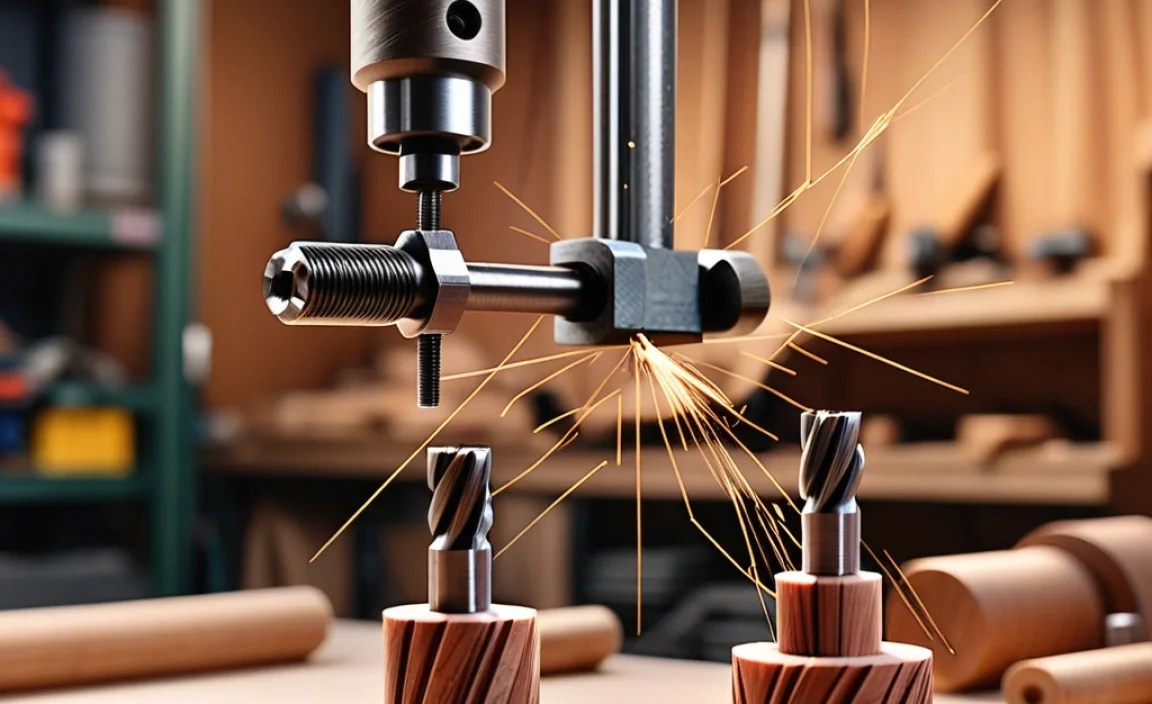
External threads are what you’ll likely work with most often as a beginner. Think of creating a threaded “bolt” that screws into something else. Die stocks and dies are your go-to for this. They work by cutting threads onto the end of a dowel or a turned spindle.
What is a Die Stock?
A die stock is essentially a handle that holds a circular cutting die. It looks a bit like a large wrench or a specialized T-handle. The die stock provides leverage and allows you to rotate the die smoothly over the wood to create the thread. They come in various sizes, and your choice will depend on the size of the die you plan to use.
What are Threading Dies?
Threading dies are circular metal forms with precisely cut teeth that match the thread profile you want to create. They are designed to be inserted into a die stock. For woodworking, you’ll typically find dies that produce coarser threads suitable for wood engagement.
Dies come in different “pitches” (the distance between threads) and sizes. Common sizes for woodworking might range from 1/4″ to 1″ or even larger, depending on the scale of your projects. You’ll also see them described by their thread per inch (TPI) or by a specific thread standard. For beginners, choosing a common, medium-coarse thread pitch is usually best.
How Die Stocks and Dies Work
The process involves securely mounting your wood on the lathe and then carefully engaging the die with the end of the workpiece. You rotate the die stock, moving the die across the wood. As you turn, the sharp teeth of the die “shave” away wood, forming the helical grooves that make up the thread. It’s a cutting process, not a scraping one.
Key components you’ll need:
- Lathe: Your wood lathe is the power source.
- Die Stock: The handle to hold the die.
- Threading Die: The cutting piece that forms the thread.
- Workpiece: The piece of wood you’re threading.
- Cutting Fluid (Optional but Recommended): Helps lubricate and cool the die and wood, making for cleaner cuts and extending die life.
Safety is paramount. Always wear safety glasses and ensure your workpiece is securely mounted. Start with a slow lathe speed.
Choosing the Right Die and Die Stock
When selecting a die and die stock, consider these factors:
- Size: The die size should match the diameter of the wood you intend to thread.
- Pitch (TPI): For wood, a coarser pitch (fewer threads per inch) is generally more effective and less prone to splitting the wood. 4, 6, or 8 TPI are common starting points.
- Material: High-speed steel (HSS) is a common and durable material for cutting dies.
- Die Stock Type: Adjustable die stocks can accommodate a range of die sizes, offering more versatility.
Many woodworking tool suppliers offer thread-cutting kits that include a popular-sized die stock and a selection of common dies, which can be a great value for beginners.
Understanding Internal Threads: Taps
While dies cut external threads, taps are used to create internal threads. This is how you’d make a “nut” or a threaded socket that a wooden bolt could screw into. Tap and die sets for wood are usually sold separately or as part of more comprehensive kits.
What is a Tap?
A tap is a tool with cutting edges along its length, designed to be inserted into a pre-drilled hole. As you rotate the tap (often with a tap wrench), it cuts internal threads into the walls of the hole. For woodworking, taps typically have coarser threads than those used for metalworking.
Taps come in different types, but for woodworking, you’ll generally use:
- Taper Taps: Have a gradually tapered end, making it easier to start the threading process.
- Plug Taps: Have a less tapered end and are used after a taper tap or for re-threading.
- Bottoming Taps: Are designed to cut threads all the way to the bottom of a blind hole.
For most beginner wood-thread projects, a taper tap is the ideal starting point.
How Taps Work
To use a tap, you first need to drill a hole of the correct diameter in your workpiece. This is crucial. If the hole is too small, the tap will struggle to cut and could break. If it’s too large, the threads won’t be deep enough to be strong. Then, you insert the tap into the hole, align it perfectly straight, and begin to turn it, usually with a tap wrench, applying downward pressure. The tap’s cutting flutes remove material as it advances, creating the internal thread.
Key components for tapping:
- Lathe (optional for tapping): While some tapping might be done off the lathe, it’s often easier to hold the workpiece securely on the lathe for consistent drilling and tapping.
- Drill Bit: For creating the pilot hole. The size is critical and usually specified by the tap manufacturer or in thread charts.
- Tap: The tool that cuts the internal threads.
- Tap Wrench: A T-handle tool designed to grip the square tang of a tap and provide leverage for turning.
- Workpiece: The piece of wood with the hole.
- Cutting Fluid (Optional but Recommended): Lubrication aids in cleaner threads.
Choosing the Right Tap
Selecting the correct tap involves understanding:
- Thread Size & Pitch: Just like with dies, taps are specified by their diameter and TPI. Ensure it matches the corresponding die or the thread you want to mate with.
- Type: Start with a taper tap for ease of use.
- Material: HSS taps are standard for durability.
Again, kits often combine taps and dies for specific thread sizes, which can simplify the purchasing process for newcomers.
Essential Wood Thread Cutting Tools: A Quick Reference

Here’s a handy table summarizing the core tools you’ll need for cutting external and internal threads on your wood lathe.
| Tool Type | Purpose | Why it’s Essential | Beginner Tip |
|---|---|---|---|
| Die Stock | Holds circular threading dies for external threads. | Provides leverage and control for cutting smooth external threads. | Look for a sturdy, comfortable grip. Adjustable ones offer flexibility. |
| Threading Dies (Circular) | Cut external threads on wood. | These are the cutting edges that form the thread profile. | Start with common sizes (e.g., 1″ or 3/4″) and medium-coarse pitches (e.g., 4-6 TPI). |
| Tap Wrench (T-Handle) | Grips and turns taps for internal threads. | Essential for applying controlled rotation and pressure to cut internal threads. | Ensure it fits the size of your tap’s tang (the end you hold). |
| Taps (Taper, Plug) | Cut internal threads in pre-drilled holes. | Allow you to create threaded sockets or nuts for mating parts. | A taper tap is best for starting internal threads. |
| Drill Bits | Create pilot holes for taps. | The correct pilot hole size is critical for successful tapping. | Always check the tap manufacturer’s recommendation for drill bit size. |
| Lathe Dog/Faceplate | Securely hold the workpiece for turning and threading. | Ensures the wood spins true and is held firm during the cutting process. | Use a method that prevents the wood from slipping. |
| Measuring Tools (Ruler, Caliper) | Check dimensions and thread sizes. | Vital for ensuring your drilled holes are the correct size and your threads match. | Precision is key for parts that need to mate together. |
| Marking Tools (Pencil, Center Finder) | Mark the center and thread start point. | Helps ensure accurate alignment and a clean start to your threads. | A center finder can be very helpful for precise hole placement. |
| Cutting Fluid/Lubricant | Lubricate the cutting action. | Reduces friction, clears chips, and helps create cleaner threads while extending tool life. | Specialized thread cutting fluid or even a light oil can work. |
Step-by-Step: Cutting External Threads with a Die
Creating external threads is a foundational skill. Follow these steps for a smooth process:
- Prepare Your Lathe: Ensure your lathe is clean and all guards are in place. Install your chosen wood block or spindle and make sure it’s securely mounted between centers or on a faceplate/chuck.
- Shape Your Spindle: Turn the end of your wood to the desired diameter for threading. For most dies, you’ll want the wood to be slightly smaller than the nominal thread size to allow the threads to form properly. Consult your die’s specifications if available. A slight taper towards the end can also help the die start more easily.
- Set Up the Die Stock: Insert the correct die into your die stock. Ensure it’s seated firmly and the retaining screws are tightened.
- Position the Die: With the lathe spinning at a very slow speed (usually the lowest speed setting), bring the die stock up to the rotating end of your workpiece. Align the die so it’s perpendicular to the spindle. Some die stocks have handles that help guide the tool.
- Start Cutting: Once aligned, apply gentle but firm pressure. Begin turning the die stock. You should feel the die start to bite into the wood. A few drops of cutting fluid here can be very beneficial.
- Continue Threading: Keep turning the die stock in a steady motion. Don’t force it. If you feel significant resistance or hear excessive tearing, stop, back the die off slightly to relieve pressure, and then continue. You may need to make several passes, advancing a little each time.
- Back Off and Clear Chips: Periodically, back the die off completely (turning counter-clockwise on the die stock) to clear wood shavings and reapply cutting fluid. This prevents chips from clogging the die and making the process difficult.
- Check Your Progress: After a few passes, stop the lathe and inspect your threads. Are they cutting cleanly? Is the depth appropriate? You can test-fit with a nut or another threaded component at this stage.
- Finishing: Continue threading until you achieve the desired length and depth. Once complete, back the die off and remove it from the workpiece. Clean up any rough edges with a chisel or sandpaper if needed.
Pro Tip: For very hard woods, taking lighter passes and using more cutting fluid will yield better results and prevent the wood from splitting.
Step-by-Step: Cutting Internal Threads with a Tap
Internal threads are a bit more involved as they require precise drilling first. Here’s how to tap a hole:
- Prepare Your Workpiece: If your workpiece is on the lathe, ensure it’s securely mounted. If tapping off the lathe, secure it firmly in a vise or workbench.
- Drill the Pilot Hole: This is critical. Using a drill bit of the correct size – as recommended by the tap manufacturer or a thread chart (like those found on Machinist-Guide.com) – drill a hole into your workpiece. Ensure the drill is perfectly perpendicular to the surface. If tapping on the lathe, you can often hold the drill bit in the tailstock for alignment.
- Select and Mount the Tap: Insert the taper tap (if using one) into your tap wrench. Ensure the tang of the tap is securely gripped by the wrench.
- Position the Tap: Carefully place the tip of the tap into the center of the drilled hole. Make sure the tap is absolutely straight up and down (perpendicular to the surface). This alignment is key to preventing broken taps and crooked threads.
- Start Tapping: Apply gentle downward pressure and begin to turn the tap wrench clockwise. You should feel the tap start to cut into the wood. As soon as you feel it engage, stop applying downward pressure and just turn.
- Tapping Motion (The “One Turn, Back Half” Rule): For successful tapping, especially in wood, a common technique is to turn the tap clockwise for one full turn, then rotate it counter-clockwise about half a turn. This breaks the chips cleanly and prevents them from clogging the tap, which can lead to breakage.
- Lubricate and Clear Chips: Periodically, withdraw the tap completely from the hole. Clean out any wood shavings from both the tap flutes and the hole. Reapply cutting fluid or lubricant to the tap and the hole before re-inserting.
- Continue Tapping: Repeat the tapping process, advancing the tap into the hole. If you started with a taper tap, you might switch to a plug tap for better thread depth.
- Check and Finish: As you approach the desired depth (or if you’re tapping through a hole), check the thread quality. Once completed, carefully back the tap out counter-clockwise. Inspect the threads. Test-fit with your corresponding threaded piece.
Safety Note: Never force a tap. If it becomes very difficult to turn, stop immediately. You’re likely to break the tap, which is much harder to remove than it is to fix crooked threads.
Types of Wood Threads and Their Uses
Wood thread cutting tools are versatile. The types of threads you can create range from functional to purely decorative. The choice of die/tap and how you use them will determine the final outcome.
Functional Threads
These are threads designed to hold two pieces together or to create a movable joint.
- Screw-Together Boxes/Lids: One of the most common uses. An external thread is cut on the box body, and an internal thread is cut into a ring or the lid itself, allowing it to screw on and off.
- Jigs and Fixtures: Threaded components can be used to create adjustable parts for woodworking jigs.
- Handles and Knobs: Attaching specialized handles or knobs to tools or other projects.
- Custom Hardware: Creating unique pulls, knobs, or connectors for furniture or craft items.
