Wood lathe spindle threading with the right attachment makes creating precise threads accessible and dramatically simplifies a once-challenging process for beginners.
Have you ever admired a beautifully turned wooden piece with perfectly formed screw threads? Maybe for a lidded box, a fine furniture component, or even a functional jig? Getting those threads just right on a wood lathe can seem intimidating at first. Many beginners struggle with achieving consistent pitch and depth, leading to frustration and less-than-perfect results. But what if I told you there’s a “genius essential tool” that can transform this intricate task into a straightforward and rewarding part of your woodworking? This guide will introduce you to wood lathe spindle threading attachments and show you how they can make creating precise threads achievable for anyone. Let’s dive in and unlock this powerful technique!
What is a Wood Lathe Spindle Threading Attachment?

A wood lathe spindle threading attachment is a specialized tool designed to help you cut accurate and repeatable screw threads onto the end of a workpiece. Think of it as a guided system that controls the movement of your threading tool, ensuring it follows a precise helical path. Without one, cutting threads manually on a lathe requires a high degree of skill, precise speed control, and a very steady hand to achieve clean and functional results. These attachments, often referred to by various names like “thread chasers” or “indexing threaders,” simplify this process dramatically.
They work by engaging with a pre-set mechanism that dictates the movement of the tool bit as the spindle rotates. This engagement typically locks the tool’s lateral movement to the spindle’s rotation at a specific ratio, which corresponds to the desired thread pitch. For beginners, this means you can focus on the cutting action itself, rather than fighting to maintain a perfect rhythm, making the entire process much more manageable and the outcomes far more professional.
Why You Need a Spindle Threading Attachment

Let’s be honest, cutting threads by hand on a wood lathe can be a steep learning curve. You need to master techniques like:
Speed Control: The lathe’s speed must be consistent and appropriate for threading.
Tool Presentation: The cutting tool needs to be held at the correct angle and depth.
Timing: You must introduce the tool at the exact point in the spindle’s rotation for each pass.
Progression: Gradually deepening the cut over multiple passes without “losing the thread.”
Many woodworkers find this combination of skills challenging, especially for intricate projects. This is where a spindle threading attachment shines. It acts as a foolproof guide, ensuring that each pass of the cutting tool aligns perfectly with the previous one.
Here are some compelling reasons why this tool is a game-changer for wood lathe users:
Accuracy and Consistency: Achieve perfectly spaced and uniform threads every time, eliminating guesswork.
Ease of Use for Beginners: Significantly lowers the barrier to entry for thread cutting, allowing newcomers to achieve professional results quickly.
Efficiency: Once set up, cutting threads is much faster and less physically demanding than manual methods.
Versatility: Many attachments can handle a range of thread pitches and sizes by simply changing gears or guides.
Reduced Material Waste: Fewer mistakes mean less scrapped material.
Enhanced Project Possibilities: Opens up a world of projects that require threaded components, such as lidded boxes, modular furniture, custom jig parts, and decorative elements.
How Wood Lathe Spindle Threading Attachments Work
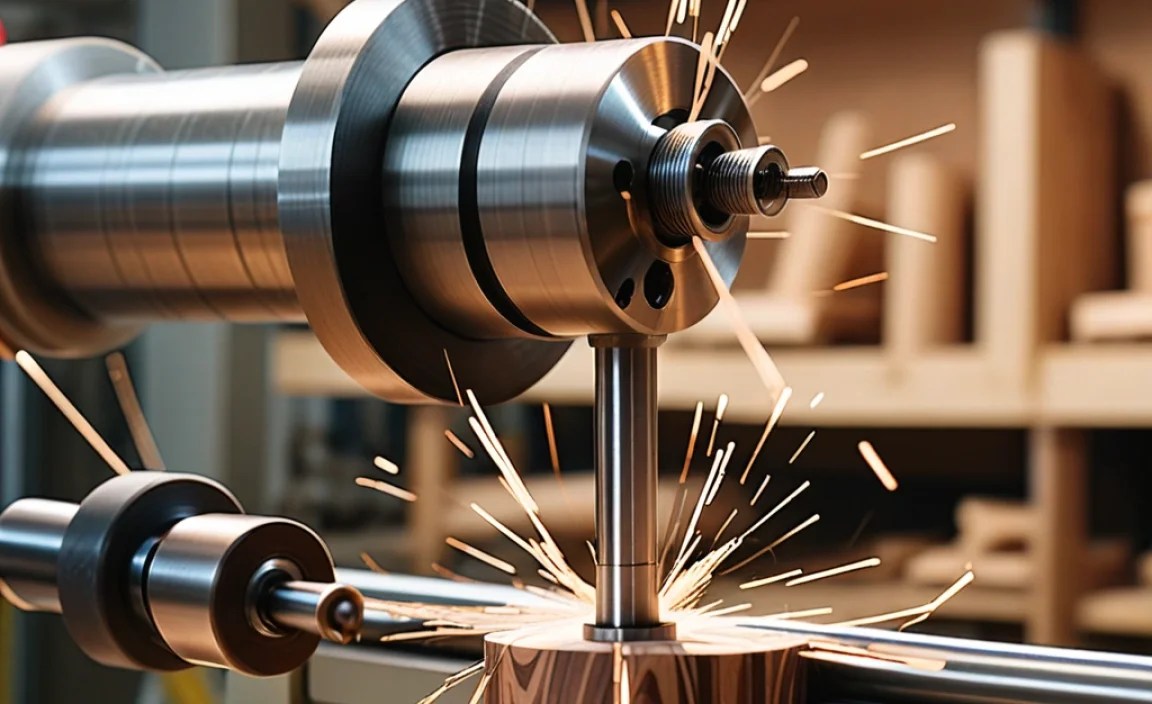
The core principle behind most spindle threading attachments is a form of mechanical indexing or gearing that links the longitudinal feed of the cutting tool to the rotational speed of the lathe spindle. When engaged, the attachment ensures that for every rotation (or a fraction thereof) of the spindle, the cutting tool advances by a precise amount corresponding to the thread’s pitch.
There are several common types of threading attachments, each with its own method of operation:
1. Gear-Driven Attachments
These are perhaps the most common and robust types. They typically involve a set of interchangeable gears. The gears connect the lathe’s headstock (or a dedicated drive shaft on the attachment) to a lead screw or guide mechanism that moves the cutting tool holder.
Mechanism: A driving gear on the spindle or an external drive connects to a driven gear. This set of gears, often in conjunction with other gear ratios, dictates how much the lead screw moves for each revolution of the spindle. By changing the gear combination, you can achieve different thread pitches.
Setup: Requires selecting the correct gear set based on the desired thread pitch (usually outlined by the manufacturer or calculated using a provided formula).
Operation: Once set, you engage the attachment, bring the tool to the workpiece, and make your passes. The attachment handles the synchronization.
2. Lever- or Cam-Actuated Attachments
Some simpler designs use a lever and cam system or a roller that follows a specific pattern or guide.
Mechanism: A hardened roller or follower on the tool holder engages with a shaped cam or a hardened steel guide. As the spindle rotates, the cam or guide dictates the lateral movement of the tool holder, effectively chasing the thread.
Setup: Often involves installing a specific cam or guide for the desired thread pitch. Some may use a lever system that, when pulled or pushed, engages the cutting mechanism.
Operation: The user typically engages a lever to bring the tool into contact or to lock it, and the rotation of the spindle drives the cam/guide mechanism.
3. Indexing-Style Attachments
These might use a system where a partial turn of the spindle locks the tool at specific intervals, allowing for manual guiding along a pre-set path. While less common for “automatic” threading, they assist by ensuring the tool returns to the correct starting point. This is more about ensuring the start of the thread is always in the same place, rather than dictating the path.
Regardless of the specific mechanism, all these attachments share the common goal of mechanically linking the spindle’s rotation to the tool’s longitudinal feed, ensuring perfect thread replication.
Choosing the Right Spindle Threading Attachment

When you’re looking to add a spindle threading attachment to your workshop, several factors come into play. The best choice for you will depend on your budget, the types of projects you envision, and the lathes you currently own or plan to purchase.
Here’s a breakdown of key considerations:
1. Lathe Compatibility
This is the most crucial factor. Not all attachments fit all lathes.
Mounting: How does the attachment secure to your lathe? Does it attach to the bed, the tool rest, or the banjo?
Spindle Thread: Does the attachment’s drive mechanism mate with your lathe’s spindle thread (e.g., 1″ x 8 TPI, 1.5″ x 8 TPI)? Some attachments have adapters or can be modified, but buying one designed for your specific lathe is always easiest.
Lathe Swing and Bed Length: Ensure the attachment’s size and reach are appropriate for your lathe’s capacity.
2. Thread Pitch Range
What kind of threads do you want to make?
Standard Pitches: Most attachments are designed for common thread pitches used in woodworking, such as 8, 10, or 12 threads per inch (TPI).
Metric Threads: If your projects require metric threads, ensure the attachment can accommodate them, as this is less common for standard woodworking attachments.
Fine Threads: Some specialized attachments can cut finer threads, but these are often more expensive.
3. Build Quality and Materials
A well-built attachment will be more durable and provide better results.
Materials: Look for sturdy metal construction (steel, aluminum) with hardened steel components where cutting or engagement occurs.
Precision: Well-machined parts will lead to smoother operation and more accurate threads. Avoid attachments with excessive play or sloppiness.
4. Ease of Setup and Use
As a beginner, a simpler setup is often better.
Gear Changes: How easy is it to change gears or guides for different thread pitches?
Indexing: Does it have a clear indexing system if manual indexing is part of its operation?
Tool Holder: Is the tool holder adjustable and easy to adjust for cutter height and angle?
5. Brand Reputation and Reviews
What do other woodworkers say?
Manufacturer: Reputable woodworking tool manufacturers often produce reliable attachments.
User Reviews: Read online reviews from fellow woodturners. Look for comments on ease of use, durability, and the quality of threads produced.
6. Cost
Threading attachments can range from a couple of hundred dollars to over a thousand, depending on complexity and quality. Set a budget and try to find the best option within it. Remember that investing in a good quality tool can save you money on materials and frustration in the long run.
For beginners, starting with a reputable brand that offers clear instructions and readily available support is advisable. Many woodworkers find that a robust gear-driven attachment provides the most consistent and reliable results.
Essential Tools and Accessories for Spindle Threading
Beyond the threading attachment itself, a few other tools will make your threading experience smoother and more successful. Having these items on hand will ensure you’re well-prepared for the task.
Here’s a list of essentials:
1. The Wood Lathe
Naturally, you need a wood lathe! The size and power of your lathe will influence how easily you can thread larger workpieces and the types of threads you can effectively cut. A sturdier lathe with good vibration damping is ideal.
2. The Threading Attachment
This is the star of the show! Ensure it’s compatible with your lathe and chosen thread pitches.
3. Cutting Tools (Hss or Carbide)
You’ll need specialized threading cutters.
HSS (High-Speed Steel) Cutters: These are traditional and can be easily ground to specific profiles and angles. They are forgiving for beginners.
Carbide Inserts: Modern carbide inserts offer excellent sharpness and durability, often lasting much longer than HSS. They are typically more expensive but can produce very clean threads. Make sure the insert’s profile matches the thread you want to cut (e.g., V-thread, Acme, square).
4. Tool Holder
This is usually part of the threading attachment itself, designed to hold the cutting tool securely at the correct height and angle relative to the workpiece.
5. Spindle Speed Control
The ability to set and maintain a consistent, relatively slow spindle speed is critical for safe and effective threading. Many modern lathes offer variable speed control, which is a huge advantage. If your lathe doesn’t have this, you might need to rely on finding the “sweet spot” on a multi-speed belt drive system.
For reference, a spindle speed of 200-500 RPM is often recommended for threading, depending on the workpiece diameter and the tool sharpness. For more information on safe lathe operation, consult resources from reputable woodworking safety organizations like the Woodworking Safety Council.
6. Measuring Tools
Calipers: Useful for measuring the diameter of your workpiece and later for checking thread dimensions.
Ruler or Tape Measure: For general measurements.
7. Safety Equipment
Always prioritize safety in the workshop.
Safety Glasses or Full Face Shield: Essential to protect your eyes from chips and dust.
Dust Mask or Respirator: For airborne particles.
Ear Protection: Lathe operation can be noisy.
8. Marking Tools
Pencil or Marker: To mark the starting point of your threading area.
9. Lathe Wrench(es)
For tightening and loosening the workpiece on the lathe spindle and for any necessary adjustments to the lathe itself.
10. Lubricant/Cutting Fluid (Optional but Recommended for Metal)
While we are focusing on wood, if you ever venture into threading metal spindles with a similar attachment, a good cutting fluid is essential. For wood, a light coat of paste wax on the threads after cutting can help them screw smoothly, but it’s not typically used during the cutting process itself.
Having these items readily available will ensure you can tackle your first spindle threading project with confidence and achieve excellent results.
Step-by-Step Guide to Wood Lathe Spindle Threading
This guide assumes you have a gear-driven spindle threading attachment installed and set up for your desired thread pitch. Always refer to your specific attachment’s manual for precise instructions.
Preparation is Key
1. Select and Prepare Your Stock: Choose a piece of wood that is suitable for threading. Ensure it’s dry and free from defects in the area where the threads will be cut. Face off the end of the workpiece so it’s perfectly flat.
2. Mount the Workpiece: Securely mount the workpiece on your lathe spindle. For threading, you typically thread onto the nose of the spindle itself, so you’ll often remove the chuck and thread directly onto the spindle threads or onto a separate threaded insert mounted to the spindle. For this guide, we’ll assume you are threading the end of a separate piece intended to screw onto the lathe’s spindle or a spindle adapter.
3. Set Spindle Speed: Adjust your lathe to a slow, consistent speed. A good starting point is usually between 250-500 RPM. Avoid using the slowest speed if it causes excessive chatter, and never use your lathe’s highest speed for threading.
4. Install and Set Up the Threading Attachment:
Follow your manufacturer’s instructions to mount the attachment securely to your lathe bed or tool rest support.
Install the correct gear set for your desired thread pitch (e.g., if you want to thread onto a 1″ x 8 TPI spindle, you’ll use the gears that create an 8 TPI thread on your workpiece).
Ensure the lead screw or guide mechanism moves freely and is properly engaged.
If your attachment requires an initial setup for tool height, adjust it so the cutter will be at the center of the workpiece when engaged.
5. Position the Cutting Tool:
Insert your chosen threading cutter (HSS or carbide) into the tool holder.
Bring the cutting tool up to the workpiece. Gently advance the tool until its tip just touches the outer diameter of the wood where you want to start threading.
Note the position of the caliper jaws or a reference mark on the tool post. This is your starting point.
Adjust the cutting tool height so it’s precisely at the center line of the workpiece. This is critical for proper thread formation.
Set the tool’s angle. For standard V-threads, this is typically 60 degrees. Some attachments have built-in angle adjustments.
6. Mark Your Threading Area: Use a pencil to mark the length of the workpiece where you want the threads to run. It’s also good practice to make a small, clear mark on the end of the workpiece and on the threading attachment’s drive mechanism (if applicable) to help you synchronize the first pass.
The Threading Process
1. Engage the Attachment (First Pass):
Ensure the lathe is spinning at your set speed.
Carefully engage the threading attachment’s lever or mechanism that brings the cutter into an engaged position.
Simultaneously, very gently advance the cutting tool longitudinally (along the bed of the lathe) with a tiny cut depth. You are not trying to cut a deep thread initially. The attachment synchronization is what’s critical.
Make sure you are starting from the marked position on the workpiece.
As you make the pass, listen to the lathe and feel the cut. You should hear a consistent “chasing” sound.
Disengage the cutter before reaching the end of the desired thread length.
Disengage the threading attachment mechanism.
2. Retract and Reset:
Back the cutting tool completely away from the workpiece.
Rotate the spindle by hand until the cutting tool’s starting mark aligns with the attachment’s starting reference mark. If you’re using a gear-driven attachment with a lead screw, you might need to run the attachment mechanism in reverse to bring the tool back to its starting position, then disengage it.
3. Second Pass and Subsequent Cuts:
For the second pass, advance the cross-slide or tool post inward (radially) by a small amount – just enough to take a shallow shaving. This is your depth adjustment. A very small adjustment is key, especially when starting. HSS cutters might require slightly deeper cuts than fresh carbide inserts.
Re-engage the threading attachment, ensuring smooth engagement from the starting point.
Make the cut, again disengaging the cutter before the end of the thread.
Retract the tool and reset for the next pass as you did in step 2.
4. Repeat and Refine:
Continue this process: advance inwards a tiny amount, engage, cut, disengage, retract, reset.
The depth of cut should be consistent for each pass. The thread will gradually deepen.
Periodically check your progress by eye and by test-fitting. You can also use calipers to measure the thread root and crest diameter.
Listen to the lathe. If it starts to sound strained or you feel the tool digging hard, your depth of cut might be too aggressive. Back off.
5. Finishing the Thread:
As you get close to the final thread diameter, make very shallow finishing passes. This will help clean up the threads and provide a smoother finish.
Once the thread appears to be the correct size and depth, you can back off the cutter completely and make one final forward pass with the tool disengaged from the cut, just to “clean” the thread.
