Want effortlessly smooth finishes on your wood lathe projects? A DIY sanding disc kit is your secret weapon for professional results without the hassle or expense. This guide shows you exactly how to create one, saving you time and money while achieving that perfect polish every time, making your woodworking truly shine.
Hey, folks! Daniel Bates here from Lathe Hub. Ever spent hours wrestling with a project on the wood lathe, only to be disappointed by a less-than-perfect finish? You’re not alone. Sanding can be a real challenge, especially when you’re starting out. Those awkward shapes, reaching tight spots – it’s enough to make anyone want to just paint over it! But what if I told you there’s a way to make sanding not just easier, but actually effortless and incredibly effective? Today, we’re diving into creating your very own wood lathe sanding disc DIY kit. We’ll break down exactly what you need and how to assemble it so you can achieve those smooth, professional-looking finishes on all your turned pieces. Get ready to say goodbye to frustrating sanding sessions and hello to beautiful, flawless results!
Why a DIY Wood Lathe Sanding Disc Kit?

Alright, let’s talk about why building your own sanding disc kit for the wood lathe is such a smart move. You’ve probably seen a ton of fancy sanding tools out there, and while some are great, they often come with a hefty price tag. For beginners especially, investing in a full array of specialized sanding gadgets can feel overwhelming and expensive. A DIY kit lets you tailor your sanding arsenal to exactly what you need, often using items you might already have or can acquire affordably.
Think about it: each project you tackle might present unique sanding challenges. A pre-made kit might include tools you rarely use, while missing that one specific attachment you desperately need. By creating your own kit, you gain control. You select the abrasives, the backing materials, and the attachment methods that best suit the types of wood you work with and the common shapes you turn. This personalized approach not only saves you money but also significantly boosts your efficiency and the quality of your finished pieces.
Plus, the process of creating your own tools can be incredibly rewarding. It’s a hands-on learning experience that deepens your understanding of how tools work and how to adapt them to your specific needs. It’s about empowering yourself as a woodworker, moving beyond just using tools to understanding and even customizing them. Let’s get into what makes a good DIY kit.
What Goes Into a Functional DIY Sanding Disc Kit?

Creating your own wood lathe sanding disc kit is all about flexibility and what works best for your projects. At its core, a sanding disc setup needs a way to hold an abrasive material securely and a method to attach it to your lathe, usually via a drive center or spur. The beauty of DIY is that you can mix and match components to suit various tasks.
Here are the key ingredients you’ll want to consider for your kit:
- Abrasive Discs: These are your workhorses. You’ll need a range of grits, from coarse (like 80 or 120 grit) for shaping and rapid material removal, to medium (like 180 or 220 grit) for refining, and fine (like 320, 400, or even higher) for achieving that silky-smooth finish. Consider both adhesive-backed discs and hook-and-loop (Velcro-style) options, as they offer different mounting advantages.
- Backing Plates/Pads: These provide a stable, flat surface for your abrasive discs. You can use a variety of materials, from firm MDF or plywood circles to slightly flexible rubber or foam pads to conform to curved surfaces. The key is to have a way to securely mount the abrasive.
- Attachment Hardware: How will you connect your sanding setup to the lathe? This is crucial. Common methods include:
- Screw-in attachments: These directly thread into the lathe spindle or a faceplate.
- Drive Centers/Spur Drives: These are driven by the headstock for rotation.
- Live Centers: These mount in the tailstock to provide support.
- Arbors/Mandrels: These are shafts that fit into your tool rest holder and have a threaded end to accept a backing plate or specialized sanding head.
- Adhesives/Fasteners: If you’re using adhesive sandpaper, you’ll need it. For hook-and-loop systems, you’ll need the corresponding hook-and-loop backing pads and discs. Strong spray adhesive or even double-sided tape can be useful for attaching sandpaper to custom backing plates.
- Adaptability: Think about how you can make your components work together. Having backing plates with different thread sizes, or using adapters, can greatly increase the versatility of your kit.
The best DIY kits aren’t necessarily about having the most expensive components, but about having the right combination for the jobs you do most often. Let’s look at how to put it all together.
Building Your Basic Sanding Disc Setup
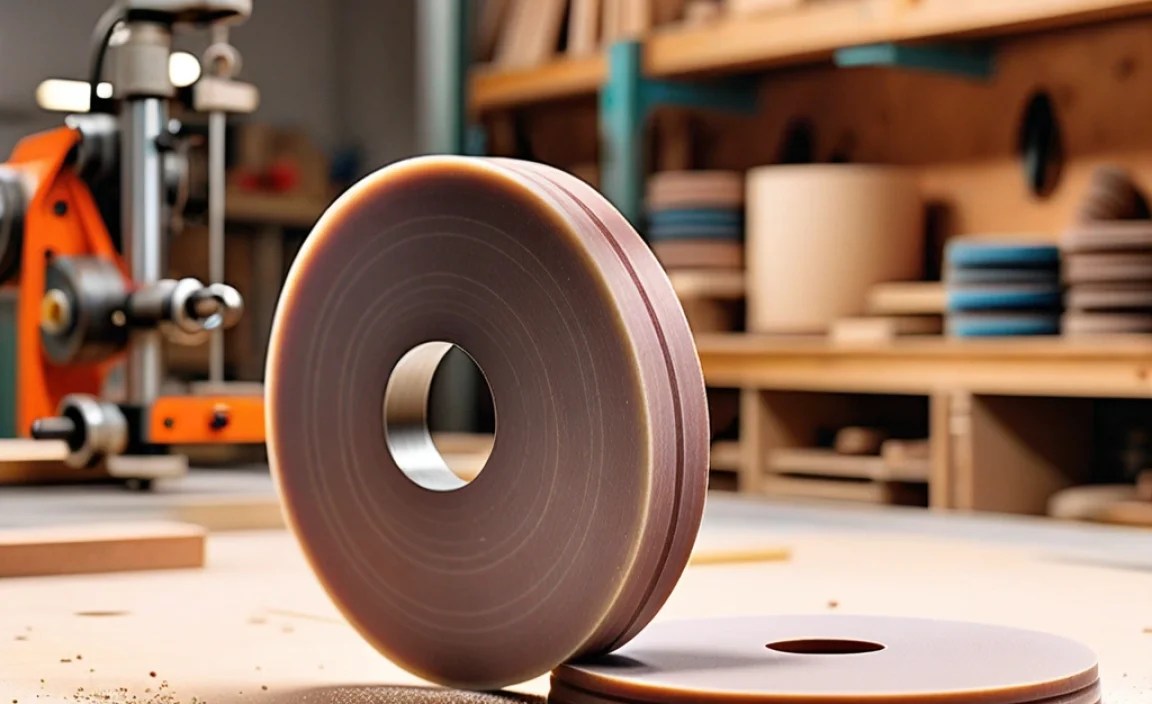
Let’s start with a foundational piece for your DIY kit: a simple, effective disc sander that can be attached to your lathe. This is a great entry point and will get you sanding in no time. For this, we’ll focus on creating a durable backing plate that you can then outfit with various abrasives.
Tools and Materials You’ll Need:
- A piece of 1/2-inch or 3/4-inch plywood or MDF (medium-density fiberboard)
- A suitable threaded arbor or a screw that matches your lathe’s spindle or faceplate
- Wood glue
- Sandpaper in various grits (e.g., 80, 120, 180, 220, 320)
- Scissors or a rotary cutter
- A drill and bits, or a hole saw
- A compass or ruler for marking circles
- Optional: A jigsaw or bandsaw for nicely shaped discs
Step-by-Step Assembly:
- Determine Your Size: Decide on the diameter of your sanding discs. Common sizes range from 3 to 6 inches, depending on your lathe and what you typically turn. For a versatile setup, consider making a few different sizes.
- Cut the Backing Discs: Using your compass, draw circles on your plywood or MDF. Cut these out. If you have a bandsaw or jigsaw, you can make them perfectly round. If not, a carefully cut circle with a rasp or sandpaper can work.
- Prepare for Attachment:
- Option A (Threaded Arbor): If you have a threaded arbor that fits your lathe’s tool rest mount or spindle, you’ll need to drill a central hole in your plywood discs slightly smaller than the arbor’s diameter. Then, you’ll press-fit or lightly glue the discs onto the arbor. Ensure they are mounted securely and run true.
- Option B (Screw/Bolt): If you’re using a faceplate or plan to screw directly into your lathe’s spindle (use this with caution and ensure proper thread fit!), drill a hole in the center of your backing discs that will accept your chosen screw or bolt. You might also drill a few mounting holes if attaching to a faceplate.
- Add Sandpaper:
- Adhesive Sandpaper: Cut circles of sandpaper slightly larger than your backing discs. Apply a strong spray adhesive or double-sided tape to the backing disc. Carefully center and apply the sandpaper, smoothing out any wrinkles or bubbles. Trim the excess sandpaper from the outer edge if needed.
- Hook-and-Loop System: Purchase hook-and-loop backing pads that match your arbor size and lathe spindle. Then, use hook-and-loop sanding discs that adhere to these pads. This method allows for quick and easy grit changes.
- Mount and Test: Attach your new sanding disc to the lathe. Spin it slowly at first to ensure it’s balanced and doesn’t wobble excessively. Make any necessary adjustments.
With this basic setup, you have a versatile sanding disc ready for action. You can now easily swap out different grit papers and start refining your turned pieces. For more advanced applications, we can explore specialized attachments.
Advanced Sanding Techniques and DIY Solutions

Once you’ve got your basic sanding disc down, you might find yourself needing solutions for more specific sanding tasks – like working on tight curves, reaching into coves, or achieving an ultra-fine polish on larger surfaces. This is where a bit of creativity can really expand your DIY kit.
DIY Sanding Mandrels and Drum Sanders
A common need is for a flexible sanding solution that can adapt to different wood shapes. Two excellent DIY additions are sanding mandrels and drum sanders.
Creating a DIY Sanding Drum
A sanding drum is fantastic for smoothing internal curves, like those found on bowls or hollow forms. You can buy them pre-made, but making your own is straightforward and cost-effective.
Materials:
-
- A piece of hardwood (e.g., 1-inch diameter dowel or a small block)
- A threaded rod (that matches your lathe spindle or faceplate configuration)
- Two smaller blocks or washers to sandwich the drum
- Wood glue
- Sandpaper
Steps:
- Cut a length of hardwood for your drum. The length can vary depending on what you need to sand.
- Drill a hole through the center to accommodate your threaded rod.
- If using a dowel, you can cut lengthwise slits into it to allow for a bit of flex, making it conform better to curves.
- Attach the hardwood drum to the threaded rod using wood glue and possibly a washer or nut on each end to secure it, creating a spindle.
- Wrap abrasive paper around the drum. Secure the ends with tape or glue. For a more robust solution, consider wrapping with hook-and-loop material on the drum and using hook-and-loop sandpaper.
- Mount this DIY sanding drum on your lathe.
DIY Sanding Mandrels for Small Details
For sanding intricate details, small curves, or the insides of smaller hollow forms, a smaller sanding mandrel is invaluable. You can adapt this concept using various materials.
- Adapt a Drill Bit: A longer drill bit (the shank portion) can sometimes be chucked into your tailstock, and you can build a small sanding pad that attaches to the tip, or wrap sandpaper directly around the bit shank.
- Use a Lathe Center: A simple spur drive center can have sandpaper wrapped tightly around its teeth or an attached backing.
- Custom Wood Mandrels: Turn small wooden cylinders on your lathe that have a threaded end or a dowel pin to accept a small sanding pad.
DIY Reusable Sanding Pads
Instead of constantly gluing or sticking new discs, consider creating reusable backing pads.
- Hook-and-Loop System: This is the easiest way to create reusable pads. Buy hook-and-loop backing discs that fit your arbor and then buy hook-and-loop sanding discs. Each disc can be used until it wears out, and then you simply peel it off and stick on a new one. This is a huge time-saver.
- Stiff Backing with Spray Adhesive: For a more permanent, but still durable, option, cut thick plywood or aluminum discs and securely attach sandpaper using a high-quality spray adhesive designed for woodworking. You can often get many hours of sanding out of a well-attached disc before needing to re-glue or replace the paper.
Using Your Lathe Tool Rest Attachment Points
Many modern lathes have specific tool rest attachment points that can be leveraged for sanding. Look for aftermarket or DIY attachments that utilize these. For instance, you can get sanding discs that screw directly into a specialized holder that then mounts onto your tool rest.
The key to a great DIY kit is experimentation. What works for one woodturner might be slightly different for another. Don’t be afraid to try different materials and methods to find what gives you the best results and an easier workflow.
Understanding Abrasive Grits for Wood Lathe Sanding

Choosing the right grit of sandpaper is just as important as the tool you use to apply it. Using the wrong grit can lead to frustratingly slow progress or a scratched-up surface that’s harder to fix than it was to create. Think of grits like a scale: lower numbers mean coarser grit and faster material removal, while higher numbers mean finer grit and a smoother finish.
Here’s a breakdown for woodturning:
Coarse Grits (40-80)
- Purpose: For initial shaping, removing tool marks, and quickly taking down high spots or bumps. Use these sparingly, as they can leave deep scratches.
- When to Use: Freshly turned green wood, removing significant imperfections, or when starting with very rough stock.
- Caution: If you are creating a smooth finish, you’ll need to follow up with much finer grits to remove the scratch pattern left by these coarse papers.
Medium Grits (100-180)
- Purpose: These are your workhorses for refining the shape and removing the scratches left by coarse grits. They start to bring out the inherent smoothness of the wood.
- When to Use: After initial shaping, for general smoothing, and preparing for finer grits on most projects.
- Tip: For many projects, sanding with 120 or 150 grit is where the bulk of your smoothing happens before moving to finer grits.
Fine Grits (220-400)
- Purpose: To achieve a smooth, ready-for-finishing surface. These grits remove the micro-scratches left by medium grits and fill the wood pores, creating a slick feel.
- When to Use: As a final sanding stage before applying finish. Essential for furniture, bowls, and anything that will be touched or admired closely.
Extra-Fine / Ultra-Fine Grits (600+)
These are sometimes referred to as “sanding between coats” or “polishing grits.”
- Purpose: Used after initial finishes (like oils or sealers) have been applied to smooth the surface and burnish the finish for an exceptional sheen. You can achieve a mirror-like finish in some cases without any traditional coating.
- When to Use: For high-gloss finishes, fine art pieces, or when you want an exceptionally smooth tactile experience. Always check your finish manufacturer’s recommendations for sanding between coats.
A Typical Sanding Progression for a Bowl:
Here’s an example of a sequence you might follow for a relatively smooth wood bowl:
- 80 or 120 Grit: To clean up any major tool marks after turning.
- 180 Grit: To start removing the scratch pattern from the 80/120 grit.
- 240 Grit: Further refinement, smoothing the surface.
- 320 Grit: Preparing for finish.
- 400 Grit (and higher): For a superior finish, especially on hardwoods.
It’s worth noting that some very soft woods might not require as many grits as dense hardwoods. Also, the type of finish you plan to apply can influence your final grits. For instance, a thick, buffed lacquer might benefit from higher grits than a simple oil finish.
Essential Components for Your DIY Kit: A Table
To help you visualize and gather the necessary items for your wood lathe sanding disc DIY kit, here’s a table outlining the core components. Think of this as your shopping list!
| Component Type | DIY Options / Considerations | Purpose | Typical Grits Needed |
|---|---|---|---|
| Backing Plates/Pads | Plywood discs, MDF discs, Rubber pads, Hook-and-Loop pads, Commercial spin-on adapters |
Provides a rigid or semi-rigid surface to mate the abrasive to, ensures even pressure. | N/A (This is the holder) |
| Abrasives | Adhesive sandpaper discs, Hook-and-Loop discs, Cut-to-size sandpaper sheets |
The actual cutting material that smooths wood. | 80, 120, 180, 220, 320, 400+ |
| Mounting Arbor/Adapter | Threaded arbor for tool rest, Screw-in arbor for spindle, Faceplate with adaptor, Chuck mounted mandrel |
Attaches the backing plate/ |
