Installing a wood lathe polishing wheel is straightforward! This guide ensures a secure, safe fit, making your finishing process smoother and more professional. Follow these simple steps for a perfect setup every time.
Wood Lathe Polishing Wheel Installation: Essential Guide

Ever looked at those beautifully finished wooden items and wondered how they got that incredibly smooth, gleaming surface? Often, the secret weapon is a polishing wheel attachment for your wood lathe. But getting that wheel onto your lathe can sometimes feel a bit… wobbly, or even a little intimidating for beginners. Don’t worry, it’s a common hurdle, and with a few clear steps, you’ll be polishing like a pro in no time. This guide will walk you through installing your wood lathe polishing wheel safely and securely, so you can achieve those showroom finishes with confidence.
We’ll cover everything from understanding the parts to the final tightening, ensuring your setup is just right to prevent vibration and ensure a perfect polish. Let’s get your lathe ready for its finest moment!
Why Use a Polishing Wheel on Your Wood Lathe?

A polishing wheel isn’t just an accessory; it’s a finishing powerhouse. When you’ve spent hours turning a beautiful piece of wood, the final stages of sanding can be tedious. A polishing wheel, especially when paired with appropriate polishing compounds, can take your workpiece from a smooth, bare wood surface to a high-gloss, professional finish in a fraction of the time. It buffs out those final microscopic scratches that even fine-grit sandpaper can leave behind. Think of it as the final polish on a meticulously crafted piece of jewelry – it’s the detail that elevates the entire project.
Using a dedicated polishing wheel attachment allows for consistent pressure and speed, which is crucial for achieving an even shine across the entire surface. This repetitive action and even application are something difficult to achieve by hand. Furthermore, it opens up new possibilities for your work, allowing you to experiment with different finishes and achieve results you might not have thought possible with basic sanding alone.
Understanding the Components: What You’ll Need
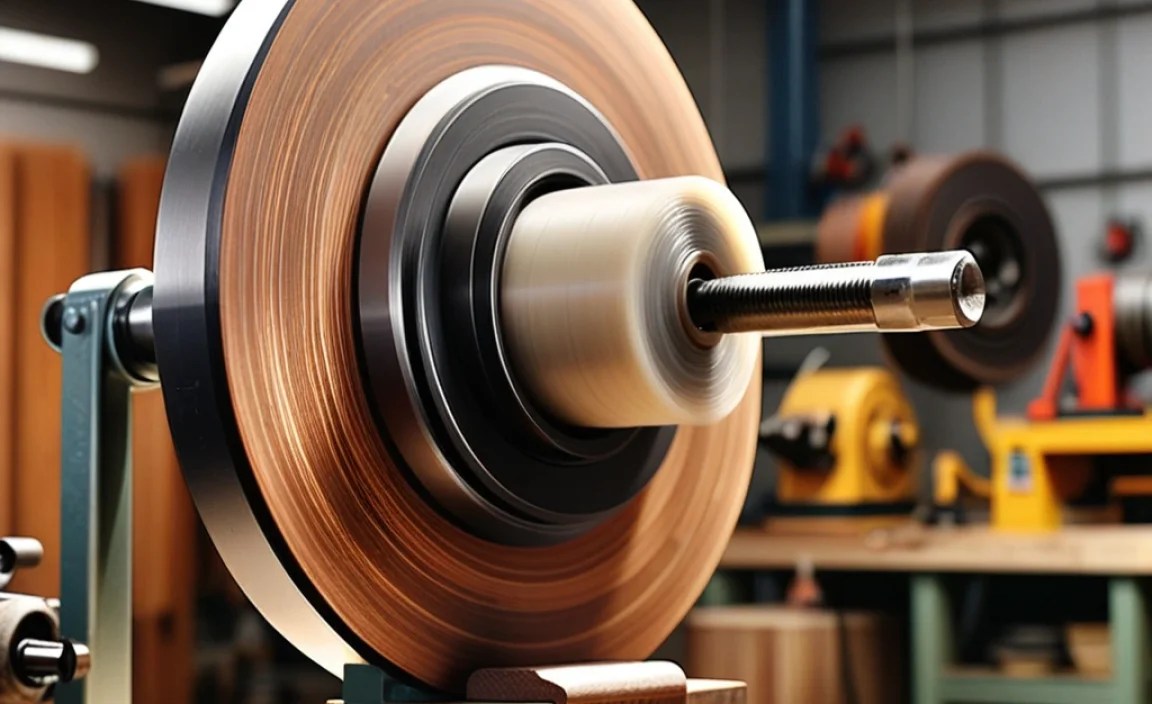
Before we dive into the installation, let’s get familiar with the parts involved. Knowing what each piece does will make the whole process much clearer and safer. The exact components might vary slightly depending on your lathe and the polishing wheel kit you purchase, but generally, you’ll encounter these key items:
- The Wood Lathe: Your trusty turning machine! Ensure it’s stable and in good working order.
- Polishing Wheel: This is the main attraction. It’s typically made of soft, dense material like cotton flannel, felt, or a similar fabric designed to hold polishing compounds. They come in various diameters.
- Arbor or Spindle Adapter: This is what connects the polishing wheel to your lathe’s headstock or tailstock. It usually has a threaded shaft that screws onto your lathe’s spindle or chuck, and it’s designed to accept the polishing wheel.
- Washer(s): Flat metal discs that distribute pressure when tightening.
- Nut or Locking Mechanism: This secures the polishing wheel and arbor to the lathe. It could be a standard nut, a specialized locking collar, or a quick-release mechanism.
- Polishing Compounds: These are the “fuels” for your polishing wheel. They are abrasive pastes or sticks applied to the wheel to do the polishing. Common types include Tripoli, Rouge, and Finesse-it.
- Safety Gear: Absolutely non-negotiable: safety glasses or a face shield, and dust/chip collection if available.
It’s important to consult your specific polishing wheel kit’s instructions, as some may have unique mounting systems. Always refer to your lathe’s manual for specifications regarding spindle thread size and recommended accessories.
Pre-Installation Safety Check: The Golden Rule
Safety first, always! Before you touch any tools or start mounting anything, take a moment to ensure your workspace and lathe are set up for safe operation. This is critical, especially when working with rotating machinery.
- Disconnect Power: ALWAYS unplug your lathe or turn off the power at the breaker before installing or removing any attachments. This prevents accidental startups.
- Clear Workspace: Ensure your lathe area is free of clutter, trip hazards, and flammable materials. Good lighting is a must.
- Wear Safety Gear: Put on your safety glasses or face shield. If your lathe has a dust collection system, turn it on.
- Check Lathe Spindle: Make sure the spindle (where the arbor will attach) is clean and free of debris, rust, or damage. A clean surface ensures a secure fit.
- Review Manuals: Briefly skim the instructions for both your polishing wheel kit and your wood lathe, paying attention to mounting procedures and any warnings.
A safe start is the foundation for successful and enjoyable woodworking. Don’t rush this step!
Step-by-Step Installation Guide
Now, let’s get that polishing wheel mounted. We’ll assume you’re using a common arbor that threads onto the lathe’s spindle. If your setup is different, like a direct thread into a chuck or a flange mount, adapt these steps accordingly, always prioritizing the manufacturer’s instructions.
Step 1: Identify Your Spindle Thread
Most wood lathes have a threaded spindle on the headstock where you mount faceplates, chucks, and other accessories. You need to know the thread size and direction (usually left-hand thread for the drive spur, right-hand for most other things) of your lathe’s spindle. This information is typically found in your lathe’s manual. For example, it might be 1″ x 8 TPI (Threads Per Inch) or an M33 x 3.5mm thread. Your arbor should match these specifications or have an adapter to fit.
A common standard for many wood lathes is the universal spindle thread size. For more information on spindle threads and why they matter, you can check out resources like Wood Magazine’s guide to lathe spindles. Understanding these specs is crucial for buying the correct accessories and ensuring a safe, solid connection.
Step 2: Prepare the Arbor
Your arbor is the shank that will hold the polishing wheel and thread into your lathe’s spindle. Inspect it for any shipping damage or dirt. Some arbors have a thread on one end to screw into the lathe and another thread or mounting point on the opposite end to hold the wheel.
Step 3: Mount the Arbor to the Lathe Spindle
Ensure your lathe is still powered off. Carefully thread the arbor onto your lathe’s spindle. If your spindle has a drive spur (a point that drives the workpiece), you’ll thread the arbor onto the spindle, opposite the spur. If it’s a direct thread spindle (like on many modern lathes), you’ll thread it directly onto the spindle nose. Turn it clockwise (for right-hand threads) until it’s snug. Don’t overtighten with excessive force at this stage; snug is usually sufficient, as it will be further secured later.
Important Note: Some lathes have a reverse (left-hand thread) for their drive spur. Make sure you are threading the arbor onto the spindle nose itself, not the drive spur’s threaded section if your lathe uses one.
Step 4: Attach the Polishing Wheel
Most polishing wheels are designed to slide onto the arbor. They usually have a central hole that fits snugly over the arbor’s mounting stem.
- Slide the polishing wheel onto the extended arbor shaft.
- Now, you’ll often encounter a washer and a nut. Place a washer onto the arbor shaft, pushing it against the polishing wheel.
- Thread the securing nut onto the arbor shaft.
The goal here is to compress the polishing wheel slightly, making it a firm fit so it doesn’t wobble or spin off the arbor. It should be snug, but you don’t want to crush the wheel material excessively.
Tip: Some premium wheels or kits might use a specific locking collar or a specialized nut. Always follow the specific instructions provided with your polishing wheel kit for this step.
Step 5: Tighten the Securing Nut
This is a critical step. You need to tighten the nut enough to hold the wheel securely but not so much that you damage it or the arbor. Use the appropriate wrench for the nut (often a spanner wrench or an adjustable wrench if it’s a standard nut). Tighten it firmly. Some kits come with purpose-built wrenches for this.
Important Consideration: Some polishing wheels are two-part, meaning you might have two fabric discs. In this case, you’ll install one disc, then the washer and nut, then the second disc, and then a final nut to secure everything. Again, check your specific kit’s instructions.
Step 6: Final Check and Rotation Test
Once the nut is tightened, give the polishing wheel a gentle wiggle. It should feel solid and not move independently on the arbor. Now, it’s time for a slow, powered test.
- Double-check that all power is still disconnected.
- Turn on the lathe at its slowest speed setting.
- Stand back and observe the polishing wheel. Listen for any unusual noises or vibrations.
- Slowly and carefully increase the speed. Listen and watch attentively. If you notice any significant wobble, vibration, or hear odd noises, immediately stop the lathe and disconnect power.
If everything looks and sounds good at the slowest speed, you can gradually increase the speed to your desired polishing RPM. Never exceed the maximum RPM rating for your polishing wheel, which should be indicated by the manufacturer.
Achieving the Best Polish: Tips and Tricks
Installing the wheel is only half the battle. To get that dazzling finish, you need to use it correctly. Here are some tips:
- Speed is Key: Polishing wheels typically run at higher RPMs than turning. Consult your wheel manufacturer’s guidelines, but speeds between 1500-3000 RPM are common. Too slow, and you won’t get a good polish; too fast, and you risk burning the wood or damaging the wheel.
- Apply Compound Correctly: Apply the polishing compound to the rotating wheel lightly. Don’t overload it. The abrasive material is meant to transfer from the wheel to your workpiece. Let the compound do the work; don’t force the wood against the wheel.
- Work the Surface: Move your workpiece across the face of the polishing wheel, covering the entire surface evenly. Don’t hold the piece in one spot for too long, as this can cause localized heating or uneven polishing.
- Compound Sequence: Often, you’ll use a sequence of compounds. A coarser compound (like Tripoli) is used first to remove sanding marks, followed by a finer compound (like Rouge) for a high shine.
- Wheel Maintenance: As you polish, the wheel will become saturated with compound and wood dust. Periodically, you may need to “clean” the wheel by briefly running it against a stiff brush or even a piece of sandpaper, or by applying a cleaner compound. This helps it pick up new compound effectively. Some wheels can be washed.
- Avoid Overheating: Keep the piece moving and apply light pressure to prevent the wood from overheating, which can cause discoloration or finish damage.
A steady hand and consistent movement are your best friends when polishing. And remember, always wear your safety gear!
Polishing Wheel vs. Sanding: When to Use Each
This is a question many beginners grapple with. Can a polishing wheel replace sanding entirely? Not quite, but it significantly changes the finishing process.
Sanding: Sanding is primarily about shaping and smoothing the wood by removing material. It effectively removes tool marks and prepares the surface for finishing. A progression through grits (e.g., 80, 120, 180, 220, 320, 400) is standard. Even at 400 grit, microscopic scratches remain. Sanding is essential for defining the form and achieving a smooth base.
Polishing Wheel: Polishing wheels are for refining an already smooth surface. They don’t remove significant amounts of wood; they burnish and fill the fine scratches left by sanding. They are used after your final sanding step to create a deep, lustrous shine and a glass-smooth feel.
Here’s a general guideline:
- Lathe Turning: Use turning tools to shape the wood.
- Initial Sanding: Start with a coarser grit (e.g., 100-150) to remove tool marks.
- Progressive Sanding: Work your way up through finer grits (e.g., 220, 320, 400). On easier projects, 400 grit can be your final sanding stage. For the highest gloss, some go to 600 or even 1000 grit.
- Applying Finish: Apply your chosen wood finish (oil, lacquer, varnish, etc.) according to its instructions.
- Polishing: After the finish has cured or dried (depending on the finish type—some finishes can be polished by hand or with specialized power tools for incredibly high gloss), use the polishing wheel with appropriate compounds to bring out the final shine.
Using a polishing wheel also means you can sometimes get away with stopping sanding at a slightly coarser grit (e.g., 320 perhaps) knowing the polishing wheel will refine it further. However, for the best results, thorough sanding before polishing is still recommended.
Troubleshooting Common Installation Issues
Even with clear instructions, you might run into a snag. Here are a few common problems and how to fix them:
| Problem | Possible Cause | Solution |
|---|---|---|
| Wheel wobbles excessively. | Arbor not fully threaded onto spindle. | Ensure arbor is threaded on completely and snugly. |
| Nut/locking mechanism is loose. | Remove the wheel and retighten the securing nut firmly. Some wheels need to be compressed slightly when tightened. | |
| Arbor thread doesn’t match lathe spindle. | Verify your lathe’s spindle thread size and ensure the arbor is compatible. You may need an adapter or a different arbor. | |
| Wheel spins on the arbor. | Securing nut is too loose. | Tighten the nut securely. The wheel should be snug against its backing washer. |
| Wheel material is compressed too much, or wrong material. | Ensure you are using the correct type of polishing wheel and are not overtightening to the point of deforming it. | |
| Lathe vibrates severely when wheel is attached. | Wheel is unbalanced. | Stop immediately. Check if the wheel is mounted evenly. Some polishing wheels can be inherently unbalanced. Ensure it’s centered. |
| Arbor is bent or damaged. | Inspect the arbor for any visible damage. If bent, it needs replacing. | |
| Arbor won’t thread onto spindle. | Incorrect thread size or direction. | Confirm your lathe’s spindle thread specifications. Ensure you are threading in the correct direction (usually clockwise for right-hand threads). |
| Debris or damaged threads on spindle or arbor. | Clean both the spindle and arbor threads thoroughly. Inspect the threads for damage and, if necessary, use a thread chaser (carefully). |
If you’re still struggling, don’t hesitate to contact the manufacturer of your polishing wheel kit or consult online forums and communities. Many experienced woodturners are happy to share advice.
Different Types of Polishing Wheels and Their Uses
Not all polishing wheels are created equal. The material they’re made from dictates their effectiveness with different compounds and finishes. Here’s a quick rundown:
- Cotton Flannel Wheels: These are very popular for their softness and ability to hold polishing compounds. They offer a good balance of cutting and buffing action. They are excellent for achieving a high gloss on woods and some plastics.
- Felt Wheels: Denser than flannel, felt wheels are good for applying firmer pressure and are often used with harder polishing compounds. They can be excellent for cutting down imperfections and for metal polishing, but also work well for wood when a very smooth, almost “wet” look is desired.
- Sisal Wheels: Made from natural fibers, sisal wheels are much stiffer and more aggressive. They are primarily used for the initial stages of polishing metal or very hard woods, often paired with very abrasive compounds to remove scratches. They are not typically used for final high-gloss finishes on wood.
