Making your own wood lathe faceplate screws is a practical and cost-effective solution for woodturners needing specific sizes or replacements. This guide shows you how to create reliable, custom faceplate screws for your lathe projects safely and efficiently.
Ever tried to mount a large, heavy bowl blank to your wood lathe, only to find the faceplate screws are just… not quite right? Maybe they’re too short, too long, or just plain worn out. It’s a common frustration that can halt your creative flow. Don’t worry, though! You don’t always need to buy new, expensive ones. With a few basic tools and this guide, you can confidently make your own robust faceplate screws right in your workshop. We’ll walk through the whole process, step-by-step, so you can get back to turning.
Why Make Your Own Wood Lathe Faceplate Screws?

Faceplate screws are the unsung heroes of woodturning, especially when you’re working with larger projects like bowls, platters, or even hollow forms. They securely attach your workpiece to the faceplate, which is then mounted to the lathe spindle. While pre-made screws are readily available, there are several compelling reasons why a woodturner might choose to make their own:
- Custom Fit: Sometimes, you need screws of a specific length or thread pitch to perfectly match your faceplate and workpiece thickness. Commercially available options might not offer the exact dimensions you need.
- Cost Savings: Buying specialized screws, especially in different sizes or quantities, can add up. Making your own from readily available stock material is often significantly cheaper.
- Availability: If a screw breaks or gets lost during a project, you might not have replacements on hand. The ability to make a new one on demand means less downtime.
- Repair and Restoration: For vintage lathes or unique faceplates, finding original or compatible screws can be a challenge. Homemade screws can be crafted to match.
- Understanding Your Tools: Learning to make components for your lathe deepens your understanding of how your equipment works and builds confidence in your workshop abilities.
Understanding Faceplate Screw Basics
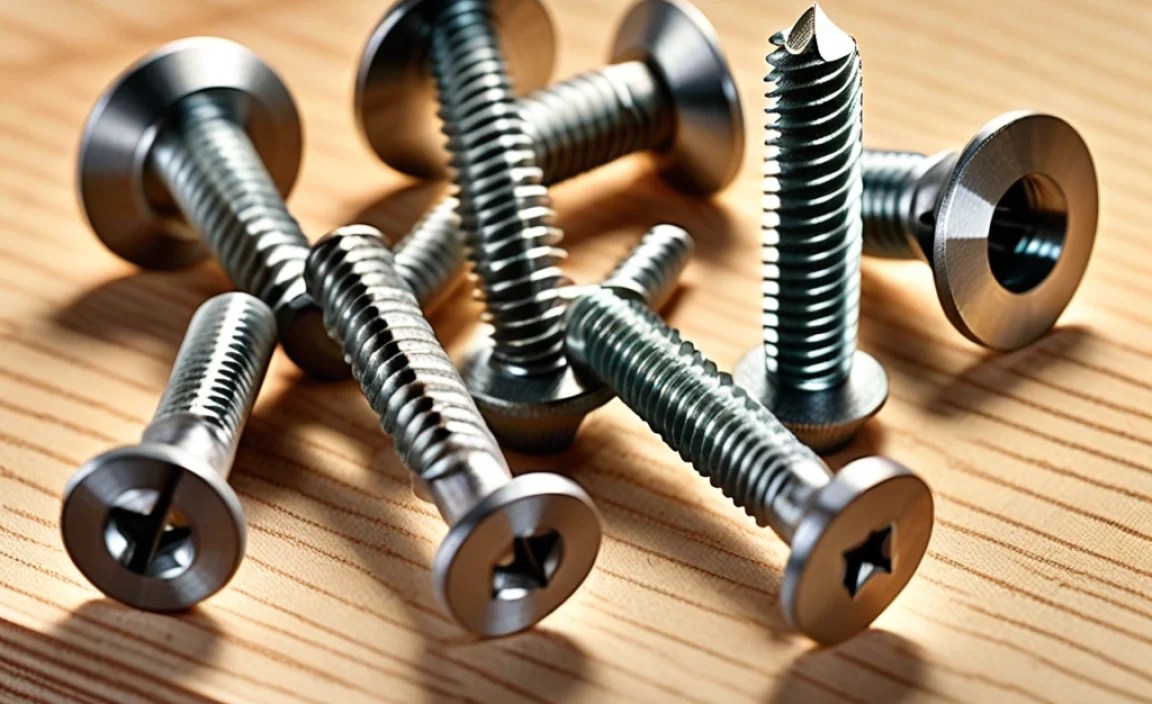
Before we start making them, let’s quickly cover what makes a good faceplate screw. These aren’t just any screws you grab from the hardware store.:
- Head Style: Most commonly, you’ll see screws with a “button head” or a “cap screw” style head. This provides a large surface area to press against the faceplate and is easy to grip with a wrench or socket.
- Thread Type: They typically use standard machine screw threads (like UNC or UNF) that match the threaded holes in your faceplate. The key is a strong, consistent thread.
- Material: Good faceplate screws are usually made from strong steel to withstand the forces involved in turning.
- Shank: The unthreaded portion of the screw, if present, should be smooth and of a precise diameter.
- Length: The overall length needs to be sufficient to pass through the faceplate and engage securely in the workpiece, but not so long that it interferes with other parts of the lathe or the workpiece itself.
Essential Tools and Materials

The good news is you don’t need a full machine shop to make these. Many of these tools you might already have if you have a basic woodworking or metalworking setup. Here’s what you’ll likely need:
Materials:
- Steel Rod or Bolt: The best starting point is a piece of mild steel rod of the correct diameter, or a bolt that you can modify. Look for diameters commonly used in faceplates, such as 1/4″, 5/16″, or 3/8″.
- Die Stock and Threading Dies: These are crucial for cutting accurate threads. Ensure you have the correct die size and pitch for your faceplate.
- Metal-Cutting Saw: A hacksaw, band saw, or even an abrasive cut-off wheel will work for cutting the steel to length.
- Bench Vise: To hold the material securely while you cut, thread, and file.
- Files: Metal files (a half-round bastard file for rough shaping and a finer file for smoothing) are essential for cleaning up edges and creating radiuses.
- Center Punch: For marking the center of your workpiece.
- Drill Press (Optional but Recommended): For drilling center holes consistently, especially if modifying a bolt.
- Lathe (Optional but Highly Recommended): If you have a metal lathe or even a sturdy wood lathe with a milling attachment, this will make the process much easier and more precise.
- Wrenches or Socket Set: To match the head of your chosen bolt or the nuts if you’re threading a rod.
- Cutting Fluid or Lubricant: Essential for die threading to keep the die cool and prevent galling.
- Measuring Tape or Calipers: For accurate length measurements.
- Safety Glasses: Always wear these when cutting, filing, or threading metal.
- Work Gloves: To protect your hands from sharp edges.
Step-by-Step Guide to Making Homemade Faceplate Screws
Let’s get down to business! We’ll cover two main methods: modifying an existing bolt and threading a steel rod. The bolt modification is generally simpler for beginners.
Method 1: Modifying a Bolt
This method is great if you can find a bolt with the correct diameter and a head style that works. Often, socket head cap screws (like Allen bolts) can be a good candidate.
- Select Your Bolt: Choose a high-quality steel bolt with the correct diameter and thread pitch that matches your faceplate. The head should ideally be round and not have a hex. If it’s a hex head, you might be cutting it off and replacing it later, or using it as-is if it fits your wrench comfortably.
- Determine the Length: Measure the thickness of your faceplate and decide how much thread engagement you need in your workpiece. Add these measurements together and add about 1/2 inch (12-15mm) for good measure. This is your target screw length.
- Cut the Bolt to Length: Using your metal-cutting saw, carefully cut the bolt to your determined length. Ensure the cut is as square as possible. If using a bench vise, clamp the bolt securely. For a cleaner cut, you can use a metal cutting jig or a band saw.
- Prepare the Head (Optional but Recommended): If your bolt has a hex head that’s too large, or if you want a specific shape, you can trim it down. If you have a metal lathe, this is easy: chuck the bolt and turn the head to a smooth button shape. If not, you can use a hacksaw and file to carefully round off the corners. The goal is a head that sits flush or slightly proud of the faceplate.
- Clean Up the Threads: Even with a bolt, the threads near the cut end might be damaged. A quick pass with a wire brush or a file can clean them up. You can also run the die over the existing threads for a few turns to ensure they are crisp and clean.
- Chamfer the Tip: Slightly “break” the sharp edge on the very tip of the screw with a file. This makes it easier to start screwing into your workpiece and prevents damage to the wood or your fingers.
- Test Fit: Screw the newly made faceplate screw into your faceplate to ensure it threads smoothly and seats correctly.
Method 2: Threading a Steel Rod
This method gives you more control over dimensions and is ideal if you can’t find a suitable bolt or want to make screws from scratch.
- Select Your Material: Obtain a length of steel rod in the correct diameter. Mild steel is generally sufficient for most woodworking applications.
- Cut the Rod: Cut the rod into lengths approximately 1/2 inch (12-15mm) longer than your final desired screw length. Again, aim for a square cut.
- Mark the Center: Use a center punch to mark the center of one end of the rod. This will be the end where the head will be formed.
- Form the Head: This is the most involved part, and the method depends on your tools.
- Using a Metal Lathe: This is the easiest and most precise. Chuck the steel rod. Face off the end, turn down a portion to create the desired head diameter and height, and then create a fillet (a small curve) where the head meets the shank. A button head is common.
- Using a Bolt and Nut (Less Precise): If you don’t have a lathe, find a large washer or a nut that fits snugly over your rod. Thread a nut partway onto the rod. Use a vise or vise grips to hold the rod. Form a rough head shape by hammering the end of the rod using a ball-peen hammer, working around the perimeter and then filing to shape. This is more art than science and requires patience for a good result.
- Using a Bolt Head (If Available): If you can find a bolt head that can be welded onto the rod, this is another option, but requires welding equipment.
- Chamfer the Tip: As in Method 1, use a file to slightly chamfer the cut end of the rod.
- Prepare for Threading: If you’re using a die stock without a handle, you might need to mount the rod in your metal lathe or drill press (using a chuck) to hold it while you thread. If using a die stock with a handle, you can hold the rod in a vise.
- Apply Lubricant: Apply cutting fluid generously to the end of the rod where you will be cutting the threads.
- Cut the Threads:
- With a Die Stock: Place the threading die into the die stock. Align the die squarely onto the end of the rod. Begin turning the die stock in a clockwise direction, applying steady, even pressure.
- Important Threading Technique: For good threads, it’s crucial to cut in passes. Turn the die for about one full rotation, then back it off half a rotation (counter-clockwise). This breaks the chip and clears the cutting area, preventing binding and producing cleaner threads. Reapply lubricant as needed.
- Continue Threading: Continue this process until you have cut the desired length of thread. You can measure the length of thread needed against your faceplate’s thread depth.
- Clean Up Threads: Once threaded, remove the die. Use a wire brush to clean any metal shavings from the threads. You can also run the die over the threads again, but this time turn slightly forward and then back to burnish them, making them smoother.
- Test Fit: Screw your newly threaded rod into the faceplate. It should thread in smoothly without excessive force. If it’s tight, you may need to chase the threads with the die again, ensuring plenty of lubricant.
Table: Common Faceplate Screw Sizes and Thread Pitches
Here’s a quick reference for some common screw sizes you might encounter. Always confirm with your specific faceplate:
| Screw Diameter | Common Thread Pitch (TPI – Threads Per Inch) | Common Applications/Lathe Types |
|---|---|---|
| 1/4 inch | 20 TPI (UNC) | Smaller lathes, specific jigs, custom attachments |
| 5/16 inch | 18 TPI (UNC) | Common on many intermediate wood lathes |
| 3/8 inch | 16 TPI (UNC) | Larger wood lathes, heavier duty faceplates |
| 1/2 inch | 13 TPI (UNC) | Heavy-duty industrial or very large lathes |
Note: TPI stands for Threads Per Inch. UNC indicates Unified National Coarse thread, which is very common. Always verify the exact TPI of your faceplate by measuring or checking its specifications.
Safety First!
Working with metal, even on a small scale, requires attention to safety. Here are some crucial points:
- Eye Protection: Always wear safety glasses or a face shield. Metal chips, filings, and small pieces of metal can fly unexpectedly.
- Hand Protection: Wear gloves, especially when handling freshly cut metal or working with rough surfaces.
- Secure Workpiece: Ensure your material is firmly clamped in a vise or held securely in a lathe. A slipping piece can cause injury.
- Sharp Edges: Be mindful of sharp edges on cut metal and tools.
- Lubrication: Use cutting fluid when threading. It cools the metal, lubricates the die, and helps produce cleaner threads. It also reduces the risk of galling (metal sticking to the die).
- Ventilation: If using cutting fluids or lubricants, ensure you are in a well-ventilated area.
- Proper Tool Use: Understand how to use your tools, especially die stocks and files.
Tips for Better Homemade Screws
Here are a few extra tips to help you make even better faceplate screws:
- Thread Cleaning: After cutting threads, it’s good practice to run the die over them once more, but with much lighter pressure and a bit of oil. This helps to smooth out any rough spots.
- Head Finishing: For a professional look, after shaping the head, you can polish it with progressively finer sandpaper or emery cloth, especially if you used a lathe.
- Anti-Seize Compound: For screws that will be frequently removed and re-inserted, a small dab of anti-seize compound on the threads can prevent them from galling or seizing over time. However, for woodturning, this is often unnecessary unless you’re dealing with extreme conditions.
- Material Choice: While mild steel is fine for most woodturning, if you were to tackle very large, demanding projects or needed extreme durability, you might consider a stronger alloy steel rod. However, these are harder to machine.
- Thread Gauge: If you’re unsure of your faceplate’s thread pitch, get a thread gauge (also known as a screw pitch gauge) from your local hardware store. It has various teeth that allow you to identify the exact TPI. You can find these online from reputable sources like NIST (National Institute of Standards and Technology) for in-depth standards, or more practically at hardware suppliers.
FAQ: Your Homemade Faceplate Screw Questions Answered
Q1: What’s the easiest way to make a faceplate screw if I don’t have a metal lathe?
The easiest method is to modify an existing bolt. Find a strong steel bolt with the correct diameter and thread pitch. Cut it to length with a hacksaw, and use files to shape the head if needed. Ensure the threads are clean and the tip is slightly chamfered.
Q2: How do I know the correct thread pitch for my faceplate?
You can measure it. Compare the screw threads to a thread gauge to find the matching TPI (Threads Per Inch). Alternatively, count the number of threads within one inch of the screw. Sometimes, faceplates have their specifications printed on them or in their manual.
Q3: Can I use regular wood screws for my faceplate?
No, absolutely not. Wood screws are designed for wood and have coarse, tapered threads. Faceplate screws need strong, straight machine threads found on bolts or threaded rod to securely engage with the threaded holes in a metal faceplate.
Q4: My homemade threads are too tight. What should I do?
This usually means the die cut a bit too “fat” or you didn’t clear the chips well enough. Try running the die over the threads again, ensuring plenty of cutting fluid and backing off the die every full turn to clear chips. A slight chamfer on the entering thread can also help. If it’s still too tight, you might need to re-cut or start over with a new piece of material.
Q5: How long should my faceplate screws be?
They need to be long enough to go through your faceplate and still engage securely in the workpiece. A general rule is to have at least two to three full thread engagements into the wood. Measure your faceplate thickness and add the desired thread depth into the wood, leaving a little extra for ease of use.
Q6: Is it safe to use homemade screws for heavy bowl turning?
Yes, as long as they are made correctly from good quality steel, with clean, strong threads and a robust head. Using a metal lathe for shaping the head and ensuring proper thread cutting will give you the most reliable results. Always inspect your screws before each use.
