Wood lathe faceplate screws are installed by carefully aligning the screw holes on the faceplate with pre-drilled pilot holes in your workpiece. Choosing the correct screw size and type, ensuring they’re driven straight and snug without overtightening, is key for secure mounting and safe turning. This guide makes installation simple and reliable.
Hey there, fellow woodworkers! Daniel Bates here, from Lathe Hub. If you’ve ever gotten excited about turning a chunky piece of wood on your lathe, only to hit a snag with how to attach it securely, you’re not alone. The faceplate is your go-to for chucking up larger, irregularly shaped items, but getting those screws in right can feel like a puzzle. Don’t worry, it’s a common hurdle, and with a little know-how, you’ll be attaching your workpieces with confidence in no time. This guide will walk you through every step, making wood lathe faceplate screw installation a breeze.
Why Faceplate Screw Installation Matters

Attaching your workpiece to a wood lathe faceplate is a critical step for both the quality of your project and, more importantly, your safety. A securely mounted piece means accurate turning, beautiful finishes, and the peace of mind that comes from knowing your lathe is behaving itself. When faceplate screws aren’t installed correctly, problems can arise, ranging from a wobbly workpiece that ruins your design to a dangerous projectile flying off the lathe. Understanding the proper method ensures your turning experience is productive and safe. This guide is designed to demystify the process, making it accessible even if you’re just starting out.
Understanding Your Wood Lathe Faceplate

Before we dive into installation, let’s get acquainted with the faceplate itself. A faceplate is a metal disc that threads onto the spindle of your lathe. It has a flat surface with holes, allowing you to screw your wood directly to it. Typically, faceplates have a few key features:
- Thread Size: This must match the spindle thread of your lathe. Common sizes vary, so always check your lathe’s specifications.
- Mounting Holes: These are the holes where you’ll drive screws to attach your workpiece. They can be evenly spaced or in a pattern.
- Pilot Holes (on workpiece): These are essential for a secure and safe attachment. We’ll cover how to create these in detail.
The faceplate provides a robust method for turning bowls, platters, small tables, and other large or irregularly shaped pieces that might not be suitable for a chuck.
Essential Tools and Materials
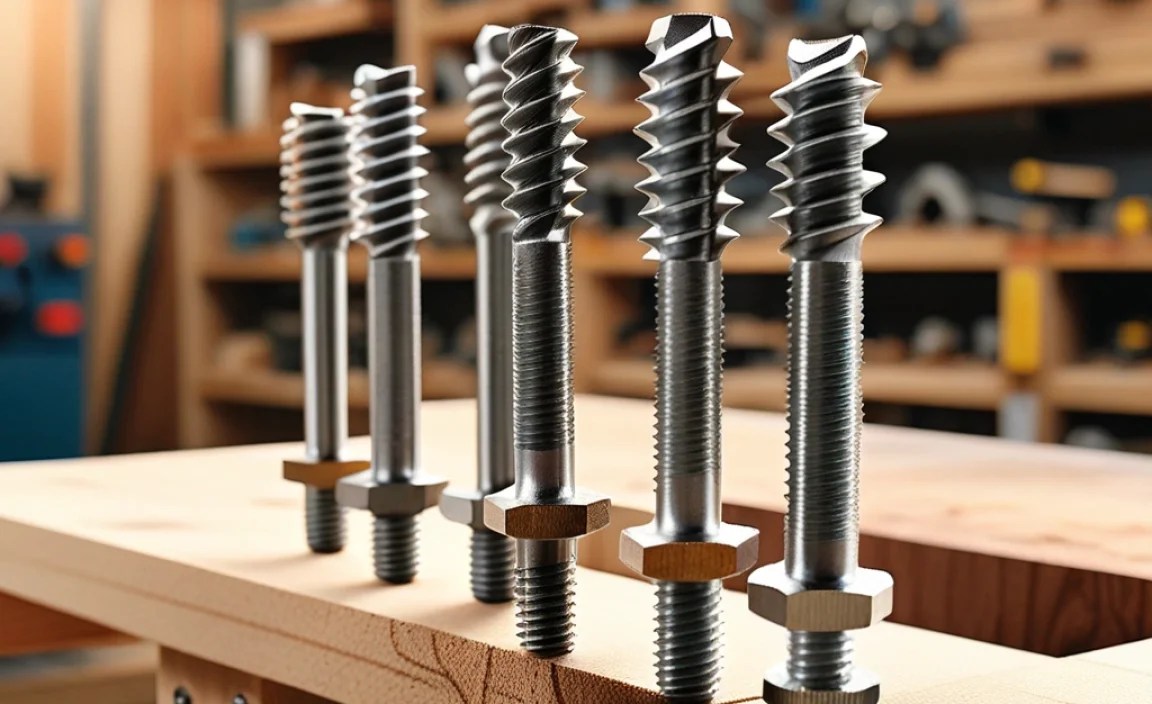
Having the right tools makes any job easier and safer. For installing wood lathe faceplate screws, you’ll need:
- Wood Lathe Faceplate: Sized to match your lathe’s spindle.
- Wood Screws: The types and sizes are crucial (more on this below).
- Drill or Drill Press: For creating pilot holes.
- Drill Bits: Sized appropriately for your pilot holes.
- Screwdriver or Drill Driver Bit: Matching your screw heads (usually Phillips or Robertson/square drive).
- Center Finder or Compass: To locate the exact center of your workpiece.
- Measuring Tape or Ruler: For marking screw locations.
- Pencil: For marking.
- Safety Glasses: Always paramount in the workshop.
- Optional: Countersink Bit: To recess screw heads neatly if desired.
Choosing the Right Screws

This is where a lot of beginners get it slightly wrong. The screws you use are vital for a strong hold. You don’t want screws that are too short, too thin, or prone to stripping.
Types of Screws to Consider:
- Wood Screws: Generally, standard wood screws are what you’ll use. Look for screws with a good thread depth that will bite well into the wood.
- Robertson (Square Drive) Screws: These are often preferred in woodworking and machining because the bit engages the screw head much better than Phillips, reducing the chance of cam-out (the bit slipping out).
- Coarse Thread vs. Fine Thread: For most applications on a lathe, coarse-thread wood screws are preferable. They grip the wood fibers more aggressively and hold tighter.
Screw Length and Diameter:
This depends entirely on the thickness of your workpiece and the faceplate.
- Length: A general rule of thumb is that the screw should penetrate the wood at least halfway through its thickness for a secure hold. For example, if you have a 1-inch thick piece of wood, you’ll want screws at least 2 inches long. However, this also depends on the placement of your pilot hole. You don’t want the screw to go all the way through the faceplate or your workpiece.
- Diameter: A diameter of #8 or #10 is usually sufficient for most faceplate applications. Thicker screws provide a stronger grip but require larger pilot holes.
A good starting point is to use screws that are around 1.5 to 2 inches long with a #8 or #10 diameter for medium-sized projects. Always measure to ensure you have adequate thread engagement without poking through.
Step-by-Step: Installing Faceplate Screws for Your Woodwork

Let’s get down to business. Follow these steps carefully for a secure attachment.
Step 1: Prepare Your Workpiece
First, you need to prepare the wood you intend to mount.
- Find the Center: Use a center finder or a compass to mark the exact center of your workpiece on the face you’ll be attaching to the faceplate. This is crucial for balance and to ensure your turning is concentric.
- Marking the Faceplate Position: Place the faceplate onto the workpiece, ensuring its center aligns with the center mark you made.
- Marking Screw Locations: With the faceplate centered, use a pencil to mark the positions of the screw holes onto the wood. You’ll typically want to mark at least three or four points, evenly spaced around the faceplate’s mounting holes.
Step 2: Drill Pilot Holes
This is arguably the most critical step for a secure and safe installation. Pilot holes prevent the wood from splitting and make it easier to drive the screws straight.
- Determine Pilot Hole Size: This is key. The pilot hole should be large enough that the screw’s unthreaded shank can pass through easily, but the threaded portion of the screw has something to bite into. A good starting point is to drill a hole slightly smaller than the screw’s minor diameter (the diameter at the bottom of the threads). A common recommendation is to drill a hole the same diameter as the screw’s shank (the part without threads), or just slightly less.
- Using a Drill Press: For consistency and accuracy, a drill press is ideal. Mount your workpiece securely and drill each marked spot to the required depth. Ensure you are drilling perpendicular to the surface.
- Using a Handheld Drill: If using a handheld drill, a drill guide can help keep the bit straight. Take your time to ensure each hole is drilled as close to perpendicular as possible.
- Drill Depth: Drill your pilot holes deep enough to accommodate the screw length you’ve chosen, but not so deep that you go through your workpiece if it’s thin. Make sure the pilot hole is deep enough for at least two-thirds of the screw’s threaded length to engage the wood.
A visual guide for pilot hole sizing can be found at sites like Wood Magazine, which offers great advice on this fundamental technique.
Step 3: Attaching the Faceplate
Now you’re ready to attach the faceplate to your workpiece.
- Align the Faceplate: Place the faceplate back onto the workpiece, aligning its screw holes with the pilot holes you just drilled.
- Insert and Drive Screws: Insert your chosen wood screws into the aligned holes.
- Drive Straight: Using your screwdriver or drill driver, begin driving the screws. Ensure they go in straight. If using a drill, set it to a low torque setting to avoid stripping the screw head or overburdening the wood.
- Snug, Not Overtightened: Drive the screws until they are snug and the faceplate is firmly seated against the wood. Avoid overtightening, as this can strip the wood fibers and weaken the hold, or even cause the wood to split. The faceplate should not move at all.
Step 4: Countersinking (Optional)
If you want a smoother finish and to avoid screw heads catching on tools or your hands, you can countersink the screw heads.
- Use a Countersink Bit: After the screws are snug, you can use a countersink bit in your drill to create a conical recess for the screw heads.
- Depth Control: Be careful not to countersink too deeply, as this can weaken the wood around the screw hole. The goal is to have the screw head sit flush or slightly below the surface once fully driven.
- Drive Screws Again: Once countersunk, drive the screws again until their heads are flush with the surface.
Troubleshooting Common Faceplate Screw Issues
Even with the best intentions, sometimes things don’t go perfectly. Here are a few common issues and how to fix them:
Problem: Wood Splitting While Driving Screws
This usually happens when the pilot hole is too small or the screw is driven too aggressively near the edge of the wood.
- Solution: If it’s a minor split, you might be able to continue. For larger splits, remove the screw, apply wood glue into the crack, and insert a shim (like a thin sliver of wood). Let it dry, then re-drill the pilot hole slightly away from the split and try again. Next time, ensure your pilot hole is adequately sized, or use screws with a slightly blunter tip.
Problem: Screw Won’t Tighten / Stripped Hole
The pilot hole was likely too large, or the wood fibers have been stripped.
- Solution: Remove the screw. Insert a few wooden toothpicks or a golf tee with wood glue into the hole. Once the glue dries, break off the protruding pieces and re-drill a pilot hole. This effectively fills the hole with wood, giving the screw threads something new to grip. Alternatively, use a slightly larger diameter screw.
Problem: Faceplate is Wobbly
The screws aren’t tight enough, or the pilot holes are uneven.
- Solution: Ensure all screws are driven snugly. Check that the faceplate is sitting flat against the wood. If any one screw is consistently looser, it might be in a compromised area of the wood or the hole is stripped (see above).
Problem: Screw Heads Cam Out (Phillips/Slotted)
This is when the screwdriver slips out of the screw head, damaging it and making it hard to drive.
- Solution: Use a bit that fits perfectly. For Phillips, try a PH2 or PH3 size depending on the screw. Even better, switch to screws with Robertson (square) or Torx heads, which offer much better engagement. If you’re stuck with a damaged Phillips head, you might need locking pliers to remove or tighten it.
Safety First: Always
Working with a lathe involves inherent risks, and proper workpiece mounting is paramount.
- Wear Your Safety Glasses: Every single time.
- Check Your Mount: Before starting the lathe, give your mounted workpiece a firm shake by hand. It should not budge.
- Start Slowly: When you first turn on the lathe, start at the slowest speed. Listen for any unusual noises and watch for any wobble. Gradually increase the speed only after you’re confident the workpiece is stable.
- Secure the Lathe: Ensure your lathe is stable and bolted down if necessary.
- Know Your Limits: Don’t try to turn excessively large or unbalanced pieces without the proper equipment and experience.
For more on lathe safety, resources like the Occupational Safety and Health Administration (OSHA) provide general guidelines for machinery safety, much of which
applies directly to woodworking lathes in terms of safe operation and workpiece security.
Faceplate Screw Installation: Key Considerations Table
To help you quickly reference the important points, here’s a summary table.
| Area of Focus | Key Considerations | Why It Matters |
|---|---|---|
| Screw Type | Coarse-thread wood screws, preferably Robertson (square drive) or Torx heads. | Better grip in wood, less cam-out, stronger hold. |
| screw Length | Long enough to penetrate at least 1/2 to 2/3 of the wood’s thickness. | Ensures adequate thread engagement for a secure mount. |
| screw Diameter | #8 or #10 are common. Ensure it suits wood thickness. | Provides strength without undue stress on the wood. |
| Pilot Hole Size | Slightly smaller than the screw’s minor diameter (threaded portion). | Prevents splitting, allows threads to grip effectively. |
| Pilot Hole Depth | Adequate for screw length, avoid drilling through workpiece. | Ensures full thread engagement. |
| Driving Technique | Straight, snug, avoid overtightening. | Prevents wobbling, stripping, or splitting. |
| Workpiece Centering | Crucial for balance and smooth operation. | Reduces vibration and prevents dangerous imbalances. |
When to Use Screws vs. Other Mounting Methods
Faceplate screws are fantastic for certain applications, but they aren’t the only way to mount work.
- Use Faceplate Screws For:
- Large bowls and platters, especially when turning “reverse chucking” (turning the outside of a bowl mounted on the faceplate).
- Irregularly shaped items where chuck jaws can’t get a good grip.
- Solid, dense hardwoods where you can reasonably expect good screw holding power.
- When you need a very robust, direct connection.
- Consider Other Methods For:
- Smaller bowls/projects requiring precise accuracy: A four-jaw chuck often offers better grip and easier centering.
- Thin stock: Very thin pieces might split easily and are better held in a chuck or with specialized jigs.
- Turning between centers: For spindles and long, slender items, the drive center and live center method is standard.
- Pieces with existing tenons or recesses: These are designed to be held by chuck jaws.
The choice often comes down to the size and shape of your project, the type of wood, and the tools you have available.
Frequently Asked Questions (FAQ)
Here are some common questions beginners have about installing faceplate screws.
Q1: How many screws should I use to attach a faceplate?
A1: It’s generally recommended to use at least three or four screws for stability, evenly spaced around the faceplate’s mounting holes. For larger faceplates or heavier wood, you might consider using all the available holes if they are appropriately spaced for even pressure.
Q2: Can I reuse screws after they’ve been used on a project?
A2: You can, but inspect them carefully. If the threads are damaged, bent, or the head is stripped, it’s best to use new screws. Reusing damaged screws increases the risk of poor grip and potential failure.
Q3: What’s the difference between the spindle thread and the screws I use?
A3: The spindle thread is what the faceplate screws onto the lathe with. The screws you install are wood screws that go through the faceplate and into your workpiece. They are completely different functions and thread types.
Q4: Should the pilot hole be the same size as the screw shank?
A4: A pilot hole the size of the screw’s unthreaded shank is often too large and won’t give the threads enough to grip. A good rule of thumb is to drill a hole slightly smaller than the unthreaded shank, or roughly the diameter of the screw at the bottom of the threads (minor diameter). Many recommend a hole about 60-70% of the screw’s major diameter for hardwoods. Experimentation on scrap wood is always a good idea.
Q5: Do I need to center punch the pilot hole locations?
A5: A center punch can be helpful, especially when starting a pilot hole with a handheld drill. It creates a small indentation that guides the drill bit and prevents it from “walking” across the surface, ensuring a more accurate start for your pilot hole.
Q6: How far into the wood should the screws penetrate?
A6: For a secure hold, aim for the screw’s threaded portion to penetrate at least halfway into the thickness of the wood you are attaching. For example.
