A well-maintained wood lathe parting tool is crucial for clean cuts. This guide shows you how to build and use a simple jig to achieve a perfect grind every time, saving you frustration and improving your woodworking.
Have you ever struggled to get a clean, crisp cut with your wood lathe parting tool? It’s a common problem, and often, the culprit isn’t the tool itself, but its sharpness. A dull parting tool can lead to torn grain, wobbly cuts, and even dangerous kickbacks. It’s frustrating when your projects don’t turn out as crisp as you’d hoped, especially when a perfectly sharpened tool can make all the difference. Don’t worry, though! Many woodturners find this a persistent challenge, but with the right setup, you can achieve professional results. We’ll walk you through building and using a simple, effective “wood lathe parting tool sharpening jig” that will transform your experience and your finished pieces. Get ready to unlock sharper cuts and more enjoyable turning!
Why Sharpening Your Parting Tool Matters

The parting tool is unique on a wood lathe. Unlike other turning tools that scrape or shear wood, the parting tool is designed to cut cleanly through stock, creating a narrow kerf to separate sections of your turning. Its effectiveness hinges on having razor-sharp edges, particularly along its thin blade. When a parting tool is dull, it doesn’t cut; it tears. This tearing action is what leads to those frustrating, ragged edges and can make it difficult to achieve a clean separation. A sharp tool glides through the wood, removing material efficiently and leaving a smooth surface in its wake.
Think of it like slicing a tomato. A dull knife will mash and tear, while a sharp one will slice cleanly. The same principle applies to your parting tool. For delicate work, such as creating beads, tenons, or separating a finished piece from the waste block, a sharp parting tool is non-negotiable. Beyond aesthetics, a sharp tool is safer. It requires less force to cut, reducing the chance of the tool slipping or the wood binding, which can lead to kickbacks. Investing a little time in sharpening, and even better, in a jig to aid that process, will pay dividends in the quality of your work and your safety at the lathe.
Understanding the Parting Tool
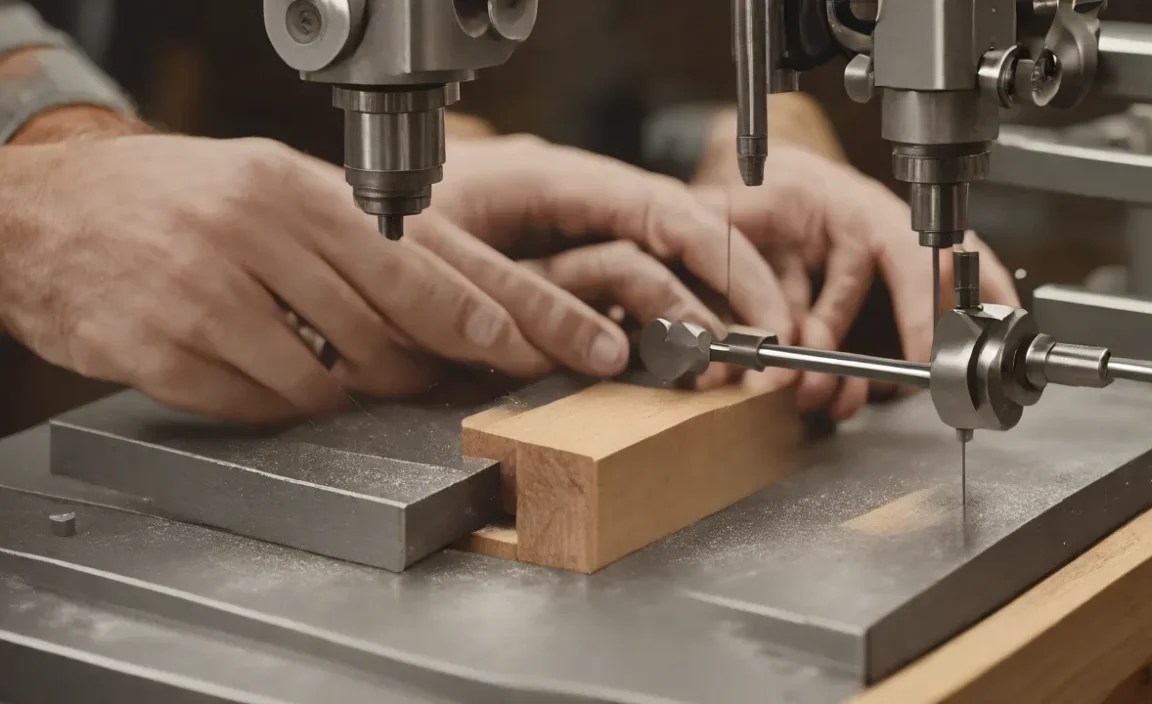
Before we dive into sharpening, let’s quickly understand the anatomy of a parting tool. Most woodturning parting tools are essentially narrow chisels with a specific bevel angle. They come in various widths, and their thinness is what allows them to cut a kerf. The cutting edge is the critical part. When you sharpen, you’re essentially creating a fine, strong apex along this edge. The secondary bevel, or the clearance angle, prevents the sides of the tool from rubbing against the wood unnecessarily, which would create friction and prevent a clean cut.
The challenge with parting tools is their thinness. They can be easy to overheat on a grinder, which can ruin the temper of the steel, making them much harder to sharpen and less effective. They also need to be presented to the grinding wheel at a consistent angle to maintain that critical bevel. This is where a jig becomes invaluable.
The Need for a Wood Lathe Parting Tool Sharpening Jig

Sharpening a parting tool freehand can be incredibly difficult, especially for beginners. Holding the narrow blade at a precise and consistent angle against a grinding wheel or sharpening stone requires a steady hand and a lot of practice. Even experienced woodturners often struggle to maintain the ideal bevel. Mistakes in sharpening a parting tool can lead to:
- Inconsistent bevel angles.
- Overheating the tool, damaging the steel.
- Removing too much material, shortening the tool’s life.
- Not achieving a sharp enough edge.
- Rounded or weakened cutting edges.
A “wood lathe parting tool sharpening jig” takes the guesswork out of the equation. It provides a stable platform and a guide to ensure your tool is held at the correct angle for grinding. This results in;
- Consistent, repeatable bevels on both sides of the tool.
- Reduced risk of overheating.
- More efficient and effective sharpening.
- A sharper, longer-lasting cutting edge.
- Increased confidence and accuracy in your sharpening.
Building your own jig can be a rewarding project, and it’s often much simpler and cheaper than buying a commercial sharpening system. It’s an investment that will save you time, frustration, and improve the quality of your woodworking. For those who use their wood lathe regularly, this is a game-changer.
Building Your Own Wood Lathe Parting Tool Sharpening Jig

There are many designs for parting tool sharpening jigs. The most common and effective ones rely on a pivoting arm or a sliding mechanism to maintain a consistent angle. We’ll focus on a simple, robust design that’s easy to build with basic tools and materials. This jig is designed to be used with a grinding wheel (like a bench grinder with a grinding wheel or a specialized sharpening system) or even with whetstones.
Materials Needed:
- A piece of hardwood (e.g., oak, maple) for the base, roughly 6″ x 4″ x 1.5″.
- Another piece of hardwood for the pivoting arm, approximately 8″ x 1.5″ x 0.75″.
- A smaller piece of hardwood or metal for the tool rest/guide block, approx. 2″ x 1.5″ x 0.75″.
- A bolt (e.g., 1/4″ or 5/16″) and nut for the pivot point.
- Wood screws.
- Sandpaper (various grits).
- Optional: Metal angle finder or protractor.
Tools Needed:
- Saw (hand saw, miter saw, or table saw).
- Drill and drill bits.
- Screwdriver.
- Clamps.
- Measuring tape or ruler.
- Pencil.
- Sandpaper or sanding block.
Step-by-Step Construction:
- Prepare the Base: Cut your base piece to size (approx. 6″ x 4″ x 1.5″). Sand all the edges smooth. You want a solid, stable foundation.
- Prepare the Pivoting Arm: Cut your pivoting arm piece (approx. 8″ x 1.5″ x 0.75″). Again, all edges should be smooth.
- Create the Pivot Point: On the base, mark a point about 1.5″ from one end and centered side-to-side. Drill a hole through the base at this mark, sized for your bolt. On the pivoting arm, mark and drill a hole near one end, the same size as the base hole. This will be your pivot.
- Attach the Tool Rest/Guide Block: This block determines the angle at which your parting tool will be held against the grinding wheel. You can create this in a few ways:
- Fixed Angle: Screw the block onto the pivoting arm so that when the arm is at the desired angle, the top of the block is parallel to the base (or at a slight drop). This requires careful measurement and cutting. A common grinding angle for parting tools is around 70-80 degrees for the primary bevel, which translates to a shallower angle on the jig.
- Adjustable Angle (More Advanced): You could use a slot and bolt system to allow adjustment, but for a beginner jig, a fixed angle is simpler.
For a simple jig, position the tool rest block on top of the pivoting arm, a few inches from the pivot point. Ensure it’s held securely with screws. The top surface of this block is where your parting tool will rest.
- Assemble the Jig: Insert the bolt through the hole in the base, then through the hole in the pivoting arm. Secure it with the nut. Don’t overtighten; the arm should pivot freely but without excessive wobble.
- Test the Pivot: Gently swing the pivoting arm. It should move smoothly. You might want to add washers between the base and arm, and between the arm and nut for smoother action.
- Set Your Grinding Angle: This is the most critical step.
- Determine the ideal bevel angle for your parting tool. For most parting tools, a primary bevel of 70-80 degrees is common. This means the angle between the cutting edge and the face of the tool it scrapes against the wood is between 70-80 degrees.
- When using a jig, we are often setting the angle at which the tool meets the grinding wheel. A common approach with jigs is to have an angle that creates the desired primary bevel when resting on the jig’s tool rest. A good starting point for the angle of the tool rest relative to the grinding wheel might be around 10-20 degrees. This will create the proper secondary clearance bevel.
- Use a protractor or angle finder to set your tool rest block to an angle that will produce your desired primary grind. This might involve some trial and error on a scrap piece of metal or wood. For example, if you want an 80-degree primary bevel, the jig might hold the tool at approximately a 10-degree angle to the grinding surface.
- A practical tip is to aim for a 5-10 degree secondary clearance angle. This is the angle of the tool away from the grinding wheel once the primary bevel is formed.
- Secure the Jig: You’ll want to be able to mount this jig securely to your workbench or a dedicated sharpening station. You can add holes to the base for screws or clamp it down when in use.
- Smooth and Finish: Sand all surfaces smooth to prevent snagging. You can finish the wood with oil or wax for durability.
Remember, the precise angles can vary slightly depending on the specific type of parting tool and your personal preference for how it interacts with the wood. The goal is consistency. Many sources, like the American Association of Woodturners (AAW), offer discussions on optimal bevel angles for different turning tasks. For example, a wider parting tool might benefit from a slightly different angle than a very narrow one.
Using Your Wood Lathe Parting Tool Sharpening Jig

Once your jig is built, using it is straightforward. The key is consistency and safety.
Sharpening with a Grinding Wheel
This method is fastest but carries the highest risk of overheating if not done carefully.
- Set Up: Mount your grinding wheel on a bench grinder. Ensure the wheel is clean and trued. Position your jig so that the tool rest block is positioned to meet the grinding wheel at the correct angle. Clamp the jig firmly to the workbench or grinder stand.
- Position the Tool: Place your parting tool on the jig’s tool rest block, with the cutting edge touching the grinding wheel. The jig’s design should hold the tool at the predetermined angle.
- Grind One Side: Gently bring the tool into contact with the spinning wheel. Move the tool back and forth slightly along the wheel’s face to grind a consistent bevel. Do this in short bursts, lifting the tool to cool it frequently. Never let the tool turn blue; if it does, you’re taking off too much metal too quickly or not cooling it enough.
- Check the Bevel: Lift the tool and inspect your progress. You’re looking for a consistent, shiny bevel along the cutting edge.
- Grind the Other Side: Flip the tool over (or adjust its position on the jig) to grind the other side of the cutting edge. Again, use light pressure and short bursts, cooling frequently.
- Hone for Sharpness: After grinding, the edge will be sharp but might have a slight burr. Use a fine ceramic stone or a leather strop with honing compound to remove the burr and create a screaming-sharp edge. A few passes on a 1000-grit or higher stone, followed by stropping, is usually sufficient.
Sharpening with Whetstones
This method is slower but offers more control and a lower risk of overheating. It’s ideal for maintaining an edge.
- Set Up: Place your whetstone on a stable surface, perhaps with a non-slip mat. If using a jig with a stone, ensure it’s stable. If your jig is designed for stones, adapt as needed. For many simple jigs, you might just be resting the jig on the stone itself, with the tool angled to meet the stone.
- Prepare the Stone: If using water stones, soak them according to the manufacturer’s instructions. If using oil stones, apply a thin layer of honing oil.
- Position the Tool: Place your parting tool on the jig, which is then positioned against the stone at the correct angle. The jig should guide the tool.
- Sharpen One Side: Move the tool back and forth along the stone, maintaining consistent pressure and angle guided by the jig. Work slowly and deliberately.
- Check the Bevel: Periodically check for a consistent bevel.
- Sharpen the Other Side: Flip the tool to sharpen the opposite side, maintaining the angle.
- Refine and Strop: Move to finer grit stones to refine the edge. Finish by stropping on leather with honing compound for a mirror-polished, razor-sharp edge.
Tool Anatomy and Bevel Angles Explained
Understanding the geometry of your tools is key to sharpening them correctly. For a parting tool, we’re primarily concerned with the primary bevel and the secondary bevel (clearance).
Primary Bevel
This is the main cutting edge of the tool. For parting tools, it’s typically set between 70 and 80 degrees. A steeper angle (closer to 80) will be stronger and last longer but may not cut quite as cleanly on softer woods. A shallower angle (closer to 70) might cut more cleanly but can be more prone to chipping or becoming dull faster. Most woodturners find a sweet spot around 75 degrees. When using a jig, you’re setting up your tool to meet the grinding surface at an angle designed to create this primary bevel.
Secondary Bevel (Clearance Angle)
This bevel is formed behind the primary cutting edge. Its purpose is to lift the sides of the tool slightly away from the wood as it cuts. This reduces friction and prevents the tool from dragging or hanging up. A secondary bevel of about 5-10 degrees is usually sufficient. The jig’s design most directly influences this angle. You want enough clearance so the tool glides through the wood, but not so much that you weaken the cutting edge.
Visualizing the Angles
Imagine your parting tool. The very tip that contacts the wood is the cutting edge. The bevel ground on it is the primary angle. The flat surface behind that edge is the clearance or secondary bevel.
A common way to approach this with sharpening jigs is not to directly set the 75-degree primary bevel on the jig itself, but rather to set the jig so that as the tool rests on its guide, it presents the cutting edge to the grinder at an angle that produces that primary bevel. The jig’s geometry then also creates the necessary secondary clearance.
A Simple Table for Bevel Angles
| Tool Type | Primary Bevel Angle (Approx.) | Secondary Bevel Angle (Approx.) | Notes |
|---|---|---|---|
| Standard Parting Tool | 70-80 degrees | 5-10 degrees | 75 degrees is a good starting point for most wood. |
| Narrow Parting Tool (under 1/8″) | 75-85 degrees | 5-10 degrees | Steeper angle for strength on thin blades. |
| Wide Parting Tool (over 1/4″) | 65-75 degrees | 5-10 degrees | Slightly shallower can help with clean cuts on larger stock. |
These are general guidelines. The best angle can depend on the specific steel of your tool, the type of wood you are turning, and personal preference. The key is consistency, which is where your jig truly shines.
Maintaining Your Sharpening Jig
Your DIY sharpening jig is an extension of your toolkit, so it’s important to keep it in good working order.
- Keep it Clean: After each use, wipe away any dust or metal filings.
- Check the Pivot: Ensure the pivot bolt isn’t seized or excessively loose. A quick tightening or a drop of lubricant can help.
- Inspect for Wear: The tool rest block can wear down over time, especially if you use it frequently or with aggressive grinding. If you notice significant wear, you may need to replace or resurface it.
- Smooth Surfaces: Always ensure the surfaces where the tool rests are smooth. If they become gouged, sand them down to prevent damage to your tools.
- Storage: Store your jig in a dry place where it won’t be damaged or collect.
