Turning bowls on a wood lathe using a faceplate is a straightforward way to create beautiful pieces without needing a three or four-jaw chuck. This guide shows beginners how to securely mount wood, safely shape bowls, and achieve impressive results with simple tools. Get ready to turn your first effortless masterpiece!
Hey there, fellow maker! Daniel Bates here, from Lathe Hub. Ever looked at a beautifully turned wooden bowl and thought, “I wish I could do that?” Maybe you’ve got a wood lathe but feel a bit intimidated by all the different chucks and accessories. I get it. Sometimes, the simplest tools are the most overlooked, and that’s exactly what we’re diving into today: the humble faceplate. It’s a fantastic, often underappreciated, attachment that can help you turn stunning bowls with confidence, even if you’re just starting out. We’ll take it step-by-step, making sure you feel comfortable and safe every turn of the way.
Mastering Wood Lathe Faceplate Turning Bowls: Your Beginner’s Guide

Turning bowls is one of the most satisfying projects you can tackle on a wood lathe. While chucks are popular, the faceplate offers a surprisingly effective and budget-friendly alternative, especially for beginners. It’s perfect for turning bowls from solid blocks of wood or even hollow forms. We’ll cover everything from selecting the right wood to safely mounting your workpiece and shaping your first bowl.
Why Choose a Faceplate for Bowl Turning?

You might be wondering why you’d opt for a faceplate when chucks exist. Here are a few compelling reasons:
- Cost-Effective: Faceplates are significantly less expensive than a good quality chuck. This is a huge plus for those just investing in their workshop or trying out new techniques.
- Simplicity: There’s less to learn and manage compared to a chuck. Mounting a faceplate is a direct, secure method.
- Versatility: Faceplates are ideal for larger, irregularly shaped blanks and for turning between centers when you need to access the entire surface of the wood.
- Great for Beginners: It reduces the complexity of chuck jaws and grip, allowing you to focus on the fundamental turning techniques.
For many beginners, the initial investment in a four-jaw chuck can be daunting. The faceplate provides a solid, reliable entry point into bowl turning, allowing you to gain confidence and experience without breaking the bank.
Essential Tools and Materials for Faceplate Turning

Before we start turning, let’s gather what you’ll need. Having the right gear makes the whole process smoother and safer.
Tools You’ll Need:
- Wood Lathe: Of course! Ensure it’s in good working order and has a stable base.
- Faceplate: This is the crucial component. They come in various sizes. Match it to the size of your workpiece. A common size is 4 inches in diameter. Make sure the thread on the faceplate matches your lathe’s spindle thread. For example, 1″ x 8 TPI is very common in North America.
- Screws: You’ll need sturdy wood screws to attach your blank to the faceplate. Ensure they are long enough to get a good grip but not so long that they poke through your bowl.
- Wood Blanks: Start with a solid, dry piece of wood. For beginner bowls, something around 6-10 inches in diameter and 2-4 inches thick is manageable. Avoid cracked or unstable wood.
- Lathe Tools:
- Gouge (Spindle Gouge or Bowl Gouge): Essential for shaping the outside and inside of the bowl. A 1/2-inch or 5/8-inch bowl gouge is a good starting point.
- Scraper (Round Nose Scraper): Useful for achieving a smoother finish, especially on the bottom of the bowl.
- Parting Tool: For creating tenons, grooves, or for cutting the bowl off the faceplate in the final step.
- Spindle Roughing Gouge (Optional but Recommended): Great for quickly rounding square stock before you start shaping.
- Safety Gear: ALWAYS wear your personal protective equipment (PPE). This includes:
- Safety Glasses or Face Shield: Non-negotiable. Protect your eyes from flying chips.
- Dust Mask or Respirator: Wood dust can be harmful.
- Hearing Protection: Lathes can be noisy.
- Appropriate Clothing: No loose sleeves or jewelry that could get caught.
- Measuring Tools: Tape measure, caliper (helpful for checking wall thickness).
- Pencil: For marking.
- Drill and Drill Bits: To pre-drill screw holes.
Understanding Your Faceplate Threads

It’s vital that your faceplate threads match your lathe’s spindle. Most wood lathes have a common thread size like 1″ x 8 TPI (Threads Per Inch). Always check your lathe’s manual or measure the spindle to confirm. If you buy a faceplate with the wrong thread, it simply won’t screw onto your lathe.
A quick tip: If you’re unsure, take a photo of your lathe’s spindle threads or measure them carefully and consult your lathe manufacturer or a reputable tool supplier.
Step-by-Step: Preparing and Mounting Your Wood Blank

This is where the magic begins. Proper preparation ensures a secure attachment and a safe turning experience.
1. Selecting and Preparing Your Wood Blank

Start with a good piece of wood. Dry, seasoned hardwood is best for beginners. Avoid cracks or knots that might compromise the blank’s integrity. If you’re using a square piece of lumber:
- Optional Rough Shaping: You can use a band saw or even a handsaw to cut off the corners of your square blank. This makes it more octagonal or round. It’s not strictly necessary, but it reduces the initial vibration and the amount of material your gouge has to remove, making the process faster and safer. If you choose to do this, ensure the rough-cut shape is as symmetrical as possible.
- Center the Blank: Find the center of your wood blank. Mark it clearly. This is where the center of your faceplate will align.
2. Attaching the Faceplate to the Wood Blank

This is the most critical safety step. A securely attached blank is paramount.
- Position the Faceplate: Place the faceplate onto the flat side of your wood blank, aligning its center with the center mark you made on the wood.
- Mark Screw Holes: Using a pencil, mark the locations of the screw holes on your wood blank through the holes in the faceplate. Most faceplates have 3 or 4 screw holes.
- Pre-Drill Pilot Holes: Remove the faceplate. Using a drill bit that is slightly smaller than the shank of your screws (not the threads), drill pilot holes at the marked locations. These holes should be deep enough for the screws to get a good bite but not so deep that they go through the other side of your blank or compromise the bowl’s structure. A good depth is usually about 3/4 of the screw length.
- Attach the Faceplate: Place the faceplate back onto the blank, aligning its holes with your pilot holes. Drive in your wood screws. Use screws that are specifically designed for woodworking and are strong enough for the job. Ensure they are driven straight and snug. Do not overtighten, as this can split the wood.
- Secure Check: Once all screws are in, give the faceplate a good tug. It should feel completely solid and attached. If there’s any wobble or looseness, address it immediately. This is not the time for “good enough.”
A common mistake here is not pre-drilling or using screws that are too small. Always err on the side of caution and use robust screws and pilot holes. The integrity of your attachment directly impacts your safety on the lathe.
3. Mounting the Faceplate Assembly to the Lathe

Now, it’s time to put your workpiece onto the lathe.
- Turn Off the Lathe: Ensure the lathe is completely off and unplugged. Safety first!
- Clean the Spindle: Make sure the spindle threads on your lathe are clean and free of dirt or old grease. A clean thread ensures a smooth, secure fit.
- Screw on the Faceplate: Carefully screw the faceplate assembly onto the lathe spindle. Turn it clockwise. It should thread on smoothly.
- Tighten Securely: Once threaded on, tighten the faceplate as much as possible by hand turning the faceplate itself. If your faceplate has a way to be locked, or if you have a faceplate wrench, use it to give it a final, firm tightening. It should feel very secure.
- Check Running True (Optional but Recommended): Manually rotate the assembly. It should spin relatively freely without any wobbling. For a more precise check, you can temporarily turn on the lathe at its lowest speed and hold a pencil or a scribe against the rotating wood blank. Mark the high spots. Turn off the lathe, and you can either sand the high spots or, for a more advanced method, adjust the mounting if one side feels significantly out of balance (though this is less common with a properly centered faceplate attachment).
Step-by-Step: Turning the Outside of the Bowl

With your blank securely mounted, you’re ready to start shaping. We’ll focus on the exterior first.
1. Roughing Out the Shape
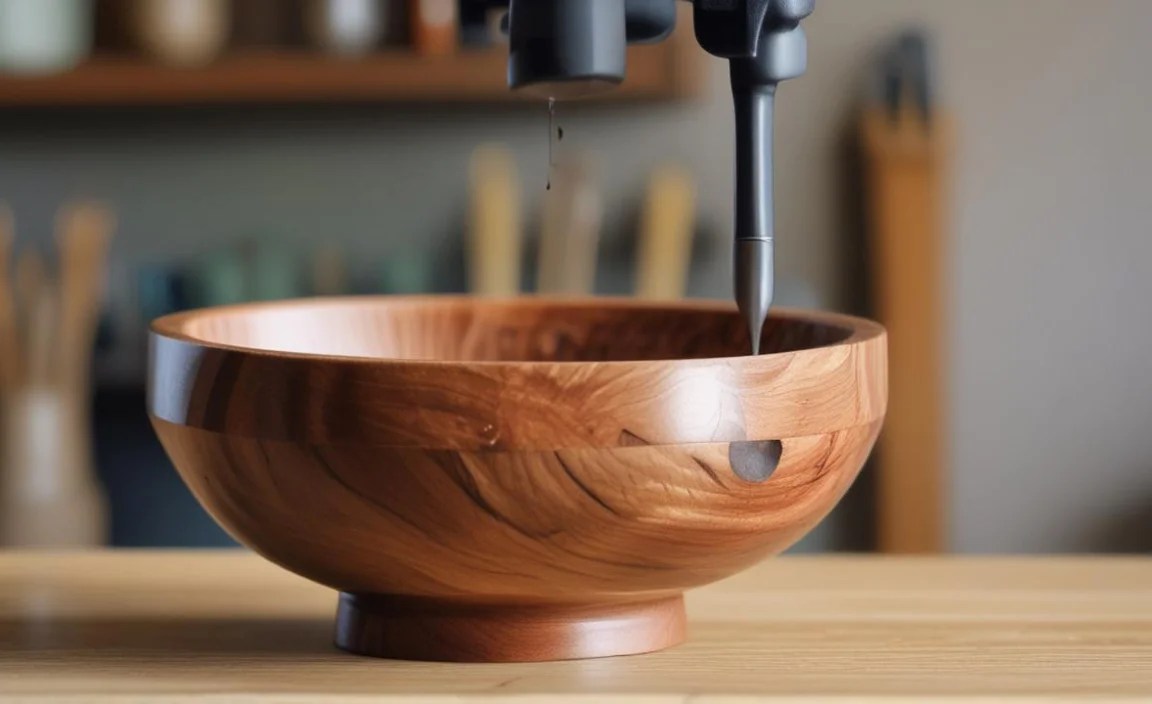
Set your lathe to a safe, moderate speed. The speed will depend on the size and rough shape of your blank. Larger and more unbalanced blanks should be turned at lower speeds. As the blank becomes more round and balanced, you can gradually increase the speed. A good starting point for a rough blank might be around 500-800 RPM.
- Spindle Roughing Gouge (If Used): If you’re using a spindle roughing gouge, hold it firmly against the tool rest, slightly below the center line of the rotating blank. Work from the center outwards, slicing off the corners to create a cylinder. Make light, controlled cuts.
- Bowl Gouge for Roughing: If you’re going straight to a bowl gouge, hold it like you’re going to scoop. Present the flute (the curved channel) upwards, at about a 45-degree angle to the blank. Rest the tool handle on the tool rest and use the tool rest as a pivot.
- Establish the Basic Shape: Begin to round the blank. Make broad, sweeping cuts, removing material to establish the overall diameter and the basic profile of your bowl’s exterior. Don’t try to get the final shape immediately. Just focus on making it round and removing excess material.
- Control Your Cuts: Always keep the tool rest close to the workpiece. Make light cuts, especially when the blank is out of balance. Listen to your lathe and feel the tool. If it’s chattering or fighting you, your cut is likely too aggressive or your tool is not sharp enough.
Remember, it’s better to take many light passes than one deep, aggressive cut. This is safer and gives you more control.
2. Shaping the Exterior Profile
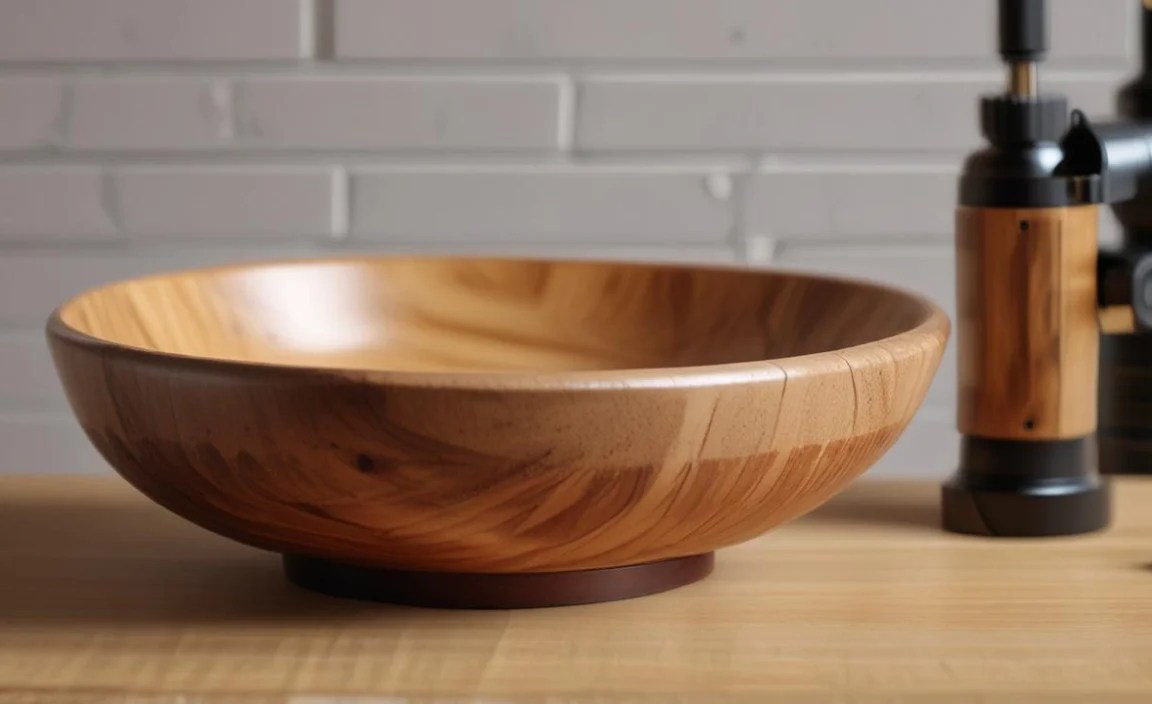
Once the blank is roughly round, you can start refining the exterior shape of your bowl.
- Bowl Gouge Refinement: Switch to your bowl gouge if you haven’t already. Hold the gouge with the flute more open, angled towards the tool rest. You’ll be making slicing cuts from the outside edge inward, or from the center outwards, depending on the specific bevel angle and cut.
- Create the Curve: Gradually work on creating the desired curve for the outside of your bowl. Experiment with different flute angles and tool rest positions to achieve smooth, flowing lines. The tool rest should be positioned to allow the tool to make a clean cut without digging in. For bowl turning, the tool rest is often set slightly below the centerline when working on the exterior.
- Smooth as You Go: Aim for a smooth finish as you shape. If you get tear-out (splintered wood), your tool might be dull, or your cut might be too aggressive. Adjust your technique and ensure your tools are sharp.
- Bevel Control: Pay attention to the bevel angle of your gouge. The un-ground part of the gouge (the bevel) should rub lightly against the wood surface after the cutting edge has passed. This indicates a proper setup and helps create a smooth finish.
3. Refining the Base and Rim
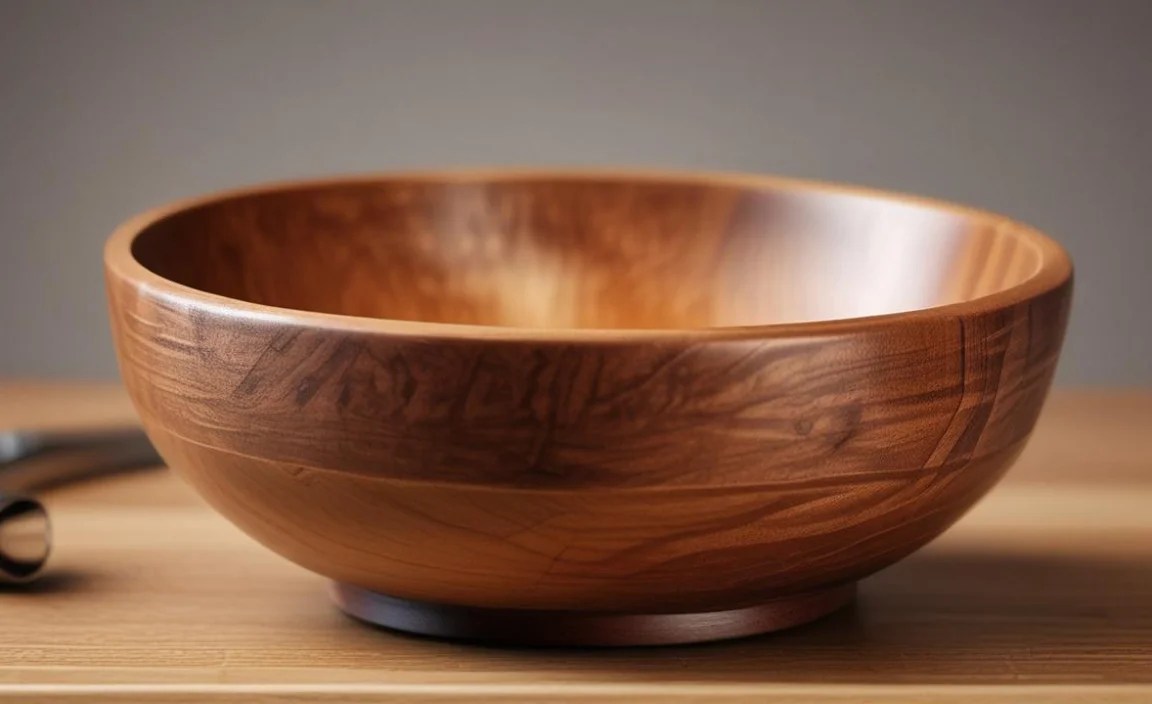
As you get closer to your final exterior shape, pay attention to the details.
- Rim: Decide on the thickness of your rim. Many bowls have a lip that tapers slightly.
- Base: The bottom of the bowl will eventually be turned flat or slightly concave. For now, just ensure it flows smoothly into the sides. We’ll deal with the final base mounting point later.
- Check Wall Thickness (Optional): If you have digital calipers, you can periodically check the wall thickness as you go, though this is more critical for the inside of the bowl.
Step-by-Step: Hollowng Out the Bowl Interior

Now for the exciting part – creating the hollow interior of your bowl!
1. Establishing the Bowl Cavity

This is where good tool control and patience are key. The tool rest needs to be moved to just above the center line of the blank.
- Position the Tool Rest: Move the tool rest so it is just above the center line of your workpiece. This allows you to work into the cavity.
- Start the Cut: Present your bowl gouge with the flute angled upwards, similar to how you started shaping the exterior, but now you’re working horizontally into the wood. Begin at the edge of your planned interior, near the rim.
- Clean, Slicing Cuts: Make slicing cuts, working from the rim towards the center. You are essentially carving out a hollow. Let the tool do the work. Think of it like peeling an apple, but in reverse.
- Gradually Deepen the Cavity: Work in successive passes, gradually deepening the cavity. Avoid trying to remove too much material at once. Listen to the tool and the lathe for signs of strain.
- Watch Your Depth: Be mindful of how deep you’re going. You don’t want to go too thin too quickly, especially near the bottom.
2. Shaping the Interior Profile

Once you have a basic cavity, you can refine its shape.
- Bowl Gouge Technique: Many of the same principles apply as for the exterior. Use slicing cuts to create a smooth, flowing interior curve. Experiment with the angle of your gouge and the pressure you apply.
- Flat Bottom vs. Rounded Bottom: Decide on the interior profile. Some bowls have a flat bottom, while others have a more rounded, organic curve. A round-nose scraper can be very useful here for achieving a smooth, flat bottom if that’s your aim.
- Wall Thickness: This is CRUCIAL. As you hollow, periodically stop the lathe and use your fingers (carefully!) or calipers to check the wall thickness. Aim for a consistent thickness throughout. For a beginner bowl, aim for at least 1/4 inch (about 6mm) for thicker areas. Too thin, and the bowl might break or be too weak to use.
A common issue: The dreaded “button” at the bottom of the bowl. This is what’s left when you try to hollow too close to the center without a proper way to hold the blank. We’ll address this with the scraping step and the final cut-off.
3. Using a Scraper for a Smooth Finish
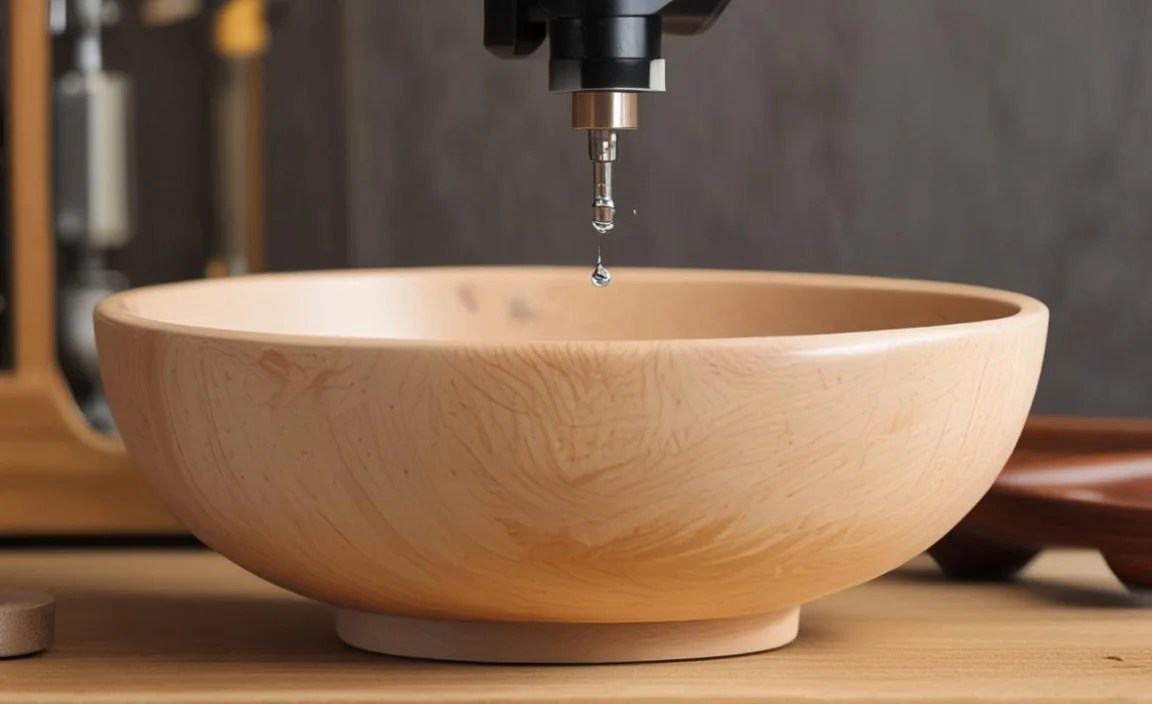
Once you’re happy with the basic shape carved by the gouge, a scraper can help achieve a glass-smooth finish, especially on the bottom. A round-nose scraper is ideal for the inside bottom.
- Tool Rest Position: The tool rest should be positioned so you can use the scraper effectively, often slightly below the center for the interior bottom.
- Scraping Technique: Hold the scraper level or at a slight downward angle. Apply gentle pressure and make very fine, slicing cuts. The goal is to skim off any high spots or tool marks left by the gouge.
- Work Systematically: Work your way around the inside, cleaning up the bottom and the transition to the sides.
Step-by-Step: Finishing the Exterior and Base

We’re getting close! Now we’ll refine the outside and handle the base.
1. Smoothing the Exterior
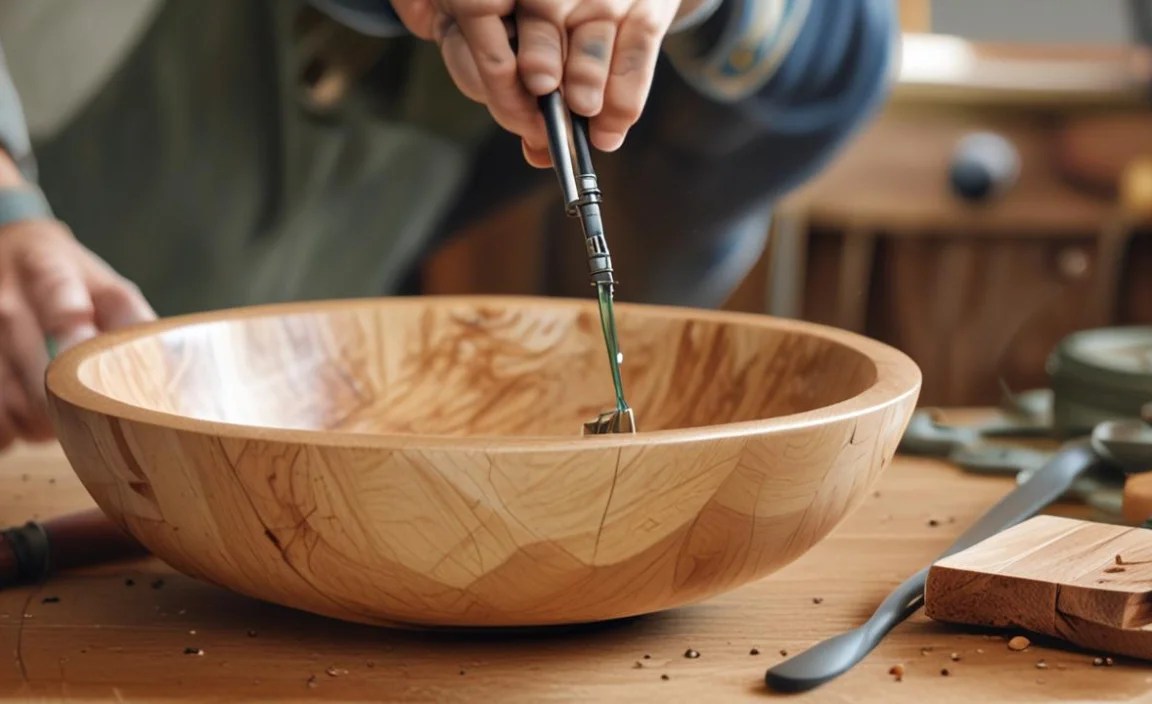
Just like the interior, you can use your bowl gouge and/or a scraper to achieve a smooth exterior finish.
- Gouge Refinement: Make very light, slicing cuts with your bowl gouge to remove any imperfections or tool marks.
- Scraping the Exterior: A flat scraper or a specific bowl scraper can be used on the exterior to achieve a very smooth surface. Make sure your tool rest is positioned correctly to allow a clean scrape, typically just below center.
