Wood lathe polishing pads are your secret weapon for achieving a smooth, professional finish on turned bowls. These abrasive pads, used with your wood lathe, gently remove tool marks and bring out the natural beauty of the wood, transforming a good project into a stunning one with minimal effort.
Wood Lathe Polishing Pads: Essential Bowl Beauty

Ever finish turning a beautiful wooden bowl on your lathe, only to be disappointed by a slightly rough surface? You’ve done the hard work, shaped the wood perfectly, but a few faint tool marks or a general dullness remain. It’s a common frustration for woodturners, especially when aiming for that mirror-smooth, show-worthy finish. But don’t worry, achieving that deep, lustrous shine is totally within reach! With the right techniques and, crucially, the right tools, you can unveil the true beauty hidden within your wood. We’re here to guide you through using wood lathe polishing pads, turning that final frustrating step into a satisfying process that makes your bowls truly shine. Get ready to discover how these simple pads can become your go-to for bowl perfection.
In this guide, we’ll explore everything you need to know about wood lathe polishing pads. We’ll break down what they are, how they work, the different types available, and most importantly, a step-by-step process for using them effectively to achieve that gorgeous, glassy finish on your turned bowls. We’ll also cover essential safety tips and common pitfalls to avoid. Ready to make your bowls irresistible to touch and behold?
What are Wood Lathe Polishing Pads?

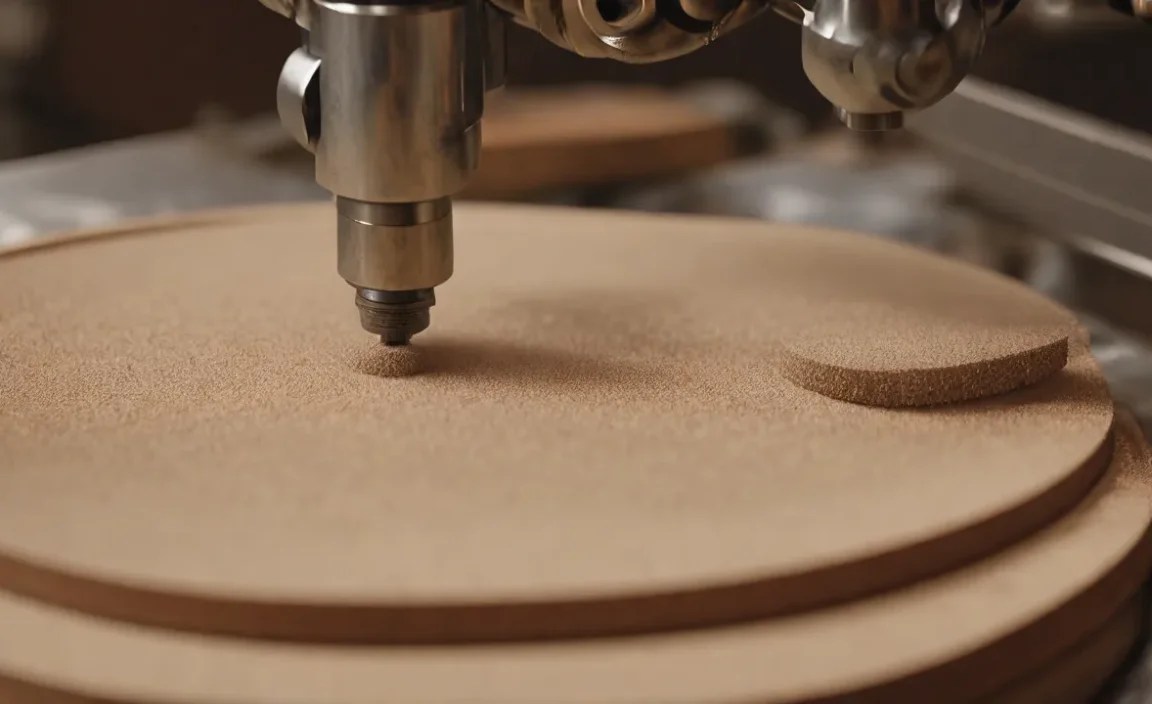
Imagine sandpaper, but much more refined and flexible. That’s a good way to think about wood lathe polishing pads. Essentially, they are abrasive materials bonded to a flexible backing, designed to conform to the contours of your turned wood. Unlike traditional sandpaper, which often comes in flat sheets, polishing pads are designed to be attached to a backing pad that spins with your lathe. This allows them to gently abrade and smooth curved surfaces, removing the finer imperfections left by your turning tools.
They come in various grits, much like sandpaper, ranging from coarser grits designed to remove minor tool marks to ultra-fine grits that create a deep, polished luster. Their flexibility is key, as it allows them to hug the curves of bowls, ensuring an even finish without creating new flat spots or unwanted lines. For anyone serious about achieving a professional-looking finish on their turned bowls, these pads are an indispensable part of the finishing toolkit.
Why are they Essential for Bowl Beauty?
Turning wood on a lathe naturally leaves behind microscopic canyons and ridges from your chisels and gouges. Even with sharp tools and careful technique, these imperfections are almost unavoidable. If you try to apply a finish over them, they become permanently sealed in, dulling the final look and feel of your piece.
Wood lathe polishing pads work by progressively removing these imperfections. They start with a grit fine enough to smooth out the tool marks, and then move to progressively finer grits. Each step refines the surface further, eventually leading to a smooth, almost silky texture that is ready to accept finishes or achieve a stand-alone lustrous sheen. For bowls, where the entire outer and inner surfaces are often on display, this smooth, uninterrupted surface is what truly elevates a piece from “homemade” to “heirloom quality.”
Types of Wood Lathe Polishing Pads

The world of wood lathe polishing pads offers a few different options, each with its own strengths. Understanding these will help you choose the best ones for your projects and preferred finishing style. The most common types include:
- Abrasive Disc Pads: These are arguably the most popular and versatile. They look like thick, flexible discs, often made of a non-woven abrasive material or coated with a very fine grit abrasive. They attach to a backing pad that itself attaches to your lathe’s spindle.
- Sanding Mops/Pumps: These consist of many individual flaps or strips of abrasive material mounted on a central hub. As they spin, these flaps conform to the wood surface, providing a gentle yet effective sanding action. They are excellent for intricate shapes and reaching into tighter areas.
- Foam Sanding Pads: Similar to abrasive disc pads, but with a thicker, compressible foam backing. This foam allows the abrasive surface to conform even more closely to irregular shapes, preventing over-sanding in some areas and ensuring consistent pressure.
- Finishing Buffs (Felt/Cloth with Compounds): While not strictly “polishing pads” in the abrasive grit sense, these are often used in conjunction with polishing pads. Made of felt or cloth, they are used with polishing compounds to bring out a final, high-gloss shine after the abrasive steps are complete.
Choosing the Right Grit
Just like with sandpaper, grit size is crucial. For polishing pads, you’ll typically be working with very fine grits. Here’s a general guideline:
- 180-240 Grit: Good for removing light tool marks left by your initial shaping gouges. This is often the coarsest grit you might use in a polishing pad application.
- 320-400 Grit: Excellent for smoothing out any remaining evidence of the coarser grits and preparing the surface for even finer polishing.
- 600-1000 Grit: These are where the real polishing magic begins. At this stage, you’re not so much removing material as you are refining and smoothing the wood surface to a high degree.
- 2000-8000 Grit and higher: These ultra-fine grits are for achieving a mirror-like shine, often used in conjunction with polishing waxes or compounds.
A common progression for bowls might involve starting with 220-grit paper on a sanding drum or disc, then moving to a 320-grit polishing pad, a 600-grit pad, and finishing with a 3000-grit pad or a buffing wheel with a suitable compound.
The Step-by-Step Guide: Achieving Bowl Perfection

Using wood lathe polishing pads effectively is a process of progressive refinement. The key is to move through the grits systematically, ensuring each step has done its job before moving to the next. Here’s how to do it:
Step 1: Prepare Your Bowl
Before you even think about polishing pads, ensure your bowl is as smooth as possible with traditional turning tools and potentially sanding up to around 180-220 grit. Make sure all tool marks are minimized. Remove any dust thoroughly. A clean surface is vital for good results.
Step 2: Mount Your Backing Pad
You’ll need a suitable backing pad for your polishing discs. These typically screw onto your lathe’s spindle or attach via a drive center. Ensure it’s securely fastened. The type of backing pad you use might depend on the polishing pads you purchased; some have hook-and-loop (Velcro) systems, while others have integrated attachment mechanisms.
Step 3: Select Your First Polishing Pad (e.g., 320 Grit)
Start with your finest grit sandpaper or your coarsest, yet still fine, polishing pad. For most bowls, this might be around 320 grit if you’ve already pre-sanded. If your bowl still has some visible tool marks, you might choose a 240-grit abrasive disc first.
Step 4: Application Technique
This is crucial. With the lathe running at a medium to slow speed (check the manufacturer’s recommendations for your pads and lathe, but generally 600-1200 RPM for polishing is a good starting point), gently bring the spinning polishing pad into contact with the rotating bowl. Don’t apply excessive pressure. Let the pad do the work.
Move the pad slowly and deliberately across the entire surface of the bowl. For bowls, this means working from the rim inwards, covering the side wall and then the base or foot. If you are polishing the inside of a hollow form, work your way around the interior carefully.
- Keep the pad moving.
- Apply even, light pressure.
- Work in one direction across the surface if possible, then overlap your passes.
- Don’t dwell in one spot, as this can create heat or uneven abrasion.
Step 5: Clean and Inspect
After you’ve worked the entire bowl with your first grit, turn off the lathe. Wipe away the accumulated dust with a clean cloth or brush. Inspect the surface under good light. You should notice a significant improvement in smoothness.
Step 6: Progress to Finer Grits
Now, repeat steps 3-5 with progressively finer grits. If you started with 320 grit, your next steps might be 400, then 600, then 800, then 1200, and so on. Many enthusiasts might go up to 3,000 or even 8,000 grit using specialized polishing pads or abrasive systems.
For instance, a common sequence using abrasive pads might be:
- Pre-sanding up to 220 grit with traditional sandpaper.
- 320-grit polishing pad.
- 400-grit polishing pad.
- 600-grit polishing pad.
- 1000-grit polishing pad.
- 3000-grit polishing pad.
Step 7: Final Buffing (Optional but Recommended)
Once you’ve reached your highest grit pad (often around 3000-8000 grit), the wood will feel remarkably smooth. For an even deeper, more brilliant shine, you can use a buffing wheel with a polishing compound. These compounds often come in different grades (e.g., coarse, medium, fine) and are applied to the buffing wheel. Again, run the lathe at a moderate speed and gently apply the buffing wheel to the bowl, letting the compound and the wheel do the work.
Safety First! Always wear appropriate safety glasses or a full face shield when turning. Use dust masks or a respirator when sanding or buffing. Ensure your workpiece is securely mounted and your lathe’s speed is appropriate for the operation. Read the manufacturer’s instructions for all abrasive products you use. Consulting the Occupational Safety and Health Administration (OSHA) standards for woodworking machinery can provide valuable safety insights.
Common Issues and How to Solve Them
Even with the best intentions, you might encounter a few snags. Here are common problems and their fixes:
- Uneven Finish/Scratches: This usually happens if you apply too much pressure, move too slowly, or didn’t get a good result from the previous grit. Ensure you cover the entire surface and that your lathe speed is appropriate.
- “Fuzzy” Surface: Sometimes, especially with very fine grits or certain wood types, the surface can become slightly fuzzy. This often indicates you might be working the wood too hard or too long with a single grit. A lighter touch and ensuring you are moving to progressively finer grits can help. Sometimes, a very light pass with an even finer grit can de-fuzz the surface.
- Heat Buildup: If the pads get too hot, they can scorch the wood or melt adhesives. Reduce lathe speed, apply lighter pressure, and keep the pad moving constantly. Allow the workpiece and pad to cool if necessary.
- Dust and Debris: Accumulation of dust can lead to an uneven finish. Clean the surface and the pad frequently between grits. A brush or a blast of compressed air can be helpful.
- Pad Wear: Abrasive pads, especially finer grit ones, will wear out over time. If you notice the pad seems to be losing its effectiveness, it’s time to replace it.
Comparing Abrasive Pads to Traditional Sandpaper
You might be asking, “Why use these special pads when I already have sandpaper?” There are distinct advantages to using dedicated polishing pads on a lathe:
| Feature | Wood Lathe Polishing Pads | Traditional Sandpaper Sheets |
|---|---|---|
| Conformability | Excellent. Flexible backing hugs curves and contours easily. | Limited. Can be difficult to get an even finish on curved surfaces without creating flat spots. |
| Speed & Efficiency | Generally faster for achieving a fine finish on turned items due to consistent contact. | Can be slower and more labor-intensive for curved surfaces on a lathe. |
| Durability | Designed for lathe speeds and pressures, often lasts longer for repetitive tasks. | Can tear or clog easily when used at high speeds or on contoured surfaces without support. |
| Finish Quality | Can achieve a very high gloss and smooth finish with less effort. | Achievable, but often requires more skill and time to match the finish of specialized pads. |
| Cost | Higher initial cost per unit. | Lower initial cost per sheet, but may require more sheets for a project. |
| Ease of Use | Designed specifically for lathe use, often simpler to apply consistently on rotating work. | Requires more adaptation for use on a lathe, especially for bowls. Foam-backed sandpaper can improve conformability. |
While sandpaper has its place, particularly for initial dimensioning or flatter surfaces, polishing pads are specifically engineered to make the process of achieving a flawless finish on turned bowls on a lathe much more accessible and effective.
Maintaining Your Polishing Gear
To get the most out of your wood lathe polishing pads and backing pads, a little maintenance goes a long way:
- Clean After Use: Always brush or blow off dust and debris from your pads after each use. This extends their life and prevents them from becoming clogged.
- Inspect Regularly: Look for signs of wear, damage, or excessive loading. Replace pads that are no longer effective.
- Proper Storage: Store pads flat in a cool, dry place away from direct sunlight. This prevents them from warping or degrading.
- Backing Pad Care: If you have a hook-and-loop backing pad, keep the hook surface clean. For other types, follow the manufacturer’s care instructions.
Beyond the Pad: Other Finishing Touches
Even after achieving a super-smooth surface with polishing pads, you might want to apply a finish for protection and enhanced beauty. Common finishes for turned bowls include:
- {“Food-safe finishes”: “For bowls intended for food use, opt for mineral oil, beeswax, shellac (de-waxed), or specialized food-safe bowls finishes. Many woodturners prefer a friction polish which can be applied with a cloth at speed, or even a buffing wheel, as the final stage.”}
- {“Durable finishes”: “For decorative bowls, harder finishes like polyurethane, lacquer, or an oil-resin blend can offer more protection against wear and moisture.”}
- {“Natural oils”: “Tung oil (pure) or Danish oil can penetrate the wood and provide a natural-looking, matte to satin finish.”}
Remember to allow adequate drying or curing time for any finish you apply. Always test finishes on scrap wood of the same species to see how they react and cure.
Frequently Asked Questions (FAQ)
Q1: Can I use regular sandpaper on my wood lathe for polishing bowls?
A1: You can use traditional sandpaper up to very fine grits (like 600 or 800), but it’s often more challenging to get an even finish on curved surfaces without creating flat spots or hand fatigue. Dedicated polishing pads are designed to conform better to the wood’s shape when spun on the lathe, making the process easier and more effective for bowls.
Q2: What speed should I use on my lathe for polishing pads?
A2: Generally, lower to medium speeds are recommended for polishing. Speeds between 600 and 1500 RPM are common, but always refer to the manufacturer’s recommendation for your specific pads and wood type. Too high a speed can generate excessive heat, while too low a speed may not allow the pads to work effectively.
Q3: How do I know when to switch to a finer grit pad?
A3: You switch to a finer grit pad when the surface you are working on is uniformly smooth from the previous, coarser grit. Visually inspect the bowl under good lighting; if you can no longer see scratches or imperfections from the previous grit, it’s time to move on to the next finer one.
Q4: Can I use polishing pads on both hardwoods and softwoods?
A4: Yes, wood lathe polishing pads work on both hardwoods and softwoods. However, you might find that softer woods can fuzz up more easily, requiring careful technique and potentially finer grits for a smooth finish. Hardwoods generally respond very well to.
