Unlock beautiful spindle designs with smart wood lathe techniques. Learn proven patterns for eye-catching results, perfect for beginner woodworkers seeking to elevate their lathe projects with confidence and ease.
Turning spindles on a wood lathe can seem a bit daunting at first, especially when you’re aiming for something more than just straight cylindrical shapes. Many beginners find themselves stuck with basic forms, unsure how to introduce variety and visual interest. This is a common hurdle, but it doesn’t have to be frustrating! The beauty of spindle turning lies in the endless patterns you can create with just a few key techniques and a little understanding of form. We’ll break down some genius insights and practical patterns that will not only make your spindles look fantastic but will also build your confidence on the lathe. Get ready to transform simple wood into captivating works of art.
Mastering Wood Lathe Spindle Turning Patterns: A Beginner’s Guide

As Daniel Bates from Lathe Hub, I’ve seen countless woodworkers fall in love with the transformative power of the lathe. Spindle turning is where the sculptural magic really happens – taking a plain piece of wood and shaping it into decorative elements, functional furniture parts, or standalone art pieces. The secret to stunning spindles isn’t just about having the sharpest tools; it’s about understanding how to use them to create specific patterns. These patterns are the building blocks of almost any spindle design you can imagine.
We’ll explore a range of patterns, from simple cove and bead combinations to more complex fluting and diamond cuts. My goal is to make these techniques accessible, ensuring you feel empowered to try them out safely and successfully in your own workshop. We’ll cover the essential tools and techniques, provide easy-to-follow steps, and offer tips to help you achieve professional-looking results. So, let’s get started on unlocking the potential of your wood lathe and creating some truly genius spindle turning patterns.
Understanding Wood Lathe Spindle Turning Patterns

Before we dive into specific patterns, it’s important to understand what makes a spindle visually appealing. Spindles are typically turned between centers and are characterized by their length and often decorative elements. The patterns we talk about are essentially variations and combinations of cuts made into the wood’s surface. These cuts can create highlights, shadows, and textured areas that draw the eye and add character.
The most fundamental patterns rely on basic shaping techniques:
Coves: These are concave hollows, often used to create a gentle transition between other turning elements.
Beads: These are convex rounded sections, providing a raised, prominent feature.
V-cuts (or parting cuts): These are sharp, angled cuts that can be used for definition, to separate sections, or as decorative elements themselves.
Scallops: These are rounded, often repetitive indentations.
Combining these basic elements in different sequences and depths is what leads to a vast array of patterns. The key is to learn how to execute each cut accurately and then experiment with their placement and repetition.
Essential Tools and Preparation

To begin exploring wood lathe spindle turning patterns, you’ll need a few key tools. Most of these are standard for any woodturning endeavor.
Basic Tool Kit for Spindle Turning:
Wood Lathe: Of course, this is the heart of the operation! Ensure it’s stable and in good working order.
Turning Chisels:
Spindle Gouge: Essential for most shaping and creating coves and beads. A 1/2-inch or 3/8-inch spindle gouge is a great starting point.
Skew Chisel: Versatile for scraping, paring, and creating flat surfaces or defined beads. A 1/2-inch or 3/4-inch skew is very useful.
Parting Tool: Crucial for making narrow cuts to define sections or create grooves. A 1/4-inch or 3/8-inch parting tool is standard.
Scraper (optional but helpful): For smoothing and refining certain flat areas or shoulders.
Measuring Tools: Tape measure, ruler, calipers for precise measurements.
Marking Tools: Pencil for marking.
Safety Gear: Safety glasses or a face shield, and hearing protection are non-negotiable. A dust mask is also advisable.
Wood: Choose a suitable wood. Straight-grained hardwoods like maple, cherry, or walnut are excellent for beginners as they turn cleanly. Avoid knots or defects.
Preparing Your Wood:
1. Select Your Stock: Choose a piece of wood that is straight and free from cracks or major imperfections. For spindle turning, you’ll typically be working with smaller diameter stock.
2. Cut to Length: Cut your stock to the desired length, ensuring the ends are square.
3. Mounting: Mount the wood securely between the lathe centers. This usually involves a spur drive center on the headstock end and a live center on the tailstock end.
4. Rough Turning: Before any pattern work, rough turn the blank to a cylinder. This ensures a consistent starting diameter and removes any irregularities. Start with a larger gouge or skew at a relatively slow speed, gradually shaping the wood into a uniform cylinder. Don’t worry about perfection at this stage; focus on getting a round form.
Safety First! Always ensure your lathe tools are sharp. Dull tools require more force, increase the risk of catches, and lead to poor results. Start with lower speeds, especially when learning new techniques or working with larger diameter stock. Always stand to the side of the spinning workpiece, never directly in front of it.
Genius Pattern 1: The Classic Bead and Cove Spindle

This is the cornerstone of spindle turning and a pattern every beginner should master. It’s simple, elegant, and incredibly versatile. You can use it for furniture legs, decorative elements, or even entire spindles.
Understanding the Components:

Cove: Created using the spindle gouge, starting with a shallow cut and deepening it with a sweeping motion.
Bead: Often achieved with a skew chisel, scraping the edge across the wood, or sometimes with the tip of a spindle gouge.
Step-by-Step Guide to the Bead and Cove Pattern:

1. Mark Your Divisions: With the lathe stopped, use a pencil to mark out the sections for your beads and coves. For a repeating pattern, you’ll want to have spaces for coves and spaces for beads. A common approach is alternating them. For example, a 1-inch cove, followed by a 1-inch bead, repeated.
2. Turn the Basic Cylinders: If you haven’t already, lightly skim turn your blank to establish a consistent diameter. You may want to mark the widest diameter of where your beads will be and the narrowest diameter of where your coves will be.
3. Carve the Coves:
Hold your spindle gouge with the flute facing upwards (or slightly angled) and the bevel rubbing against the wood.
Start with a shallow cut at one of your marked cove lines, using a sweeping motion from the higher diameter towards the lower diameter.
Gradually deepen the cove with successive cuts, always keeping the bevel rubbing. Aim for a smooth, consistent curve.
Repeat for all marked coves.
4. Create the Beads: This is where the skew chisel shines, but it can be mastered with practice.
Position the skew chisel with the beveled edge pointing towards the tailstock and the cutting edge angled to scrape across the wood.
Engage the wood gently, starting from the side of the cove or the shoulder of the bead area.
Make a scraping cut, working from the outside of the bead area towards the center. You’re essentially peeling away wood to create the rounded bead shape.
Use very light cuts, especially when learning. You can also use the tip of the spindle gouge for a slightly different bead profile, but the skew offers more control for clean definition.
Repeat for all marked bead areas. Ensure beads are symmetrical and well-defined.
5. Refine and Blend:
Once the basic coves and beads are roughed out, you can use the skew or gouge to refine the transitions between them.
A light scraping cut with the skew can flatten the shoulders leading into the coves or beads, providing sharp definition.
You can also use sandpaper, wrapped around a block, to smooth these transitions while the lathe is spinning at a slow speed. Be careful not to round over the beads too much or overwork the coves.
6. Final Sanding and Finishing: Once you’re happy with the form, sand the entire spindle smooth, moving up through grits of sandpaper. Apply your chosen finish while the lathe is still turning slowly.
This pattern teaches you fundamental tool control and the ability to create smooth curves and defined edges, essential for all subsequent pattern work.
Genius Pattern 2: The Reed and Ribbon (or Twist) Spindle

This pattern adds a dynamic, almost fabric-like texture to your spindles. It involves creating a shallow groove that can then be “twisted” or decorated.
Understanding the Components:
Reeding: A series of parallel concave grooves. Can be achieved with specialized reeding tools or by carefully using a gouge or skew.
Ribbon/Twist: Often created by cutting a V-shaped groove or a shallow, wider groove and then introducing a subtle “twist” or by highlighting the edges of the groove.
Step-by-Step Guide to the Reed and Ribbon Pattern:

1. Prepare the Blank and Mark Sections: Turn your wood to a uniform cylinder. Decide where you want your reeded sections and ribbon sections. Mark them out clearly with a pencil. For a classic look, you might have a central reeded section flanked by plain sections, with ribboins at the ends.
2. Create the Reeding:
Using a Gouge: This requires a steady hand. Turn your spindle gouge so that it cuts into the wood sideways, creating a concave groove. The trick is to make these grooves parallel and evenly spaced. Use a repetitive motion, pushing the gouge in, pulling it out, moving over slightly, and repeating. It helps to mark lines for the edges of your reeded area and then work inwards. Aim for consistent depth and width.
Using a Scraper (with care): A specialized reeding jig or a modified scraper can also be used, but this is more advanced.
Specialized Reeding Tool: For more consistent results and ease of use, an actual reeding tool (a type of plow plane that attaches to the lathe) is highly recommended. It cuts multiple grooves at once. You can find these online or at woodworking supply stores. A good example can be found at reputable tool manufacturer demonstrations.
3. Carve the Ribbon/Twist Groove:
Use your skew chisel to cut a shallow V-shaped groove or a slightly wider, shallow channel down the length of your marked ribbon section.
The key here is the depth and width. It should be noticeable but not so deep that it weakens the spindle.
To create the “twist” illusion, you can slightly bevel the edges of this groove with the skew, making the groove appear to open up and close as you move along its length. This is subtle and requires a very light touch.
4. Refine and Define:
Clean up the edges of the reeded sections and the ribbon groove. Use the skew chisel to create crisp lines where the patterns meet plain wood.
Ensure the grooves are smooth and consistent. Sanding can be tricky in deep grooves, so focus on clean cuts.
5. Sanding and Finishing: Sand the plain areas and any raised edges of your patterns. Be very careful not to sand away the depth of your grooves. Finish as usual.
The reed and ribbon pattern looks sophisticated and adds a touch of classical craftsmanship to your work. It’s a great way to practice precise grooving and subtle shaping.
Genius Pattern 3: The Diamond (or Tumbler) Pattern Spindle
This is a bold, geometric pattern that requires a bit of precision but offers a very striking visual effect. It involves creating a series of crisscrossing V-cuts.
Understanding the Components:
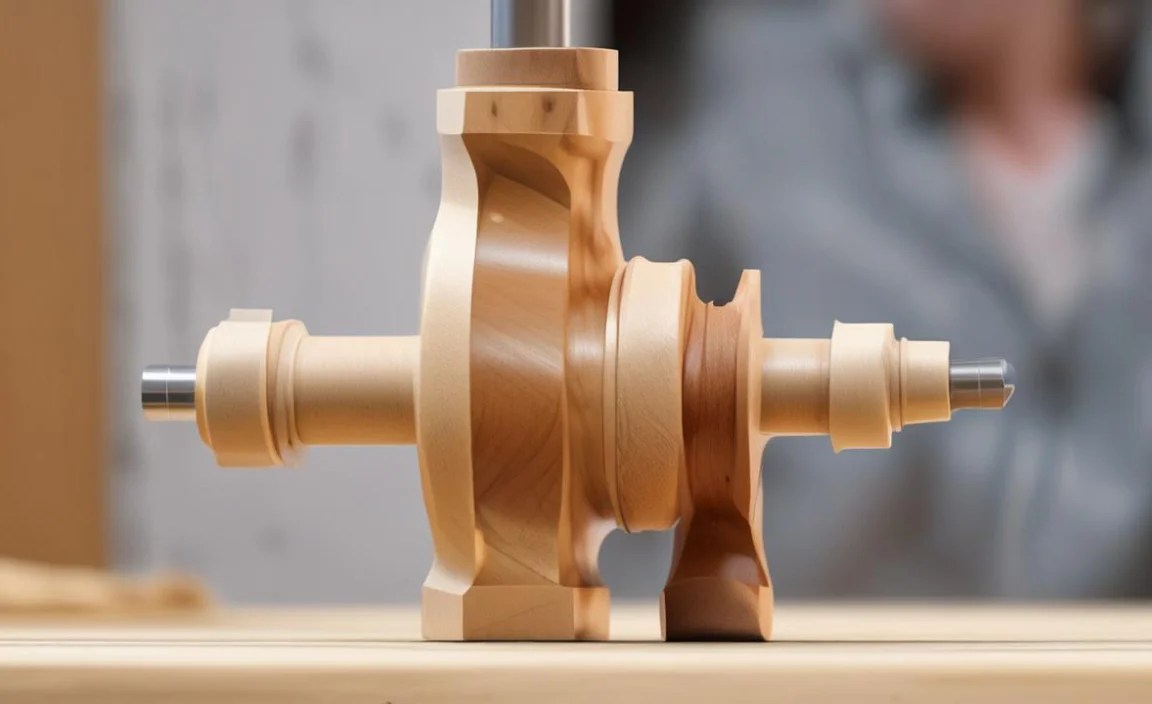
Diamond Cuts: Created by making angled V-shaped cuts into the wood.
Alignment: The success of this pattern relies heavily on consistent angles and spacing of the V-cuts.
Step-by-Step Guide to the Diamond Pattern:

1. Blank Preparation and Marking: Turn your blank to a smooth cylinder. Now, for the marking, this is crucial. You’ll need to mark lines that will guide your cuts.
Option A (Simple): Mark out sections that will have diamond patterns and sections that will be plain. Within the diamond section, mark a series of equally spaced lines running the length of the section.
Option B (More Advanced – for better symmetry): Divide the circumference of your spindle into an even number of segments (e.g., 4, 6, or 8). Mark vertical lines at these divisions. Then, mark horizontal lines at intervals along the length of the spindle. These horizontal lines will serve as a guide for the peaks and valleys of your diamonds.
2. The Tool: A skew chisel is your primary tool here. A sharp skew is essential for clean, precise V-cuts.
3. Making the First Set of V-Cuts:
Set your lathe speed to a moderate pace.
Hold your skew chisel with the cutting edge angled to make a V-shaped cut.
Start at one of your marked vertical lines, engaging the wood with the tip of the skew.
Make a cut that goes to a consistent depth, aiming towards the center of a marked horizontal line (if using Option B) or just to a predetermined depth.
Move to the next vertical line and make a similar cut, ensuring the depth and angle are consistent.
You will be creating a series of parallel V-grooves running down the spindle.
4. Making the Second Set of V-Cuts (The Diamond Effect):
Now, you need to make cuts running in the opposite direction. These cuts will intersect the first set of cuts.
Position your skew chisel at an angle that will create V-cuts running diagonally.
The key is to make these cuts between the first set of cuts, and at the same depth. You are essentially slicing into the wood at an angle.
Aim to make the V-cut meet the first set of cuts precisely. This intersection creates the flat point of the diamond.
By alternating the direction of the V-cuts, you create the diamond pattern. For a symmetrical pattern, the number of vertical lines and horizontal divisions is critical.
5. Refining the Diamonds:
Once all the V-cuts are made, you can gently go back with the skew to define the points of the diamonds and ensure the cuts are clean and sharp without being too deep.
The goal is to have the wood planes meet precisely. Avoid over-sanding at this stage.
6. Sanding and Finishing: Very light sanding is best for this pattern, as too much can soften the sharp points and edges of the diamonds. Work your sandpaper carefully into the recesses. Apply finish with care.
This pattern is a fantastic exercise in precision marking and tool control. It looks particularly stunning on darker woods or when highlighted with a contrasting finish.
Tips for Achieving Genius Results

Beyond the specific patterns, here are some overarching tips that will elevate your spindle turning:
Sharp Tools are Non-Negotiable: I cannot stress this enough. A sharp tool cuts cleanly, requires less force, and produces a far better finish, reducing sanding time significantly. Keep a honing guide and a sharpening stone handy.
Consistent Speed: Use appropriate lathe speeds for the operation. Faster speeds are generally used for sanding and finishing, while slower speeds are safer for roughing and detail work. Consult your lathe’s manual for recommended speed ranges.
The Bevel Rub: For gouges, always ensure the bevel is rubbing against the wood. This guides the cut and prevents catches.
Light, Successive Cuts: Instead of trying to hog out material, take many small, controlled cuts. This gives you more command over the tool and reduces the risk of tear-out or catches.
Think in Terms of Form: Visualize the end result. Spindle turning is about creating form through the removal of material. Understand how your tool cuts and how it will influence the shape.
Marking is Key: Don’t be afraid to use your pencil liberally to mark divisions, depths, and centers. This guidance is invaluable for accuracy.
Practice on Scrap Wood: Before committing to a fine piece of hardwood, practice new patterns on scrap pieces of softer wood. This allows you to get a feel for the tool and technique without risking your project.
Embrace Imperfection (Sometimes): Especially when you’re learning, not every spindle will be perfect. Learn from any mistakes, and remember that slight variations can sometimes add character.
Consider exploring resources like the American Association of Woodturners (AAW) for further guidance and community insights. Their website often features galleries and articles showcasing advanced techniques.
Advanced Techniques and Variations

Once you’ve mastered the basic patterns, you can start to explore more advanced techniques:
Adding Rings: Use your parting tool to create narrow, precisely spaced rings within a cove or at the edge of a bead.
Fluting: Similar to reeding but with a wider, flatter bottom. Can be done with a gouge or a specialized fluting jig.
Combination Patterns: Combine different patterns on a single spindle. For example, a reeded section in the middle with diamond accents on either side.
* Texturing Tools: Explore specialized texturing chisels or rotary tools designed.
