Wood lathe spindle speed control isn’t just a nice-to-have; it’s a crucial upgrade for safety, precision, and versatility. Mastering spindle speed lets you handle different wood types and project sizes with confidence, leading to better finishes and fewer mistakes. Learn how to choose and install the right control unit for your lathe.
Wood Lathe Spindle Speed Control: An Essential Upgrade for Every Maker

Hey makers! Daniel Bates here, your guide to making your workshop tools work smarter and safer. Today, we’re diving into something that can seriously transform your woodturning experience: spindle speed control. If you’ve ever found yourself wishing you had more control over how fast your wood spins, or if you’re just starting out and want to get things right from the get-go, you’re in the right place. Many beginner lathes come with fixed speeds or a limited range, which can be a real headache.
Trying to turn a large, unbalanced piece at high speed is asking for trouble, and conversely, a delicate detail job at low speed can be frustratingly slow. This article will break down why upgrading your wood lathe’s spindle speed control is so important, what your options are, and how to make the right choice for your setup. We’ll make this as simple as possible, so you can get back to creating amazing things!
Why Spindle Speed Control Matters
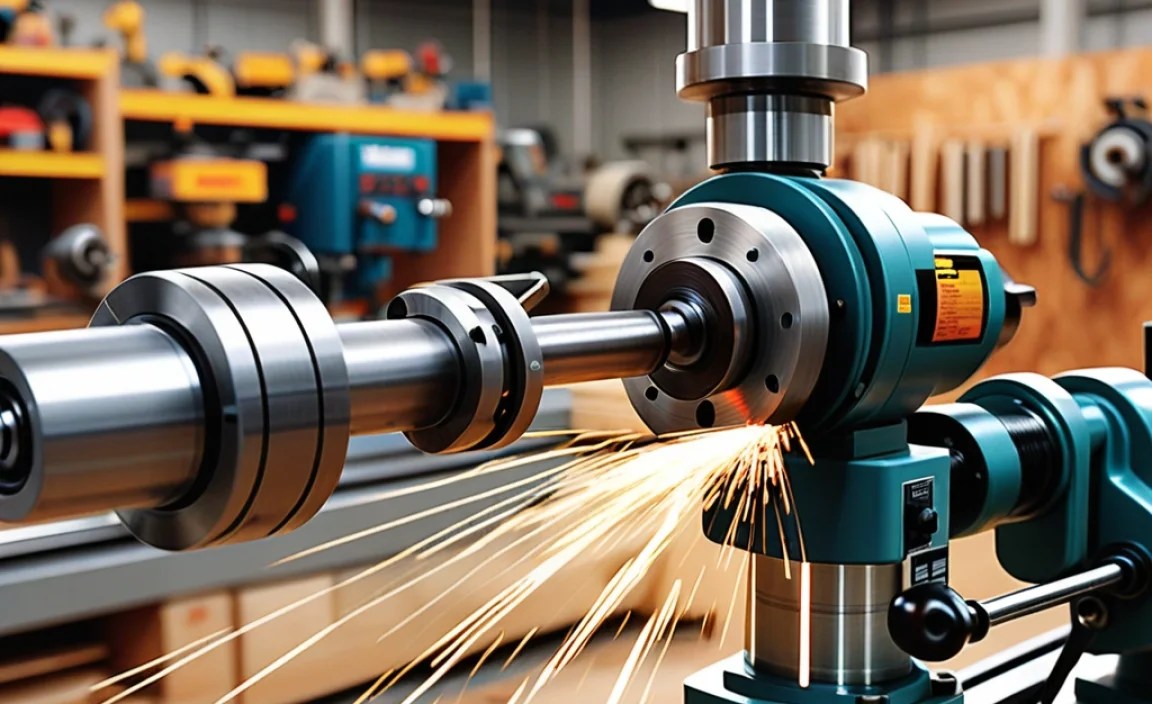
Think of spindle speed like the gear shift on your car. You wouldn’t try to drive up a steep hill in the highest gear, right? The same logic applies to your wood lathe. The speed at which your workpiece rotates (the spindle speed) needs to be appropriate for the size and type of wood you’re working with, as well as the operation you’re performing. Getting this wrong can lead to a host of problems, ranging from poor finish quality to dangerous situations.
Safety First: The Biggest Benefit
This is, without a doubt, the most critical reason to have good spindle speed control. Working with wood involves inherent risks, and controlling the speed helps mitigate them. Large, asymmetrical, or green (wet) wood pieces need to be spun much slower than small, dense, dry pieces. This prevents:
- Workpiece Breakage: Unbalanced or awkwardly shaped pieces spinning too fast can exert immense centrifugal force, leading to parts of the wood flying off. This is incredibly dangerous.
- Tool Tear-out: When your tool catches on the wood, a slower, controlled spin gives you more time to react and prevents the wood from violently breaking away around the cut.
- Chatter: Inconsistent speeds can cause vibrations, leading to a rough, “chattery” finish on your workpiece. Proper speed control smooths this out.
For a comprehensive overview of woodturning safety, the Wood Turners Guild of Ontario offers excellent resources and guidelines.
Achieving a Better Finish
The speed of your spindle directly impacts the quality of the surface finish you achieve. Different woods react differently to cutting tools at various speeds. A general rule of thumb is:
- Faster speeds: Good for sanding and achieving a smooth, glass-like finish on balanced pieces.
- Slower speeds: Better for roughing out large blanks, removing significant material, and working with more difficult or tear-out-prone woods.
Having precise control allows you to dial in the exact speed needed for each stage of your project, from rough shaping to final sanding. This means less time spent correcting imperfections and more time enjoying the smooth results.
Versatility for All Projects
A lathe with limited speed settings severely restricts the types of projects you can tackle. With adjustable spindle speed control, you gain the flexibility to:
- Turn Large or Small: Safely handle everything from tiny pen blanks to massive bowl blanks.
- Work with Various Woods: Adapt to the challenges of soft, hard, green, or brittle woods.
- Perform Different Operations: Easily switch speeds for scraping, parting off, hollowing, or detailed carving.
This adaptability makes your lathe a much more powerful tool for creativity.
Understanding Your Wood Lathe’s Drive System

Before we talk about upgrades, it’s helpful to know how your current lathe likely achieves its speed. Most wood lathes use one of two main types of drive systems, which dictate how speed is controlled:
1. Belt Drive Systems
This is the most common setup on entry-level and intermediate wood lathes. Speed is controlled by moving a belt between different-sized pulleys on the motor and headstock. The larger the difference in pulley diameter, the greater the speed change.
- How it works: You typically open a cover, loosen a tensioning mechanism, shift a belt to a different set of pulleys, and then re-tension it.
- Pros: Simple, reliable, and less expensive to manufacture.
- Cons: Speed changes require stopping the lathe and fiddling with belts, which is inconvenient and interrupts your workflow. The speed adjustments are usually in discrete steps, not infinitely variable.
2. Variable Speed Systems
More advanced lathes feature built-in variable speed control. These can be electronic or mechanical, offering a much wider range of speeds that can be adjusted on the fly.
- Mechanical Variable Speed: Often uses expanding pulleys that change their effective diameter, allowing for a continuous range of speeds. These can sometimes be less precise or require maintenance.
- Electronic Variable Speed (EVS): This is the gold standard for modern lathes. It uses an electronic motor controller (often a VFD – Variable Frequency Drive, or a DC motor controller) to adjust motor speed via a dial or lever.
- Pros: Infinite speed adjustment, easy to change speeds without stopping, precise control.
- Cons: More complex and expensive than basic belt drives.
Upgrade Options: Boosting Your Spindle Speed Control

If your lathe has a basic belt-drive system, you’re a prime candidate for an upgrade. The goal is to move from those inconvenient, stepped speed changes to something more fluid and accessible. There are generally two main paths to achieving this:
Option 1: Upgrading to a Variable Speed Pulley System
This approach keeps the basic belt-drive concept but replaces the fixed pulleys with adjustable ones. These systems allow you to change the speed ratio by turning a handwheel or lever, which adjusts the pulley diameters.
- How it works: The pulleys have adjustable grooves that widen or narrow, effectively changing the pulley diameter the belt rides on. A linkage moves the belt between these adjustable pulleys as you turn a control knob.
- Pros:
- Significant improvement over fixed pulleys, offering a wider and more continuous range of speeds.
- Less expensive than a full electronic conversion.
- Can often be retrofitted to existing belt-drive lathes.
- Cons:
- Installation can still be involved, requiring some mechanical aptitude.
- May not offer as fine or as wide a speed range as electronic systems.
- Can sometimes be less reliable or precise over time compared to EVS.
When considering a variable pulley system, look for kits specifically designed for your lathe model or for lathes with similar motor and headstock shaft sizes. Ensure the system can handle the power of your motor.
Option 2: Installing an Electronic Variable Speed (EVS) Conversion Kit
This is the most sophisticated and popular upgrade for many woodturners. It involves replacing the existing motor and/or controller with an electronic system that offers precise, on-the-fly speed adjustments. The most common type of EVS conversion uses a Variable Frequency Drive (VFD) to control an AC inverter-duty motor.
- How it works: A VFD takes the incoming AC power, converts it to DC, and then synthesizes a new AC waveform to control both the voltage and frequency supplied to the motor. By changing the frequency, the VFD changes the motor’s speed. A dial or buttons on the controller adjust this frequency.
- Pros:
- Infinite Speed Control: Dial in any speed within the unit’s range.
- On-the-Fly Adjustment: Change speed with a knob or lever while the lathe is running.
- Increased Torque at Low Speeds: Many VFD systems provide excellent torque even at very low RPMs, which is crucial for large bowls or initial roughing.
- Safety Features: Many units include brake functions or overload protection.
- Quieter Operation: Often results in a smoother, quieter running lathe overall.
- Cons:
- Most Expensive Option: VFD kits are a significant investment.
- Requires Electrical Knowledge: Installation involves wiring, which can be intimidating for absolute beginners. Safety is paramount here.
- Motor Compatibility: You may need a specific type of motor (inverter-duty AC motor) for best results with VFDs.
When looking at EVS conversions, ensure the kit is rated for your lathe’s horsepower and voltage requirements. Reputable suppliers will offer support and clear installation instructions. For a good understanding of VFDs in general, resources like Emasons’ guide to VFDs can be very informative (though focus on their core principles, not specific industrial applications).
Choosing the Right Upgrade for Your Lathe

The best upgrade path for you depends on several factors:
1. Your Lathe’s Current Capabilities
What kind of drive does your lathe have now? How much horsepower does it have? What is its voltage? Answering these will narrow down your options. For a basic 1/2 HP lathe with fixed pulleys, a variable pulley system might be a good first step. For a more powerful lathe that you plan to use extensively, an EVS conversion is likely the better long-term investment.
2. Your Budget
Variable pulley systems are generally cheaper upfront (ranging from a few hundred dollars). EVS conversion kits are a larger investment, often starting around $500-$1000 and going up depending on the quality and features.
3. Your Technical Skill Level
If you’re comfortable with basic mechanical adjustments and maybe a bit of wiring, both options are feasible. If electrical wiring makes you nervous, you might opt for a mechanically simpler system or seek help from a knowledgeable friend or professional for installation.
4. Your Turning Goals
Are you turning small decorative items, or do you aspire to turn very large bowls and platters? For demanding tasks like hollowing out large workpieces, the increased torque at low speeds offered by EVS is a significant advantage that a basic variable pulley system might not provide.
A Quick Comparison Table
To help you visualize the differences:
| Feature | Fixed Belt Pulleys | Variable Pulley System | Electronic Variable Speed (EVS) |
|---|---|---|---|
| Speed Adjustment | Manual (stop and shift belt) | Manual (turn knob/lever while running) | Electronic (dial/buttons while running) |
| Speed Range | Limited, discrete steps | Wider continuous range | Widest continuous range, often with reverse |
| Ease of Use | Inconvenient | Convenient | Very convenient |
| Torque at Low Speeds | Poor | Moderate | Excellent (especially with VFD) |
| Cost | Lowest | Medium | Highest |
| Installation Complexity | Minimal | Moderate | Moderate to Complex (electrical) |
| Typical Lathes | Entry-level | Mid-range to older higher-end | Mid-range to High-end, or upgraded older lathes |
Installation Considerations (General Guidance)
Regardless of the upgrade path you choose, safety and careful planning are essential. While specific instructions will come with your chosen kit, here are some general points to keep in mind:
For Variable Pulley Systems:
- Clearance: Ensure there’s enough space for the new pulleys and the mechanism to operate without hitting the lathe bed or stand.
- Belt Alignment: Proper alignment is crucial for smooth operation and belt longevity. Misalignment can cause excessive wear and noise.
- Tensioning: Make sure the belt tensioning mechanism is robust and easy to adjust.
For EVS Conversion Kits (especially VFDs):
- Motor Type: If using a VFD, ensure you have an AC inverter-duty motor. Standard AC motors may overheat or not perform optimally. Some kits include a suitable motor.
- Wiring: This is the most critical part. Disconnect all power to the lathe. Follow the kit’s wiring diagram precisely. If you’re unsure, consult a qualified electrician or motor control specialist. Incorrect wiring can damage components or create fire hazards.
- Enclosure: The VFD controller should be housed in a suitable enclosure to protect it from dust and chips.
- Cooling: Ensure the VFD has adequate airflow to prevent overheating.
- Grounding: Proper grounding of the motor and the VFD is essential for safety and performance.
For DIY electrical projects, reviewing resources from organizations like the National Fire Protection Association (NFPA) on electrical safety and codes can provide valuable overarching safety principles.
Setting Up Your New Speed Control
Once installed, the real fun begins: learning to use your new control effectively.
Understanding the Speed Range
Your upgrade will have a specified RPM (Revolutions Per Minute) range. For example, a common range might be 300-3500 RPM. Knowing your limits is key to safety.
- Low End: Critical for starting out, roughing large blanks, and working with tricky woods. Speeds below 500 RPM are often used for these tasks.
- Mid Range: Suitable for general turning, shaping, and some detail work.
- High End: Best for fine finishing, sanding, and working with dense, balanced pieces.
Tips for Using Your Variable Speed Control
- Start Slow: Always begin at the lowest speed when mounting a new piece of wood, especially if it’s lopsided or large. Check for balance and stability before gradually increasing speed.
- Listen and Watch: Pay attention to the sound and vibration of the lathe. Excessive vibration is a sign the speed might be too high, or the workpiece is unbalanced.
- Adjust for Wood Type: Softer woods can often be turned at higher speeds than hardwoods. Green wood needs to be turned very slowly.
- Match Speed to Tool: Certain tools and techniques benefit from specific speeds. For instance, detailed carving might require slower, more controlled speeds than broad scraping.
- Sanding Strategy: Generally, sand at higher speeds (e.g., 1500-2500 RPM, depending on the wood and grit) for the best finish, but always be prepared to slow down if you encounter issues.
- Don’t Over-Speed: Never exceed the manufacturer’s recommended maximum speed for your lathe or workpiece size.
FAQ: Your Wood Lathe Speed Control Questions Answered
Q1: How do I know what speed to use for a particular project?
A1: It’s a combination of experience and guidelines. General rules are slower for large/unbalanced/wet wood, faster for small/dense/dry wood and sanding. Always start slow when mounting a new piece and gradually increase speed while observing for vibrations.
Q2: Can I upgrade any wood lathe with variable speed control?
A2: Most belt-driven lathes can be upgraded. The specific method (variable pulleys or EVS) and feasibility depend on your lathe’s motor horsepower, physical space, and your technical comfort level. Check with upgrade kit manufacturers for compatibility.
Q3: Is an EVS conversion kit difficult to install?
A3: Installation complexity varies. Variable pulley systems are generally simpler mechanically. EVS conversions, especially VFDs, involve electrical wiring. While kits come with instructions, if you’re not comfortable with electrical work, it’s best to get professional help to ensure safety and prevent equipment damage.
