Tired of shaky, imperfect woodturning projects? If your wood lathe’s tailstock isn’t perfectly aligned, it’s the likely culprit. This guide provides simple, step-by-step solutions to diagnose and fix common tailstock alignment issues, ensuring smoother cuts and professional results every time. Get ready to turn with confidence!
Hey there, fellow makers! Daniel Bates here from Lathe Hub. We all love the magic of turning wood, right? But sometimes, our projects don’t turn out quite as smooth as we’d hoped. Often, the sneaky reason behind wobbly spindle turnings or uneven bowls is a misaligned tailstock. It’s a super common issue, especially for those of us just getting started, and it can be really frustrating. But don’t worry! Today, we’re going to dive into exactly how to find and fix these tailstock alignment problems. We’ll walk through it step-by-step, so you can get back to creating beautiful pieces with a reliable machine.
We’ll cover everything from understanding why alignment matters to the simple tools you’ll need and the precise adjustments to make. By the end of this, you’ll have the know-how to get your tailstock perfectly dialed in and boost your turning confidence.
Why Wood Lathe Tailstock Alignment Matters

Think of your wood lathe as a team: the headstock and the tailstock working together. The headstock drives your workpiece, while the tailstock supports the other end, especially for longer pieces or when drilling. For them to work in harmony, they need to be perfectly in line with each other and with the bed of your lathe. When they’re not, it’s like trying to drive a car with misaligned wheels – things get bumpy and go wrong.
Here’s why perfect alignment is crucial:
- Smoother Turning: A misaligned tailstock can cause vibrations, leading to a rough surface finish on your workpiece. This means more sanding and less perfect results.
- Accurate Spindle Turning: For projects like table legs or chair spindles, the headstock and tailstock centers must be perfectly aligned. If they aren’t, the spindle won’t be “round” when finished; it will have a slight taper or an oval shape, which is a dead giveaway of misalignment.
- Precise Drilling: When you need to drill a hole through the center of your workpiece using the tailstock, perfect alignment ensures the drill bit goes exactly where you want it, right through the center.
- Reduced Wear and Tear: Forcing a lathe with misaligned parts puts extra strain on bearings and other components, potentially shortening their lifespan.
- Safer Operation: While not usually a safety hazard in itself, poor alignment can lead to unexpected workpiece behavior, which is always a concern in a workshop.
The good news is that most wood lathes are designed so that tailstock alignment can be adjusted. It’s usually a straightforward process, and once you know how, you can check and adjust it regularly.
Common Wood Lathe Tailstock Alignment Problems

When your tailstock isn’t playing nicely with the headstock, you might notice a few specific issues. Identifying the symptom can often point towards the cause of the misalignment.
- Tapered Turnings: This is the most classic sign. If you turn a long cylinder between centers, one end will be noticeably larger in diameter than the other. This happens because the tailstock center is higher or lower than the headstock center.
- Chalky or Fuzzy Cuts: Even on shorter pieces, you might notice your tools aren’t cutting cleanly. Instead of a smooth shaving, you get a dusty or fuzzy surface. This can be a sign of vibration caused by misalignment.
- Drill Wandering: When drilling, if the drill bit doesn’t start perfectly in the center or wanders off course, it’s a strong indicator that the tailstock center isn’t aligned with the headstock center.
- Workpiece Wobble: If the entire piece seems to vibrate or wobble excessively during turning, it could be a combination of poor balancing and tailstock misalignment.
- Difficult to Mount Work: Sometimes, a badly misaligned tailstock can make it tricky to get your centers to engage properly with the workpiece, making setup feel awkward.
Most of these issues boil down to the tailstock being slightly off center relative to the headstock. This is usually due to the tailstock not being perfectly parallel to the lathe’s bed ways, or the tailstock center not being aligned with the headstock center.
Tools Needed for Tailstock Alignment
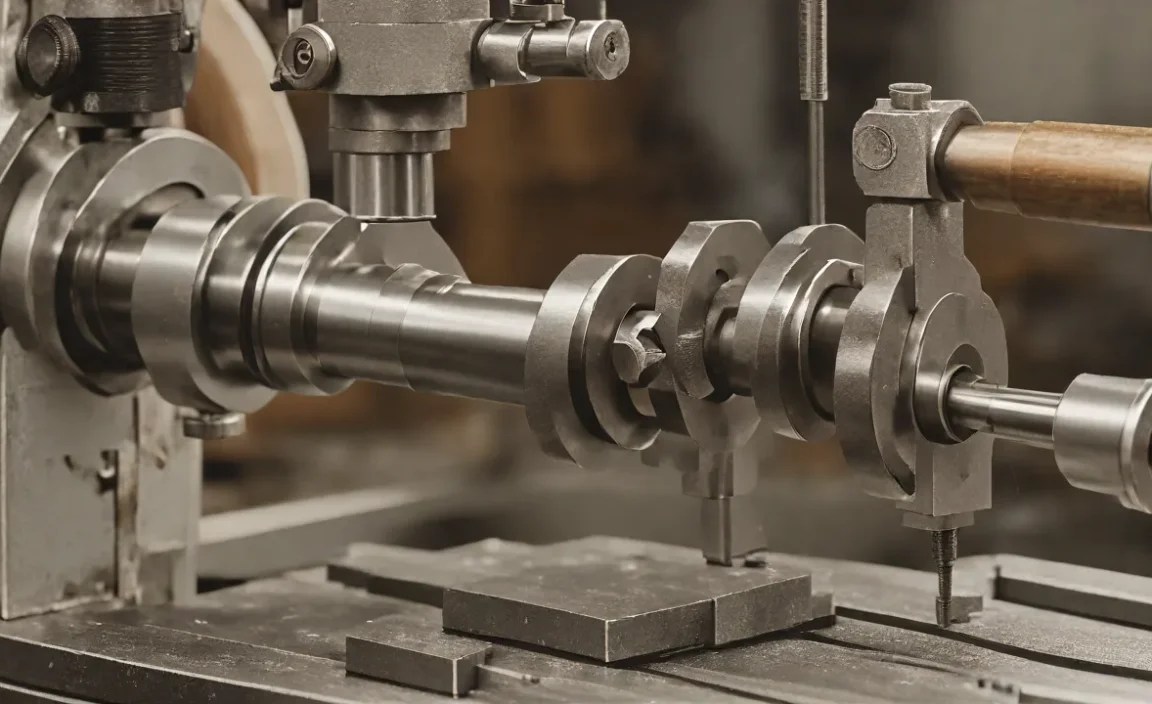
You don’t need a workshop full of specialized equipment to align your tailstock. Most of what you’ll need, you probably already have or can easily acquire:
- Dial Indicator with Magnetic Base: This is the most precise tool for checking alignment. It allows you to measure very small movements and deviations. A good quality dial indicator can be found online from reputable tool suppliers or even in some well-stocked hardware stores. Look for one with a range of at least 0-1 inch (or 0-25mm).
- Centers for Your Lathe: You’ll need a live center for the tailstock and a spur drive or driver center for the headstock. Or, if you’re testing for drilling accuracy, you can use a drill bit in your tailstock chuck.
- Calipers (Optional but Recommended): For a less precise, but still effective, method, a good set of calipers (vernier or digital) can be used to measure the distance from the tailstock ways to the headstock spindle at opposing points.
- Allen Wrenches or Wrenches: These will be needed to loosen and tighten the bolts that secure your tailstock to the lathe bed for adjustment. Check your lathe’s manual to know the correct sizes.
- Measuring Tape or Ruler: For initial checks and general measurements.
- A Piece of Scrap Wood (for a quick check): Sometimes, a simple piece of scrap wood can give you a good visual clue.
- Shop Rags: To keep your workspace clean. The National Institute of Standards and Technology (NIST) provides excellent resources on precise measurement standards, which are good to keep in mind for any workshop task.
Having the right tools makes the job much easier and more accurate. While a dial indicator is ideal for the most precise results, you can still achieve good alignment with careful use of calipers and visual checks.
How to Check Tailstock Alignment: Step-by-Step Guides

There are a couple of primary ways to check your tailstock alignment. We’ll cover the most accurate method using a dial indicator, and then a simpler method using calipers and a scrap piece of wood.
Method 1: Using a Dial Indicator (Most Accurate)
This method measures how parallel your tailstock spindle is to the lathe bed when the tailstock is in the center of its travel.
- Prepare Your Lathe: Ensure the lathe is clean and unplugged. Remove any chuck or faceplate from the headstock.
- Install Centers: Place a live center into your tailstock (or a drill bit chucked securely). Place a spur center or spur drive into your headstock spindle.
- Mount a Test Piece: Find a sturdy, straight piece of round stock or a dowel that’s long enough to span between your headstock and tailstock. Mount it securely between the centers. Ensure it’s not too tight, just snug enough to hold.
- Mount the Dial Indicator: Attach the magnetic base of your dial indicator to the headstock spindle (if it’s magnetic) or to a sturdy part of the headstock casting. Position the indicator’s probe against the tail-end of the test piece, near the tailstock center.
- Set the Indicator: Gently spin the workpiece by hand. Adjust the dial indicator so the needle just starts to move, then set the indicator to zero. Alternatively, you can take a reading, then spin the piece 180 degrees and note the difference.
- Move the Tailstock: Now, carefully slide the tailstock towards the headstock, keeping it roughly aligned with the headstock’s center. Lock the tailstock in position.
- Check Alignment at Headstock End: With the tailstock locked, position the indicator’s probe against the test piece near the headstock. Spin the workpiece again. The reading on the dial indicator will tell you how far out of alignment the centers are. For perfect alignment, the dial should read “zero” or very close to it (within a few thousandths of an inch, depending on your tolerance).
- Check Alignment at Tailstock End: Now, slide the tailstock all the way back to the far end of its travel on the bed. Lock it in place. Carefully position the dial indicator’s probe against the test piece near the tailstock. Spin the workpiece. Again, the reading should be zero.
- Alternative Dial Indicator Method (Tailstock Spindle Parallel to Ways): For a more direct check of the tailstock body itself being parallel to the bed ways:
- Remove the center from your tailstock.
- Mount the dial indicator onto the tailstock quill or body, so the probe can reach the lathe bed.
- Position the tailstock near the headstock. Set the dial indicator to zero against the top of the lathe bed.
- Slowly slide the tailstock the full length of the bed. Watch the dial indicator. The reading should not change significantly. Any significant swing indicates the tailstock body is not parallel to the bed ways.
This dial indicator method provides the most precise measurement of your tailstock’s alignment.
Method 2: Using Calipers and a Scrap Piece of Wood (Simpler)
This method is less scientific but often good enough for many woodturners, especially for less critical projects.
- Mount a Test Piece: Chuck a piece of scrap wood between the headstock and tailstock centers, just like in the dial indicator method. Make sure it’s a solid, straight piece.
- Position the Tailstock Close: Slide the tailstock towards the headstock so it’s about 6-10 inches away. Lock it in place.
- Measure at Headstock End: Using your calipers, measure the distance from the outside edge of the headstock spindle casting directly across to the surface of the test piece. Record this measurement.
- Position the Tailstock Far: Now, slide the tailstock all the way back to the far end of its travel on the bed. Lock it in place.
- Measure at Tailstock End: With the calipers, measure the distance from the outside edge of the tailstock body (or quill housing) directly across to the surface of the test piece. Record this measurement.
- Compare Measurements: If the tailstock is properly aligned, the distances measured at both ends should be very close, if not identical. If the measurement at the tailstock end is larger, the tailstock is likely angled “outward” (higher at the headstock end). If it’s smaller, it’s angled “inward” (lower at the headstock end).
- Visual Check with Scrap Wood: Mount a simple cylindrical piece of scrap wood. Turn a section of it around 6-8 inches long. Then, measure the diameter at the end nearest the headstock and the end nearest the tailstock. If the diameters are significantly different, your tailstock is misaligned.
This method gives you a good idea if something is significantly out of whack. For critical work, however, the dial indicator is the way to go.
How to Fix Tailstock Alignment Problems
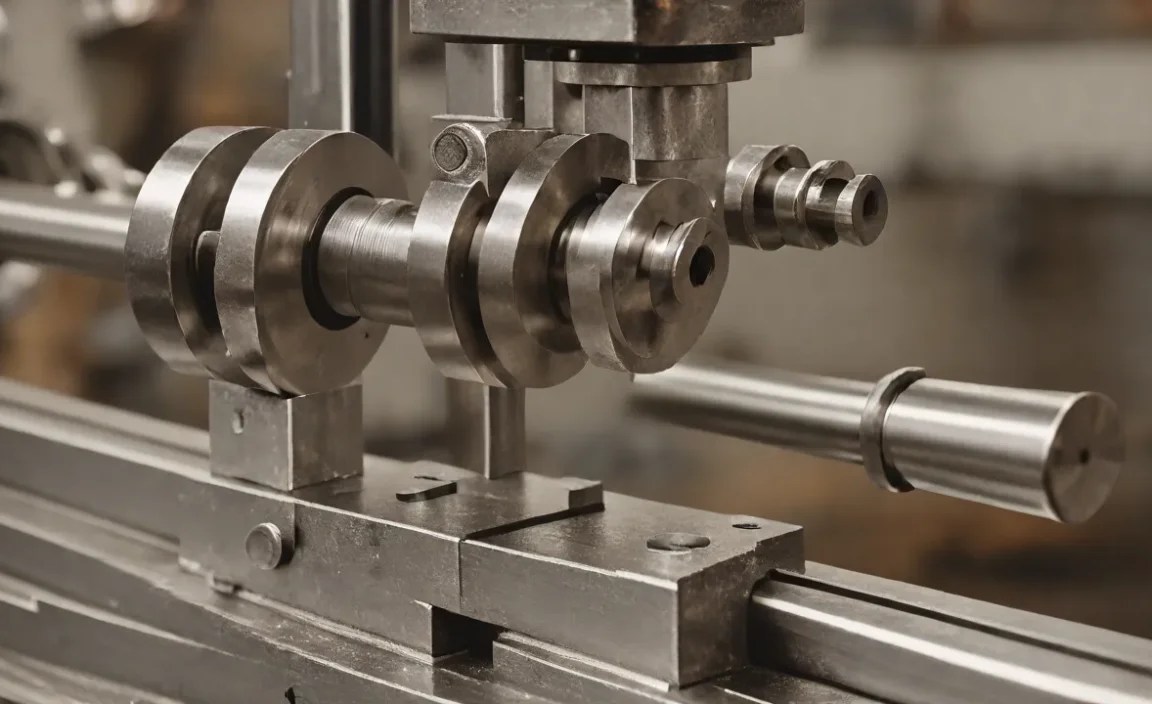
Once you’ve identified that your tailstock is out of alignment, fixing it is usually a simple mechanical adjustment. The key is to adjust the tailstock body relative to the lathe bed.
Adjusting the Tailstock Body
Tailstocks are designed to pivot slightly on the lathe bed. This pivot point is usually controlled by bolts that go through slots in the tailstock base.
- Loosen the Tailstock Lock: First, ensure the tailstock is clamped securely to the bed. Underneath the tailstock body, you’ll find a large lever or bolts that lock the tailstock in place. Loosen these just enough so the tailstock can be moved and adjusted, but not so loose that it slides around freely.
- Locate Adjustment Points: Look at the base of your tailstock. You’ll typically find two bolts that pass through elongated slots in the tailstock base and thread into the lathe bed. These are your adjustment bolts.
- Make Small Adjustments:
- If your spindle is turning out tapered (larger at the headstock end), it means your tailstock center is too low relative to the headstock center. You need to raise the tailstock end of the tailstock body. To do this, slightly tighten the bolt on the tailstock side (the side further from the headstock).
- If your spindle is turning out tapered (larger at the tailstock end), your tailstock center is too high. You need to lower the tailstock end of the tailstock body. To do this, slightly tighten the bolt on the headstock side (the side closer to the headstock).
- Tighten and Re-check: After each small adjustment (a quarter or half turn of the bolt), firmly re-lock the tailstock to the bed. Then, repeat your alignment check (using the dial indicator or calipers/scrap wood).
- Repeat Until Aligned: Continue making small adjustments, re-locking, and re-checking until your measurements show perfect or near-perfect alignment.
- Final Tightening: Once aligned, firmly tighten the tailstock lock to prevent it from moving during use.
| Symptom (Tapered Turning) | Tailstock Center is… | Adjustment Needed | Action |
|---|---|---|---|
| Larger at Headstock End | Too Low | Raise Tailstock End | Slightly tighten the rear adjustment bolt (further from headstock). |
| Larger at Tailstock End | Too High | Lower Tailstock End | Slightly tighten the front adjustment bolt (closer to headstock). |
It’s important to remember that these adjustments are usually very subtle. Make small changes iteratively. Overtightening the adjustment bolts can cause damage or make future adjustments difficult, so be firm but not forceful.
What About Tailstock Chuck Alignment?
Sometimes, the problem isn’t with the tailstock body being out of parallel with the bed, but with the tailstock chuck or center not being perfectly aligned with the tailstock spindle (quill). This is less common on quality lathes but can happen.
If your tailstock body is perfectly aligned with the bed, but you’re still getting tapering or drill runout, the issue might be with the tailstock spindle itself or the chuck.
- Check the Tailstock Quill: Make sure the quill is clean and free of debris. Extend and retract it fully. Does it move smoothly? Are there any obvious bending or damage to the quill or the chuck it holds?
- Test the Tailstock Chuck: If you have a separate tailstock chuck, try removing it and reinserting it. Sometimes, a slightly damaged chuck or an improperly seated chuck can cause runout. If possible, try a different tailstock chuck to see if the problem persists.
- Spindle Runout: For very precise work, you can even use a dial indicator to check the runout of the tailstock quill itself. Mount the dial indicator to the bed and place the probe against the quill taper or the inside of a chuck. Rotate the quill by hand and check for excessive movement. If the quill itself has runout, it might indicate a more significant internal issue with the tailstock assembly, which may require professional service or a deeper dive into your lathe’s specific design. For beginner woodturners, this is rarely the primary issue.
Most of the time, the alignment issues are corrected by adjusting the angle of the tailstock body on the lathe bed.
Maintaining Tailstock Alignment
Once you’ve got your tailstock perfectly aligned, you want to keep it that way! Here are a few tips:
- Regular Checks: Make it a habit to quickly check your tailstock alignment. After setting up a new piece, especially for spindle turning, take a moment to make a quick measurement or visual check. A quick check before starting a critical cut can save you a lot of frustration.
- Keep it Clean: Debris on the lathe bed ways or on the base of the tailstock can prevent it from locking down firmly and consistently, leading to shifts in alignment. Keep your lathe bed clean.
- Tighten Properly: Always ensure your tailstock is securely locked down to the bed before turning. Don’t overtighten.
