Wood lathe spindle lock problems can be frustrating, but the good news is most issues are simple to fix. This guide provides straightforward solutions to get your lathe spinning smoothly and safely again. We’ll cover common causes and practical steps to diagnose and repair your wood lathe’s spindle lock.
Wood Lathe Spindle Lock Problems: Essential Fixes

Hey there, fellow makers! Daniel Bates here from Lathe Hub. If you’ve ever wrestled with a stubborn wood lathe spindle lock, you know how it can bring your creative flow to a grinding halt. That little lever or knob meant to hold your spindle steady for bit changes or precise work can sometimes feel like it has a mind of its own. Don’t worry, though! These spindle lock issues are super common, especially for those of us getting comfortable with our lathes. We’ll walk through the most frequent culprits and what you can do about them, step-by-step. By the end of this, you’ll have your spindle locking like a charm again, ready for your next project. Let’s dive in and get you back to turning!
Why is My Wood Lathe Spindle Lock Not Working?

A properly functioning spindle lock is crucial for safety and precision on your wood lathe. It prevents the headstock spindle from turning when you’re tightening or loosening chucks, faceplates, or when you need to do detailed work like parting off. When it fails, it’s not just an annoyance; it can be a serious safety hazard. The most common reasons for a malfunctioning spindle lock boil down to a few key areas: wear and tear, debris, improper adjustment, or lubrication issues. Understanding these can help you quickly pinpoint the problem. Let’s break down the usual suspects.
Common Wood Lathe Spindle Lock Problems and Their Fixes

Many spindle lock issues stem from simple mechanical problems that are easily addressed with basic tools and a little bit of know-how. We’ll cover the most prevalent problems you’re likely to encounter.
1. The Spindle Lock Won’t Engage or Hold
This is probably the most disheartening problem. You try to lock the spindle, but it just spins freely, or it slips under even the slightest pressure. This can be due to a few reasons.
Causes:
- Worn Lock Pin or Bolt: Over time, the part of the lock that actually engages with the spindle can wear down, becoming rounded or flattened.
- Stripped Threads: The threads on the locking bolt or within the spindle itself might be stripped, preventing a secure grip.
- Insufficient Spring Tension: The spring that engages the lock pin might be weak or have compressed, not providing enough force to hold the spindle.
- Misalignment: The lock pin or bolt might not be lining up correctly with the locking hole or surface on the spindle.
Fixes:
- Inspect for Wear: Carefully examine the spindle lock pin or bolt. If it’s noticeably worn, it might need to be replaced. Some DIYers have had success building up worn pins with a bit of welding and grinding, but replacement is usually the most reliable.
- Check for Stripped Threads: Try turning the locking bolt by hand to feel for any slippage. If you suspect stripped threads on the spindle, this is a more complex repair, and you might need to consult your lathe’s manual or a professional machinist. For stripped threads on the bolt itself, replacement is straightforward.
- Assess Spring Tension: If your lock uses a spring, check its condition. Is it broken? Does it feel overly soft? Replacing a spring is often a simple task, usually involving unscrewing a cap or retainer.
- Realign the Lock: Sometimes, the lock needs a slight adjustment. Loosen the mechanism slightly and try to manually align the pin with the spindle’s locking hole. You might need to shim or adjust the position of the lock mechanism itself. Refer to your lathe’s manual for specific adjustment procedures.
2. The Spindle Lock is Stuck and Won’t Disengage
Just as frustrating is when the lock won’t release, leaving you unable to remove a chuck or change accessories. This often means you’re stuck in one position.
Causes:
- Debris or Gunk: Sawdust, metal shavings (less common on wood lathes, but possible) or old grease can gum up the mechanism.
- Bent Pin or Shaft: The locking pin or the shaft it runs on might be bent, binding in its bore.
- Over-Tightening: The lock might have been forced too tightly, deforming parts or jamming them.
- Corrosion: If the lathe has been exposed to moisture, rust can seize the locking components.
Fixes:
- Clean Thoroughly: Use a penetrating lubricant (like WD-40, though dedicated machine oil is better for long-term lubrication) and a stiff brush or compressed air to clear out any debris. Work the lock mechanism back and forth gently.
- Check for Bends: With the lock partially disengaged (if possible), try to visually inspect the pin and its path for any obvious bends. If you can see a bend, you might be able to gently straighten it with a pair of pliers or a soft hammer, but be very careful not to cause more damage. Replacement is safer if it’s severely bent.
- Gentle Persuasion: If it feels jammed, avoid brute force. Apply penetrating oil and try to gently rock the mechanism. Sometimes tapping lightly with a block of wood can help break the bond.
- Address Corrosion: For rust, you’ll need to apply a rust remover or more aggressive penetrating oil. You might need to disassemble the lock housing to get to the affected parts.
3. The Spindle Lock Pin is Broken or Damaged
Sometimes, you’ll find the pin itself is visibly broken, or the end that engages the spindle is chipped or deformed.
Causes:
- Impact Damage: The pin might have been hit, or excessive force applied when it was jammed.
- Material Fatigue: Over many cycles, the metal can fatigue and break.
- Manufacturing Defect: Less common, but possible.
Fixes:
- Replacement: This is the only real fix. You’ll need to identify the correct replacement part. Your lathe manufacturer’s website or a good industrial supplier should have parts diagrams. Sometimes, a generic pin of the correct diameter and length can be found and modified if necessary.
Safety Note: Always ensure the lathe is unplugged and the spindle is completely stopped before attempting any maintenance or repair on the spindle lock. Wear safety glasses!
Understanding Your Wood Lathe’s Spindle Lock Mechanism
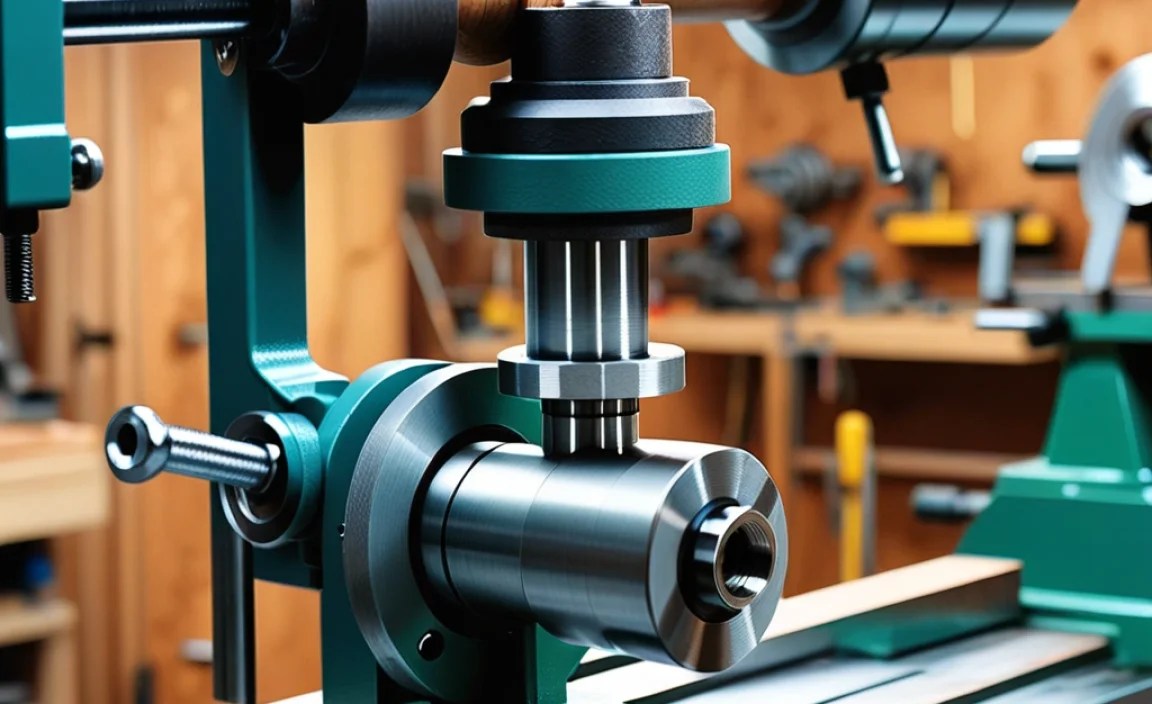
Most wood lathe spindle locks operate on a simple principle: a pin, bolt, or screw that extends to engage a slot, hole, or detent on the spindle. When engaged, it prevents the spindle from rotating.
Types of Spindle Locks:
While the core function is the same, the implementation can vary:
- Thumb Screw/Bolt: A simple bolt with a knurled knob you tighten directly against the spindle. This is often the most basic and can be prone to slippage if not tightened enough or if the threads wear.
- Spring-Loaded Pin: A pin that is pushed into a hole on the spindle by a spring. Typically, you pull a knob or lever to retract the pin against the spring tension.
- Cam Lock: A lever that, when turned, operates a cam mechanism to push a locking pin or shoe against the spindle.
The Role of the Spindle Hole/Slot:
The spindle itself has specific features for the lock to engage with. This could be a drilled hole, a slot milled into the spindle body, or a keyed section. The integrity of this feature is just as important as the lock mechanism itself. If this hole or slot is damaged, it can cause the lock to fail.
For a deeper dive into lathe components, The American Precision Museum offers excellent historical and technical insights into machine tools, including lathes: American Precision Museum – Precision Lathes.
Troubleshooting Step-by-Step
Let’s approach this logically. When your spindle lock isn’t behaving, follow these steps:
- Identify the Symptom: Is it not engaging? Not holding? Stuck? Be specific.
- Safety First: Unplug the lathe. Ensure the spindle is completely stationary.
- Visual Inspection: Look at the lock mechanism. Is anything obviously broken, bent, or missing? Check the spindle itself for damage around the locking hole/slot.
- Check for Obstructions: Clean the mechanism thoroughly with compressed air, a brush, and penetrating oil.
- Test Engagement Manually: If it’s a pin-type lock, try to manually push the pin into the spindle hole (with the spindle stationary, of course) to feel for resistance or binding.
- Check Threads (if applicable): For bolt-type locks, examine the threads on both the bolt and the spindle (if accessible).
- Spring Check: If it’s spring-loaded, assess the spring’s condition and tension.
- Lubrication: Apply a small amount of appropriate lubricant to moving parts. Avoid over-lubricating, which can attract dust.
Preventative Maintenance for Your Spindle Lock
A little regular care goes a long way in keeping your spindle lock functioning reliably.
- Keep it Clean: After each turning session, especially if you’ve been doing dusty work, give the headstock area a quick wipe-down. Use compressed air to blow out any dust accumulation around the lock mechanism.
- Periodic Lubrication: Depending on your lathe’s design and usage, apply a light machine oil to the lock pin, threads (if applicable), and any moving parts of the mechanism every few months. Always use a lubricant designed for machinery.
- Inspect Regularly: Make a habit of checking the lock’s operation. Does it engage smoothly? Does it hold firmly? Catching minor issues early can prevent major headaches.
- Avoid Over-Tightening: Don’t force the spindle lock. If it doesn’t engage easily, there might be an underlying issue that needs addressing, not just more force.
- Protect from Moisture: Store your lathe in a dry environment to prevent rust and corrosion, especially in the spindle lock area.
When to Seek Professional Help or Replace Parts
While many spindle lock issues are DIY fixes, there are times when it’s best to call in the experts or order new parts.
You should consider professional help or replacement parts if:
- Severely Damaged Spindle: If the hole or slot on the spindle itself is significantly damaged, cracked, or worn, it requires specialized repair or replacement of the spindle, which is usually a job for a skilled machinist.
- Stripped Spindle Threads: Repairing threads within the spindle is a complex machining task.
- Bent or Broken Spindle Lock Assembly: If the entire locking mechanism housing is bent or broken, replacement of the entire assembly may be necessary.
- Recurring Issues: If you’ve tried basic fixes and the problem keeps coming back, there might be a deeper design flaw or wear issue that requires a professional assessment.
- Lack of Confidence: If you’re not comfortable with the repair, especially if it involves disassembly of critical components, it’s always safer to seek help from a qualified technician or a more experienced user.
For identifying parts, your lathe’s manufacturer’s website is the first stop. If you have an older or less common model, resources like Machinery’s Handbook (while technical, it’s the bible for mechanics) or specialized online forums can help identify compatible parts.
Wood Lathe Spindle Lock Troubleshooting Table
Here’s a quick reference guide to help you diagnose common spindle lock problems:
| Symptom | Possible Cause(s) | Suggested Fix(es) |
|---|---|---|
| Lock won’t engage or hold | Worn pin/bolt, stripped threads, weak spring, misalignment | Inspect/replace pin, check/repair threads, check/replace spring, adjust alignment |
| Lock is stuck, won’t disengage | Debris/gunk, bent pin/shaft, over-tightening, corrosion | Clean thoroughly, oil, gentle persuasion, address rust, check for bends |
| Lock pin is broken/chipped | Impact damage, material fatigue | Replace pin |
| Lock bolt spins freely (no grip) | Stripped threads (bolt or spindle), worn-out locking surface | Inspect threads, consider thread repair or replacement of bolt/spindle |
| Spindle still turns slightly when locked | Worn lock pin/hole, debris in hole, spring not strong enough | Clean hole, inspect pin/hole for wear, check spring tension |
Frequently Asked Questions (FAQ) About Wood Lathe Spindle Locks
Q1: How tight should I make my spindle lock?
You should tighten the spindle lock just enough to firmly prevent the spindle from turning. Over-tightening can damage the lock mechanism or the spindle. There’s no specific torque, but it should feel secure without requiring excessive force.
Q2: Can I use my wood lathe without a spindle lock?
While you might be tempted to skip it for quick tasks, it’s strongly recommended to use the spindle lock whenever you’re not actively turning. It’s crucial for safety when changing chucks, faceplates, or adding/removing workpieces.
Q3: What kind of lubricant is best for a spindle lock?
A light machine oil is generally recommended for the moving parts of a spindle lock. Avoid heavy greases, which can attract dust and debris. For initial cleaning of stuck mechanisms, a penetrating oil can be helpful, but follow up with a lighter machine oil for regular lubrication.
Q4: My lathe has a spindle lock hole, but no pin. What do I do?
This typically means your lathe uses a separate spindle lock bolt or pin that you insert or thread into the headstock casting and then use to engage the hole on the spindle. Consult your lathe’s manual to see if this part was included or if it’s an accessory you need to acquire.
Q5: How do I know if the spindle lock is damaging my spindle?
If the spindle lock pin is worn, bent, or forcefully engaged, it can start to deform the edges of the locking hole or slot on the spindle. You might notice enlarged or misshapen areas around the hole. Any visible deformation indicates wear or damage that should be addressed to prevent further issues.
Q6: Is it safe to force a stuck spindle lock?
No, it’s generally not safe to force a stuck spindle lock. Excessive force can break the lock pin, damage the threads, or even warp the headstock components. It’s better to use penetrating oil, gentle persuasion, and thorough cleaning to free a stuck mechanism.
Conclusion: Back to Turning with Confidence
Dealing with wood lathe spindle lock problems can seem daunting at first, but as we’ve explored, most issues are quite manageable. Whether it’s a stubborn lock that won’t disengage or one that simply won’t hold, a systematic approach involving cleaning, inspection, and perhaps a few simple adjustments or part replacements usually gets you back on track. Remember that regular, preventative maintenance is your best friend – a quick clean and a bit of oil can save you a lot of hassle down the road. By understanding your lathe’s spindle lock and addressing problems promptly and correctly, you ensure both safety and precision in your woodworking projects. So go ahead, give that lock a good check, apply these tips, and get back to the joy of turning wood with confidence!
