Wood lathe mini faceplate sets offer a compact, secure, and versatile way to mount smaller woodturning projects, making them ideal for beginners and experienced woodworkers alike. They provide excellent stability for turning bowls, spindles, and other items where larger faceplates might be overkill. Learn how to harness their charm for your projects.
Hey there, fellow woodworkers and aspiring turners! Daniel Bates here from Lathe Hub. Ever find yourself admiring a beautifully turned small bowl or a delicate spindle and wonder how it was made so perfectly stable on the lathe? Often, the secret lies in the right kind of hardware. For those smaller, intricate projects, a wood lathe mini faceplate set isn’t just an accessory; it’s a game-changer.
If you’ve been struggling with keeping your smaller workpieces secure or finding the right way to mount them, you’re not alone. Many beginners feel a bit overwhelmed by the variety of chucks and faceplates available. But don’t worry! Today, we’re diving into the world of mini faceplates. We’ll explore what they are, why they’re so useful, and how you can use them to add that essential charm to your woodturning projects, all while keeping things simple and safe. Get ready to discover how these little tools can make a big difference!
What Exactly is a Wood Lathe Mini Faceplate Set?

Think of a faceplate as a disc that screws onto the end of your lathe’s spindle. It then provides a flat, threaded surface to attach your workpiece. A “mini” faceplate is simply a smaller version of this, typically designed for smaller lathes or for turning smaller projects. A “set” usually includes a few different sizes of these faceplates, often with varying thread sizes, and sometimes with additional accessories like screw-in spurs or mounting hardware.
Why Mini Faceplates are Your New Best Friend
For many small turning tasks, a full-sized faceplate or a large chuck can feel like using a sledgehammer to crack a nut. They’re often too heavy, too bulky, and can even cause balance issues on smaller lathes or with smaller workpieces. Mini faceplates solve these problems beautifully:
- Compact Size: Their smaller diameter means they’re less obtrusive, allowing you more clearance to work on your piece.
- Lightweight: Less weight means better balance and less strain on your lathe’s motor and bearings, especially important for smaller machines.
- Secure Mounting: Despite their size, they offer a very stable connection to the lathe spindle, essential for safe turning.
- Versatility: They’re perfect for a wide range of small projects like small bowls, pens, salt and pepper grinders, spinning tops, and small decorative items.
- Cost-Effective: Compared to elaborate chuck systems, mini faceplates are generally much more affordable, making them a great entry point for new turners.
- Easy to Use: They are straightforward to attach and use, requiring minimal setup time.
When Should You Reach for a Mini Faceplate?

The primary role of a wood lathe mini faceplate set is to securely attach smaller wood blanks to your lathe spindle. Here are some situations where they truly shine:
- Small Bowls and Vases: If you’re turning pieces that are only a few inches in diameter, a mini faceplate is perfect. You can mount the blank directly to it, turn the outside, and then remount it reversed to turn the inside.
- Spindle Turning: For items like table legs, candle holders, or even decorative finials that are longer than they are wide, a mini faceplate provides a stable mounting point without adding excessive bulk.
- Pens and Pencils: Turning wooden pens is a very popular hobby, and small faceplates are often the go-to for holding the pen blanks securely while you shape them.
- Small Decorative Items: Think spinning tops, small ornaments, knobs, or drawer pulls. Anything where precision and stability on a small scale are key.
- Projects Requiring Recesses: You can often turn a recess into the back of your workpiece that perfectly matches the faceplate, allowing you to attach it for the second stage of turning (e.g., hollowing out a bowl).
- When a Chuck is Overkill: If your project is too small or simple to justify setting up a more complex chuck, a mini faceplate is often the quickest and most effective solution.
Understanding Faceplate Threads and Your Lathe

This is a crucial step, and getting it right ensures safety and proper function. Your lathe spindle has a specific thread size and direction. Most wood lathe spindles are threaded for faceplates and chucks.
Common spindle threads can include, but are not limited to:
- 1″ x 8 TPI (Threads Per Inch) – Very common on larger lathes
- 3/4″ x 10 TPI
- 1″ x 10 TPI
- 3/4″ x 16 TPI
- 1-1/4″ x 8 TPI
- Metric threads (less common in the US, but found on imported machines)
Important Safety Tip: Always ensure the faceplate you purchase has threads that precisely match your lathe’s spindle thread. Using an incompatible thread can lead to the faceplate coming loose, which is extremely dangerous. Check your lathe’s manual or measure your spindle threads carefully. You can often identify threads by counting the number of threads within one inch.
Some mini faceplate sets might include adapters for different thread sizes, which can be a handy bonus. Otherwise, you’ll need to buy a faceplate with the correct thread for your machine.
Types of Mini Faceplates and Their Features

Mini faceplate sets can vary, but here are some common types and features you’ll encounter:
| Type | Description | Pros | Cons |
|---|---|---|---|
| Standard Screw-On Faceplate | A simple metal disc with internal threads to match your lathe spindle. The wood blank is attached to the face of the disc either with screws or by turning a recess into the wood. | Most common, affordable, simple to use. Good for direct screw mounting to thicker blanks. | Requires direct screwing into the wood, which can be destructive or require careful placement. Recess turning is often preferred for better finish. |
| Faceplate with Integral Spur/Screw | Some mini faceplates have a central point, a “spur” or a substantial screw built into the center. This helps to positively locate and drive small workpieces without needing to screw directly into the entire blank. | Provides positive drive and location, especially useful for smaller, thinner workpieces. Can sometimes be used with short screws for extra security on larger items. | The spur can limit the depth of certain internal turnings. May require a pre-drilled pilot hole. |
| Universal Faceplate Systems | These are less common in “mini” sets but some systems offer a base faceplate that can accept interchangeable drive spurs, screw chucks, or other attachment methods. | Highly versatile if you opt for a system with multiple accessories. | Can be more expensive. May be more complex than a simple screw-on. |
Essential Tools for Using Mini Faceplates
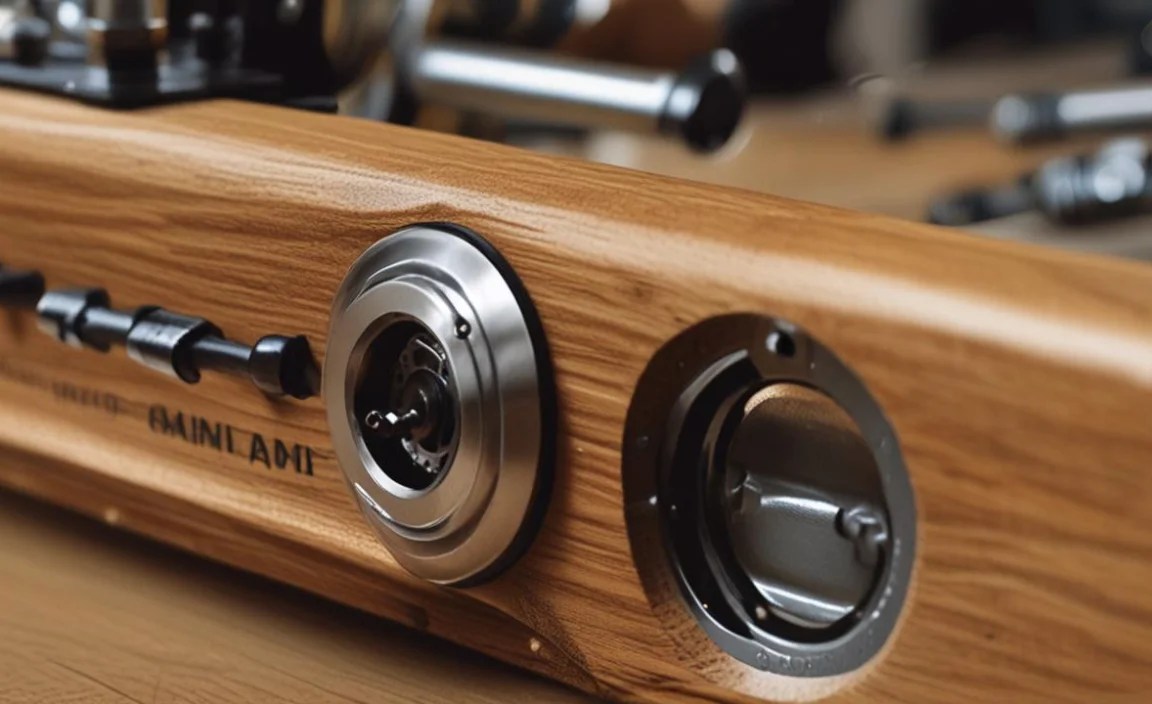
Beyond the mini faceplate set itself, you’ll want a few other items to make the process smooth and safe.
- Your Wood Lathe: Of course! Ensure it’s in good working order and matches the size of the faceplate you’re using.
- Drill and Drill Bits: For pre-drilling pilot holes for screws, or for turning recesses.
- Screwdrivers: To drive screws into your workpiece if you’re not turning a recess. Use appropriate Phillips or flathead types.
- Bandsaw or Jigsaw: For cutting your initial blank to a rough round shape to minimize vibration.
- Lathe Chisels/Gouges: Essential turning tools like spindle gouges, bowl gouges, and parting tools.
- Measuring Tools: Calipers for checking dimensions, a ruler or tape measure.
- Safety Gear: This is non-negotiable. Safety glasses are a minimum. A full face shield is highly recommended for turning. Hearing protection is also wise. Dust mask.
- Wood Blanks: Your materials!
- Wood Glue (Optional): For laminated constructions or if you’re joining pieces.
- Center Finder/Compass: To accurately mark the center of irregular blanks.
Step-by-Step Guide: Using a Mini Faceplate to Turn a Small Bowl
Let’s walk through a common scenario: turning a small bowl. This process is fundamental and will teach you a lot about faceplate use.
Step 1: Prepare Your Blank
Start with a piece of wood that’s slightly larger than your desired finished bowl diameter and thick enough to accommodate the depth of the bowl plus the attachment area for the faceplate. If your wood isn’t already round, use a bandsaw or jigsaw to cut it to a rough circle. This reduces initial vibration.
Tip: For a more professional finish and secure hold, it’s best to turn a recess into the back of the blank that precisely matches the diameter and depth of your mini faceplate. This way, the faceplate sits flush within the wood, and you can use a screw through the faceplate into the wood for a very secure hold.
Step 2: Attach the Mini Faceplate to the Lathe
Ensure your lathe is off. Screw the appropriate mini faceplate onto your lathe spindle, making sure the threads engage fully and it tightens securely. Tighten it firmly, but avoid overtightening to the point where you might struggle to remove it later.
Step 3: Mount the Wood Blank to the Faceplate
There are two main methods here:
Method A: Turning a Recess (Recommended for Bowls)
- Place your rough-cut blank against the faceplate.
- Using a pencil, trace the outline of the faceplate onto the back of your blank.
- Turn the lathe on at a slow speed. Using a bowl gouge, carefully turn a recess into the blank that matches the diameter of your faceplate and is slightly deeper than the faceplate is thick. Aim for a snug fit.
- Turn off the lathe and press the blank onto the faceplate. It should feel like an interference fit.
- For maximum security, drive a screw from the inside of the faceplate (through one of its mounting holes) directly into the back of the wood blank. Use a screw that is long enough to grip well but not so long that it protrudes into the area you’ll be turning.
Method B: Direct Screw Mounting
- Place your blank against the faceplate, ensuring it’s centered.
- Mark pilot hole locations on the blank through the mounting holes on the faceplate.
- Turn off the lathe. Pre-drill pilot holes at your marked locations for the screws you’ll be using. This prevents splitting.
- Position the blank against the faceplate and drive appropriate wood screws (e.g., pan head or flat head screws) through the faceplate holes into the pilot holes in your blank. Use at least 3-4 screws, spaced evenly.
Step 4: Rough Turning the Outside
Ensure your tool rest is securely positioned. Put on your safety gear! Start the lathe at a slow speed, especially for the initial roughing. Use a bowl gouge or spindle gouge to round the blank and begin shaping the outside of your bowl. Gradually increase speed as the blank becomes more balanced.
Safety Note: Always start slow. As the wood becomes rounder and more symmetrical, vibration will decrease, and you can safely increase the lathe’s speed according to standard guidelines for your lathe and wood type. For example, the American Association of Woodturners (AAW) offers resources on safe lathe operation speeds which can be helpful.
Step 5: Shaping and Finishing the Outside
Continue using your gouges to refine the shape of the bowl’s exterior. Use scraping tools for a smooth finish if desired. When you’re satisfied with the exterior, you can sand it. You can often sand the area where the faceplate attaches, but be careful not to sand away your snug recess fit.
Step 6: Removing the Blank and Preparing for Inside Turning
Turn off the lathe. Unscrew the screws holding the blank to the faceplate (if you used Method B, or if your recess was loose and you used screws for extra security). If you turned a recess (Method A), the blank should now be free of the faceplate. The back of your bowl now has the recess that was formed by the faceplate.
Step 7: Mounting the Blank for Inside Turning
Now, you’ll remount the blank onto the faceplate. This time, the previously turned outside surface of the bowl will press into the recess you made on the faceplate (if you used a faceplate with a recessed mounting surface) or you will simply place the blank against the faceplate again, ensuring the recess you turned in the blank fits snugly against the faceplate. The goal is to have the blank securely held by the recess you created.
Important: For this stage, you typically won’t need to screw the blank to the faceplate again. The friction and snug fit of the recess should hold it securely. However, some advanced turners might still use one screw for absolute peace of mind, especially on larger pieces.
Step 8: Turning the Inside
With the blank remounted, start the lathe at a slow speed. Use your bowl gouge to begin hollowing out the inside of the bowl. Work from the rim towards the center, gradually deepening the hollow. Be mindful of the faceplate location and don’t turn past your original blank thickness or into the area where the faceplate was mounted.
Step 9: Finishing Internally
Once the inside is hollowed, continue refining the shape. Sand the interior. You’ll notice around the rim that you can’t sand all the way to the edge because of the area where the faceplate was attached. You can either:
- Leave a small decorative band where the attachment was.
- Carefully use a small detail gouge or parting tool to remove that small lip, creating a clean edge. This requires practice and a steady hand.
- If you used a faceplate with a central spur, there might be a small hole or slight indentation left that needs to be dealt with, often by filling or by careful sanding.
Step 10: Final Finishing and Removal
Complete your sanding and apply your chosen finish (oil, wax, lacquer, etc.) to both the inside and outside of the bowl. Once the finish is dry and you’re happy with the result, turn off the lathe. Remove the faceplate from the spindle. Your small, beautifully turned bowl is now ready!
Tips for Success with Mini Faceplates
- Always Center Your Blank: Whether cutting rough blanks or using a pre-cut one, finding the true center and mounting it accurately on the faceplate is key to reducing vibration. A center finder or compass is invaluable here.
- Use Pilot Holes for Screws: If you’re screwing directly into the wood, always pre-drill pilot holes. This prevents the wood from splitting, especially on harder species or near the edges.
- Don’t Overtighten Screws: While you want a secure hold, overtightening screws can strip the wood fibers or even crack the blank.
- Balance is Key: For smaller lathes, keeping your work as balanced as possible is crucial. Rough-cutting blanks to a basic round shape helps immensely.
- Listen to Your Lathe: Unusual noises or excessive vibration are signs of a problem. Stop the lathe immediately and check your mounting, balance, and tool rest position.
- Clean Your Threads: Keep the threads on your lathe spindle and your faceplates clean of dust and debris. A little brass brush can help.
- Practice Recess Turning: For bowls and similar items, mastering how to turn a recess to match your faceplate will give you much cleaner results and stronger mounting.
Pros and Cons of Using Mini Faceplates
Like any tool, mini faceplates have their advantages and disadvantages.
| Pros | Cons |
|---|---|
| Inexpensive: Great value for money. | Limited to Small Projects: Not suitable for larger turning. |
| Lightweight: Good for smaller lathes and less vibration. | Can Leave Marks: |
