Wood lathe faceplate screw size is crucial for securely attaching your workpiece, ensuring safety and precision. The right size prevents slipping and dangerous kickbacks, allowing for smooth turning. This guide will demystify common sizes, helping you choose the perfect fit for your projects and confidently tackle your next turning challenge. Let’s get started!
Wood Lathe Faceplate Screw Size: An Essential Guide for Beginners

Welcome to Lathe Hub! As a fellow enthusiast who loves making things with wood, I know how frustrating it can be when something as seemingly small as a screw can halt your progress. Finding the right wood lathe faceplate screw size might sound like a minor detail, but trust me, it’s a big deal for safety and the quality of your work. A loose faceplate can mean a ruined project, or worse, a dangerous situation. Many beginners overlook this, just grabbing whatever screw is handy. But we’re going to change that today! We’ll break down exactly what you need to know, so you can confidently select the correct screws every time you mount your work. Get ready to turn with renewed confidence!
Why Faceplate Screw Size Matters More Than You Think

Your wood lathe faceplate is the sturdy disc that screws onto the lathe spindle, offering a secure way to mount larger, irregularly shaped workpieces that aren’t easily held by a chuck. It provides a stable platform by allowing you to attach your wood blank directly to it using screws. These screws are the critical link holding everything together. If they’re too small, they might not have enough thread engagement in the faceplate or the wood, leading to slippage. If they’re too long, they could interfere with your tools or even the lathe’s tailstock. Using screws of the correct diameter, length, and thread count ensures maximum grip, prevents vibration, and keeps your project spinning true. This ultimately leads to cleaner cuts, less wasted material, and the most important thing: keeping you safe in your workshop.
Understanding Faceplate Construction
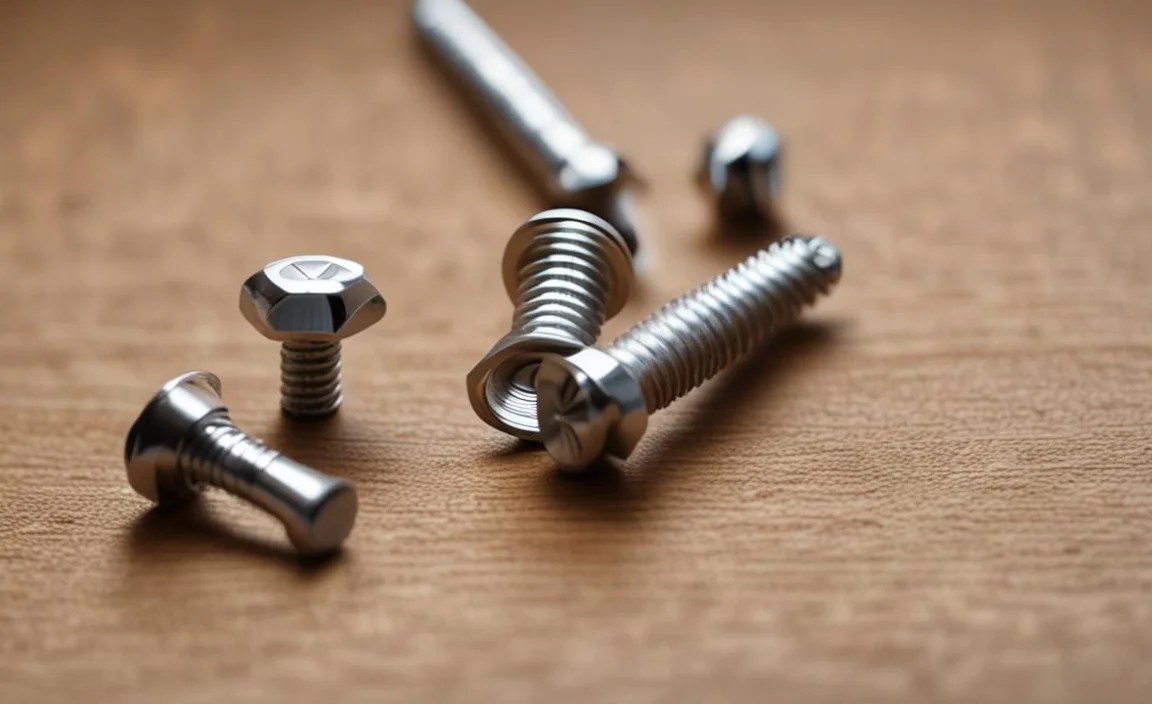
Before we dive into screw sizes, let’s quickly look at the faceplate itself. Most wood lathe faceplates are made of cast iron or steel and have several threaded holes drilled around their perimeter. These holes are designed to accept screws that pass through the faceplate and into your wooden workpiece. The number and spacing of these holes can vary between faceplates. Some smaller faceplates might have only three or four holes, while larger ones can have six or more. The size of the threaded holes in the faceplate is the primary determinant of the screw shank diameter you’ll need.
Common Faceplate Screw Diameters and Threads

The most common screw sizes used with wood lathe faceplates are generally in the medium to coarse thread range, designed for good holding power in wood. You’ll typically encounter screws with diameters that fall within standard UNC (Unified National Coarse) or even some specific woodworking screw designations. It’s rare to see metric threads on standard wood lathe faceplates unless the lathe itself is of European manufacture and specifically designed for it.
The “Go-To” Sizes for Faceplate Screws
While there’s no single universal size, certain diameters and thread pitches are more prevalent. For most common woodworking faceplates, you’ll find yourself reaching for screws in these ranges:
- #8 Screw Size (Approx. 0.164 inches or 4.2 mm diameter): This is a very common size, often found in smaller faceplates or for lighter-duty applications. They provide adequate grip for smaller bowls or decorative turnings.
- #10 Screw Size (Approx. 0.190 inches or 4.8 mm diameter): A step up from #8, #10 screws offer more strength and holding power. They are excellent for medium-sized bowls and spindles.
- #12 Screw Size (Approx. 0.216 inches or 5.5 mm diameter): These are robust screws, suitable for larger projects and situations where extra security is desired.
- 1/4-inch Diameter Screws (Approx. 6.35 mm diameter): Especially those with a coarse thread, 1/4-inch screws are a popular choice for serious woodworking. They offer substantial strength for bigger bowls, platters, and face-mounted projects.
It’s important to note that the “Screw Size” designation (like #8, #10) refers to the nominal outer diameter of the screw’s shank. The thread pitch (threads per inch, or TPI) is also critical. Coarse threads are generally preferred for wood as they offer better grip with less risk of stripping the wood fibers.
Determining the Right Screw Size for Your Faceplate

So, how do you know which size is right for your faceplate? There are a few reliable methods:
- Check Your Faceplate’s Threaded Holes: The easiest way is to look at the faceplate itself. If the original screws are missing, you might be able to discern their size by looking at the threaded holes. Sometimes, the size is even stamped on the faceplate. If not, you can try inserting a few known screw sizes to see what fits snugly.
- Consult Your Lathe’s Manual: If you still have the user manual for your wood lathe, it will often specify the recommended faceplate screw sizes or the size of the threaded holes on the faceplates that came with the machine.
- Measure the Threaded Hole: If you have a set of calipers, you can measure the diameter of the threaded hole in the faceplate. For a snug fit, you want a screw shank diameter that is slightly smaller than the major diameter of the thread in the hole. A good rule of thumb is to aim for a screw diameter that is about 0.010 to 0.020 inches smaller than the diameter of the hole itself. For UNC threads, you can then look up standard TPI for that diameter.
- Use a Thread Gauge (Less Common for Woodworking): While more common in metalworking, a thread gauge (or screw pitch gauge) can help identify the thread type and pitch if you’re unsure, though this is often overkill for standard woodworking faceplates.
- Test Fit with Assorted Screws: The most practical method often involves having a small collection of common screw sizes. Take your faceplate to a hardware store or bring a few common screw sizes to your shop and try them in the faceplate holes. The screw should thread in smoothly without wobbling, but also without being so tight that you have to force it.
A Quick Guide to Common Faceplate Holes and Screw Sizes (Approximate)
Here’s a handy table to give you a general idea. Remember, these are approximate, and always best to confirm with your specific faceplate:
| Faceplate Hole Diameter (Approximate) | Recommended Screw Shank Diameter | Common Screw Sizes | Typical Thread Pitch (UNC) |
|---|---|---|---|
| 0.205 – 0.220 inches (5.2 – 5.6 mm) | #8 (0.164 inches / 4.2 mm) | #8 x 3/4″, #8 x 1″ | 32 TPI |
| 0.230 – 0.245 inches (5.8 – 6.2 mm) | #10 (0.190 inches / 4.8 mm) | #10 x 3/4″, #10 x 1″ | 24 TPI |
| 0.255 – 0.270 inches (6.5 – 6.9 mm) | #12 (0.216 inches / 5.5 mm) | #12 x 1″, #12 x 1.5″ | 24 TPI |
| 0.270 – 0.300 inches (6.9 – 7.6 mm) | 1/4″ (0.250 inches / 6.35 mm) | 1/4″ x 1″, 1/4″ x 1.5″ | 20 TPI |
Important Note: The TPI (Threads Per Inch) is crucial for matching a bolt or screw to a tapped hole. Coarse threads (lower TPI numbers like 20 or 24) are generally better for wood, as they bite more effectively without excessive risk of stripping wood fibers. Fine threads (higher TPI numbers like 32) can be used but might require more care when driving them into softer woods.
Choosing the Right Screw Length
Once you’ve got the diameter and thread type sorted, the next big question is length. The ideal screw length should:
- Engage sufficiently with the faceplate’s threads.
- Penetrate the workpiece deep enough for a secure hold without passing all the way through.
- Not be so long that it interferes with other lathe components or creates a hazard.
A good rule of thumb for screw length is to consider the thickness of your faceplate. You want at least two-thirds of the screw’s length to be embedded in the wood for optimal holding power. For example, if your faceplate is 1/2 inch thick and you’re using a 1-inch screw:
- 1/2 inch goes into the faceplate threads.
- The remaining 1/2 inch penetrates the wood.
- However, you ideally want more than just the exposed part in the wood for a strong hold.
A better approach is often to select a screw that, when threaded into the faceplate, leaves enough length sticking out to achieve at least 3/4 to 1 inch of penetration into your wood blank, depending on the workpiece size and density.
Factors Influencing Screw Length Selection:
- Faceplate Thickness: Deeper threads mean you can use shorter screws or get more engagement with screws of the same length.
- Workpiece Material: Hardwoods can take deeper penetration without becoming too weak. Softwoods require more care to avoid stripping.
- Workpiece Size and Shape: Larger or heavier pieces will require more substantial screw engagement. For very thick blanks, you might need longer screws, ensuring they don’t protrude dangerously.
- Recessed Faceplates: Some faceplates are designed to recess into the workpiece, requiring different screw lengths and possibly counterboring.
Always err on the side of caution. It’s better to use a screw that’s slightly too short with ample penetration than one that’s too long and creates a safety hazard.
Types of Screws Best Suited for Faceplates
Not all screws are created equal when it comes to faceplate work. You’ll want screws that offer good grip and are durable. Here are some common types:
- Wood Screws (Coarse Thread): These are your bread and butter. Look for screws with deep, coarse threads specifically designed for softwoods and hardwoods. They generally have a plain shank under the head and then the threaded portion.
- Washer Head Screws: These have a built-in washer under the head, which distributes the clamping force over a wider area of the wood. This is excellent for preventing tear-out or crushing fibers, especially in softer woods or on larger faceplates.
- Deck Screws: Many modern deck screws are made of hardened steel and feature excellent coarse threads that bite well into wood. They often have a corrosion-resistant coating, which is a bonus.
- Coach Screws (Round Head, Square Neck): These are a bit more specialized but can be excellent. They have a domed head and a square neck that bites into the wood to prevent spinning. You’d typically use them with a washer and nut on the backside if the faceplate allowed, but for direct screwing into wood, the round head can be sufficient.
Avoid screws with fine threads, very shallow threads, or those designed for very specific applications like drywall or metal framing.
Can I Use Bolts Instead of Screws?
Yes, absolutely! Many woodturners prefer to use bolts with nuts and washers instead of screws, especially for very large or heavy workpieces. This method involves drilling through the faceplate and the wood blank, then securing with a bolt, washer, and nut. This offers exceptional holding power.
Bolts vs. Screws for Faceplates:
- Bolts (with Nuts & Washers):
- Pros: Extremely strong and secure, reversible (can be removed from either side), excellent for heavy-duty work.
- Cons: Requires drilling through the entire workpiece, can be more time-consuming to set up, nuts and washers add extra parts.
- Screws (Directly into Wood):
- Pros: Faster and simpler setup, doesn’t require drilling through the blank, good for most general-purpose faceplate turning.
- Cons: Holding power relies on wood’s integrity, can strip out in soft woods, requires careful selection of screw size and depth.
If you choose bolts, you’ll likely use standard machine bolts (like hex head bolts) with matching nuts and washers. The diameter will again depend on the drilled hole size in your faceplate and workpiece. Common bolt sizes range from 1/4″ to 1/2″ diameter.
Safety First: Essential Precautions
Working with a lathe involves inherent risks, and proper use of your faceplate and screws is paramount for safety. Here are critical precautions to always follow:
- Never Use Damaged Screws or Faceplates: Check your hardware for rust, bent threads, or cracks. A compromised screw can fail unexpectedly.
- Ensure Full Thread Engagement: Make sure the screw threads are fully engaged in the faceplate’s tapped holes. Don’t let them bottom out with only a few threads engaged.
- Don’t Overtighten: While you want them snug, overtightening can strip the threads in the wood, weakening the hold, or even crack the faceplate.
- Check for Protrusion: Always ensure that no part of the screw head or shank protrudes beyond the faceplate surface in a way that could hit your tools or catch your clothing.
- Consider the Wood Density: Be extra cautious with softwoods like pine. They strip easily, so pre-drilling a pilot hole slightly smaller than the screw’s minor diameter can significantly improve grip.
- Secure Your Workpiece: Give your mounted workpiece a gentle tug and spin the faceplate by hand before turning on the lathe. It should feel completely solid.
- Wear Safety Glasses: Always protect your eyes.
- Use a Face Shield: For added protection, especially when turning at higher speeds or working with larger pieces.
- Maintain a Safe Distance: Keep your hands and body away from the rotating workpiece. For more information on safe lathe operation, consult resources like the Occupational Safety and Health Administration (OSHA) standards for machine guarding, which provide general guidance on safeguarding machinery.
Step-by-Step: Mounting a Blank to Your Faceplate with Screws
Let’s walk through the process of mounting a wood blank securely using faceplate screws. This assumes you’ve already chosen the correct size screws and faceplate for your lathe spindle.
- Prepare Your Workpiece: Cut your wood blank to a rough size. If you’re using screws, decide where your screw holes will go. For round pieces like bowls, the holes will often be around the perimeter, hidden by the final turning. For square or irregular blanks, plan for placement that allows for good grip without interfering with your turning shape. Mark the locations where you’ll drive your screws.
- Attach the Faceplate to the Lathe: Screw your faceplate onto the live center (spindle) of your lathe. Make sure it’s snug.
- Position the Workpiece: Place your wood blank against the faceplate. For bowls or similar shapes, you might center the blank on the faceplate and then mark where the faceplate holes align with your wood.
- Pre-drill Pilot Holes (Recommended): Using a drill bit that matches the minor diameter (the diameter at the root of the threads) of your screws, drill pilot holes into your wood blank at the marked locations. This is critical for hardwoods and highly recommended for all woods to prevent splitting and ensure maximum holding power. Drill to a depth that will accommodate most of your screw length, but less than the total intended screw penetration.
- Drive the Faceplate Screws:
- Start by driving one screw partly in to hold the blank in place.
- Then, insert and partially drive a second screw directly opposite the first. This helps keep the blank centered and prevents it from shifting.
- Continue inserting and partially driving the remaining screws.
